

IONNA Expansion Adds Context for EV Charging Decisions
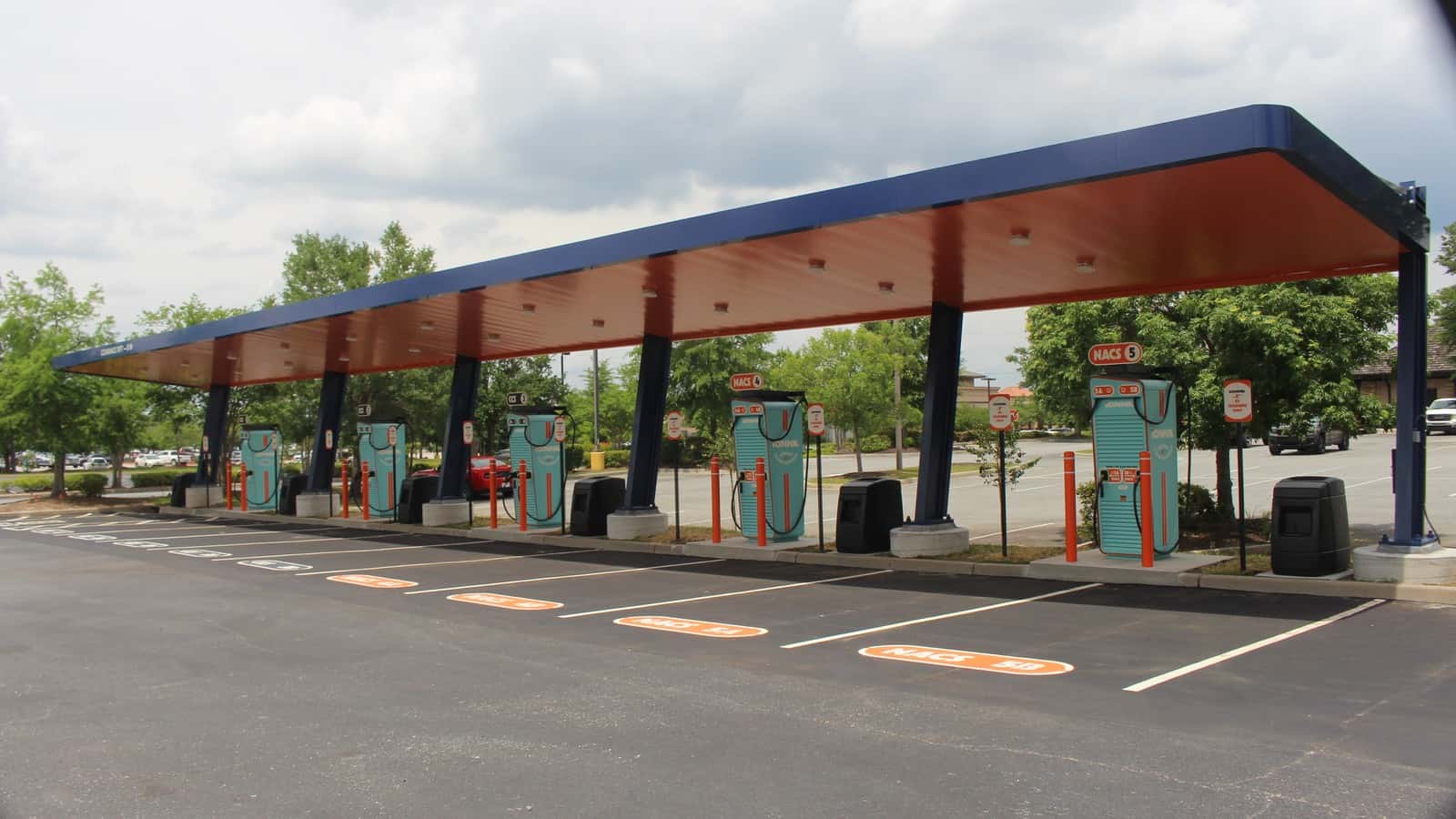

IONNA reported on September 30 that it had passed 180 operating charging sites nationwide, more than twice its footprint at the start of 2026. The update gives electric-vehicle drivers another network to consider when planning travel. Its usefulness still depends on whether a compatible, operating charger lies along the route a driver actually takes.
The network’s September announcement also reported more than 40 operating locations through its Circle K partnership. These figures describe that announcement’s snapshot. They should not be read as a count of chargers available in a particular city today, and a charging site can contain multiple vehicle charging positions.
What the satisfaction ranking measures
IONNA separately ranked highest among DC fast-charging networks in the J.D. Power 2026 U.S. Electric Vehicle Experience Public Charging Study, released August 12. Its score was 807 on a 1,000-point scale, in its first year of award eligibility. The study included 6,594 battery-electric and plug-in hybrid owners, with responses collected from January through June.
The survey considers ten aspects of the experience, including charging speed, availability, payment, location and amenities. That makes the result useful for comparing reported customer experiences. It is not a promise about an individual stop or a direct measurement of every charger’s uptime. A driver with a successful session may also value a convenient location, clear payment process and somewhere to wait.
Match the charging stop to the vehicle
According to IONNA’s current charging guidance, its network provides CCS and NACS access, with drivers directed to check individual locations. It accepts payment at the charger by credit card and mobile wallet, alongside supported apps and eligible Plug & Charge arrangements. Automatic session activation depends on the particular vehicle and setup; it should be confirmed before relying on it.
The company says its charging locations operate around the clock, while food and restroom hours may differ. A sensible trip check therefore includes the connector, payment method, actual location and available amenities. Existing coverage of vehicle-linked charging programs provides additional context for drivers comparing account-based access and charging benefits.
Charger power is another separate question. The U.S. Department of Energy’s charging overview explains that charging time varies with the battery’s charge level and capacity, the vehicle and the charging equipment. A dispenser’s maximum rating does not establish the rate every connected vehicle will receive throughout a session. That distinction also matters when reading about higher-power charging hardware.
Use network information alongside the ownership plan
Public fast charging is one part of EV ownership. DOE notes that most owners do most of their charging at home and provides tools to search for stations by location or route. Compare likely daily charging access with occasional travel needs, then check current station information before departure. A growing national footprint becomes more useful when it adds practical stops to those specific journeys.
For a used EV, access to chargers also belongs beside a separate assessment of the car itself. A battery-health report, charging capability and service documentation answer different questions. Keep each tied to the actual vehicle. The September expansion and August satisfaction findings provide helpful network context; the purchase and travel decisions still require details about the vehicle, route and intended charging stop.
0 comment(s) so far on IONNA Expansion Adds Context for EV Charging Decisions