

Roof Box Weight Limits: What Counts Before a Road Trip
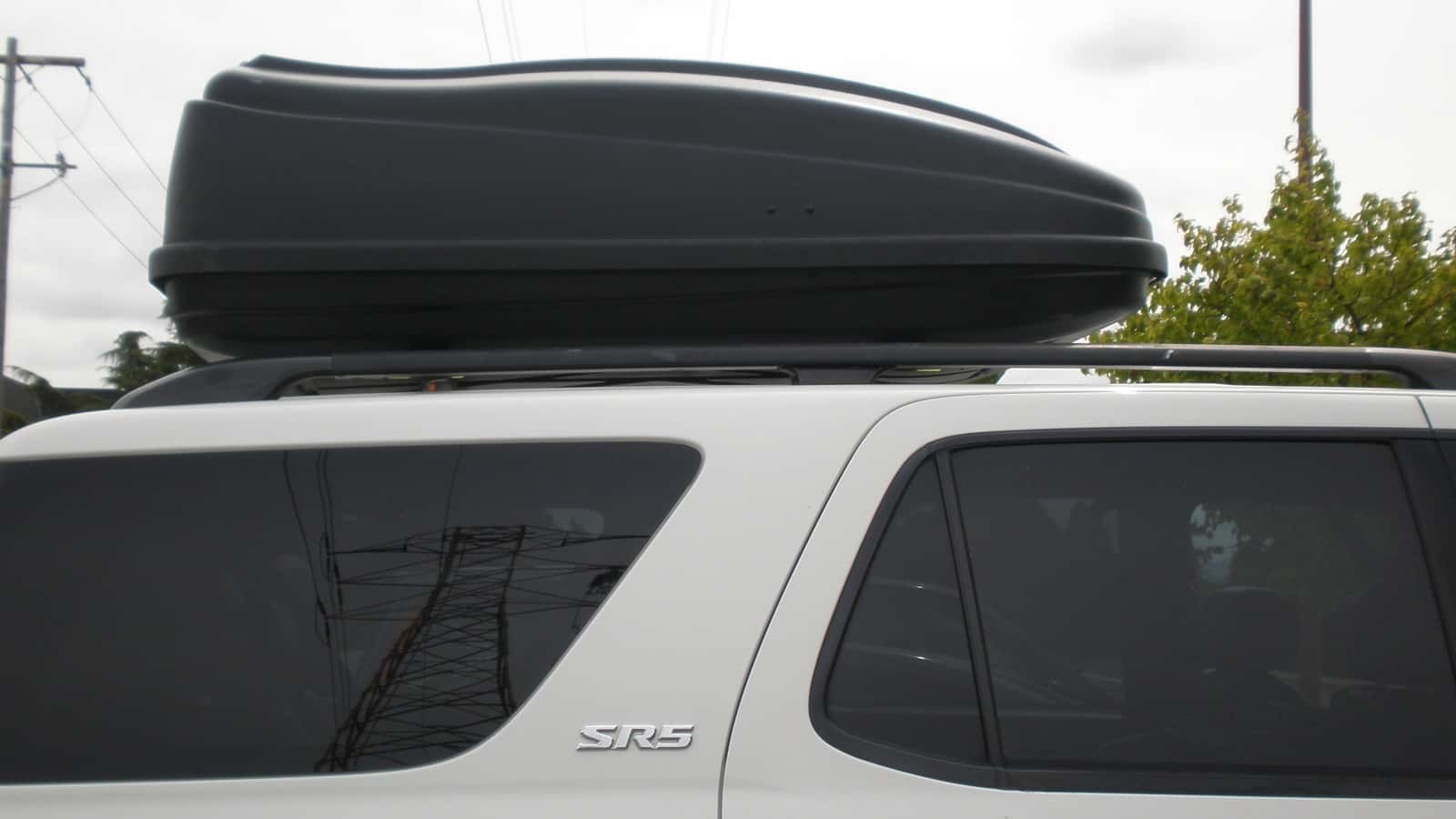

A roof cargo box can make a road trip easier to organize, but its size does not establish how much weight a vehicle can carry overhead. Before packing, check the vehicle, mounting system and box together. For shoppers, this is a specific addition to the broader used-SUV buying checklist, especially when roof equipment is already installed.
Thule’s roof-box packing guidance identifies three separate limits: the vehicle’s roof load, the rack’s capacity and the box’s cargo limit. The vehicle manual supplies the roof specification. The rack and box instructions explain their own limits. A high number on one component does not increase a lower limit elsewhere in the setup.
Count the equipment before adding luggage
Start by listing the weights of the rack, mounting hardware and empty box. These items use part of the permitted roof load before any bags are added. As an illustrative calculation, a 150-pound roof allowance minus a 20-pound rack system and a 35-pound box leaves 95 pounds for cargo. Those figures are hypothetical, not a rating for any particular vehicle or product.
The box’s own cargo limit still applies. If that hypothetical box allowed only 75 pounds inside, the remaining 95-pound roof allowance would not permit loading it beyond 75 pounds. Record the calculation with the product instructions, and weigh packed bags rather than estimating from how much space they occupy. Bulky items can fill a box well before the allowed weight is reached.
Compatibility also needs confirmation. Thule’s rack instructions direct owners to check the current vehicle fit guide and use the lower applicable load limit. Identify the actual bars, feet, fitting kit and carrier model. Equipment that was suitable for a previous car should be checked again against the replacement vehicle’s year, roof configuration and approved mounting points.
Use the driving limit for the journey
Yakima’s load-rating guide, revised in June 2025, distinguishes dynamic ratings, which apply while driving, from static ratings for a stationary vehicle. It also explains that the lowest-rated component controls the carrying system and that the vehicle manufacturer’s instructions remain necessary. A parked-load figure therefore should not be used as permission to carry that weight on the road.
Yakima also notes that the type of mounting and intended use can change a system’s capacity, including reductions for some unpaved-road use. Check the instructions applicable to the actual combination and route. Do not apply a generic multiplier or assume a rating for smooth paved roads covers every surface or accessory arrangement.
Check clearance as well as weight
A setup can be within its weight limit and still interfere with the rear hatch. Thule’s box-fit guide explains how to compare the distance from the front crossbar to the open hatch with the box’s required clearance. It also calls for checking crossbar spacing against the box manual. Verify both measurements before fastening the carrier in place.
Check the box’s orientation and positioning, too. Thule warns that moving it too far rearward can obstruct the hatch, while excessive forward placement can affect visibility and airflow. Record the vehicle’s total height with the carrier fitted and account for garages and other overhead obstacles. A familiar parking space may have different clearance once the box is installed.
Before departure, follow the product’s fastening procedure and check its straps, locks and mounting hardware. Thule’s instructions call for inspecting components for wear and checking the load at stops. Add those tasks to the pre-trip vehicle checklist. When comparing used vehicles, confirm which roof accessories are included and obtain their instructions before planning a trip around them.
0 comment(s) so far on Roof Box Weight Limits: What Counts Before a Road Trip