

Intermittent Car Problem With No Code? What to Tell the Shop
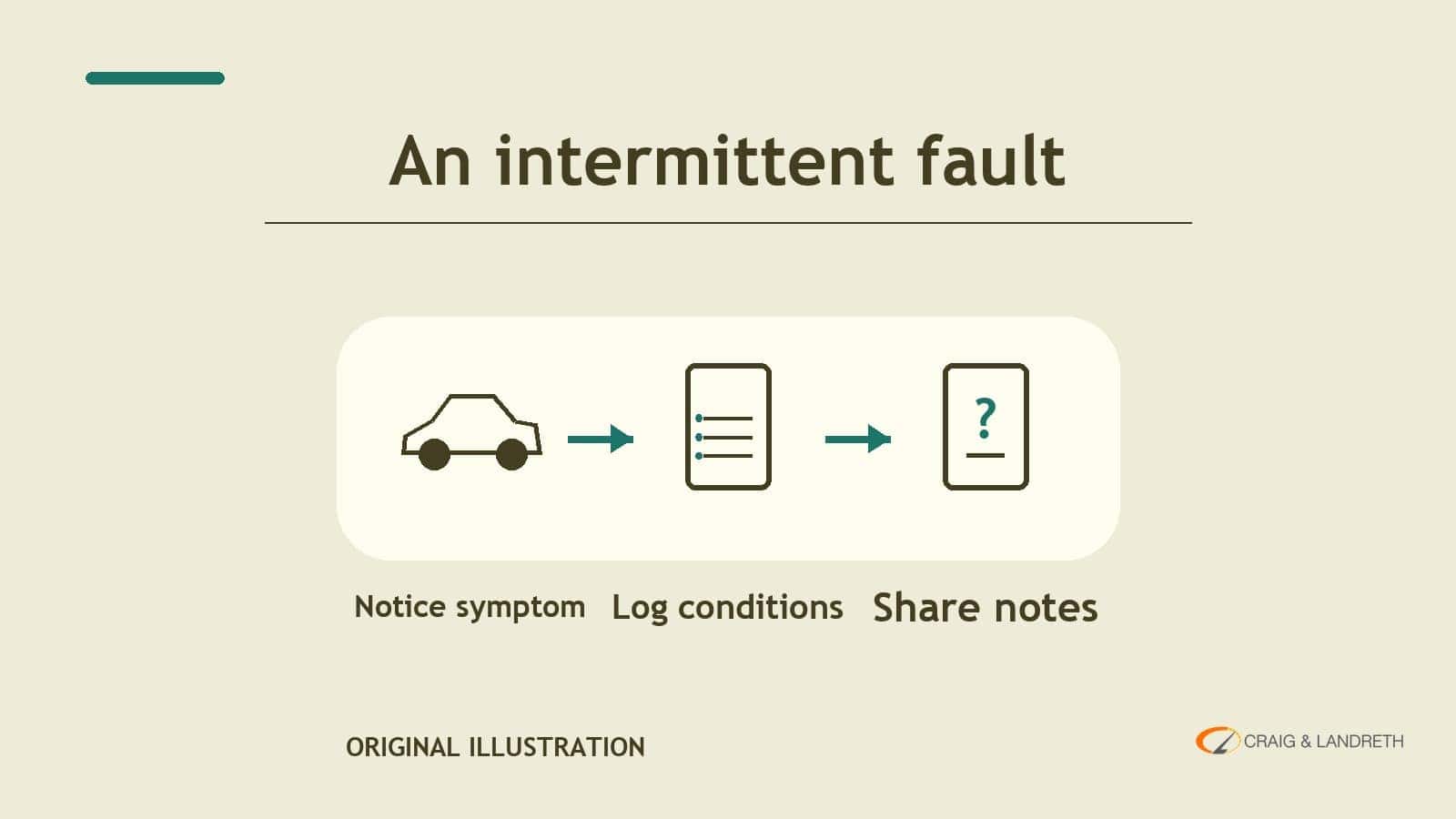
“No codes” on a basic OBD-II reader doesn’t rule out a problem. It typically checks emissions-related information and may miss faults in another system, such as the brakes or body electronics. Once you’re safely parked, write down what happened, what the car was doing and how long the symptom lasted. Those details give the shop a way to start even if it can’t reproduce the problem right away.
Build one line per event
Use one line for each event: date and mileage | time since startup | speed or maneuver | exact symptom or warning | duration | what stayed normal. Write what you observed in everyday language. “Twice while slowing to a stop after a cold start” gives the shop a different lead from “at a steady speed after 40 minutes.”
Add the conditions that changed. A rough road, a turn, rain, use of the A/C, a recent fill-up or an electrical accessory can give a technician a way to narrow the test. Write down what stayed normal too. If the engine ran smoothly while the instrument display flickered, that distinction matters. Keep prior repair receipts with the log so the shop can see which systems were disturbed or tested already.
Capture what you can without putting yourself at risk
Take a photo of a warning message or record a noise only after stopping safely, or have a passenger help when that is appropriate. If a reader says “no codes,” note the scanner or app and when you used it. Do not clear stored information while trying to make a symptom go away. The Cooper service FAQ describes what a diagnostic visit includes when a light is on.
Don’t take another drive to trigger a severe symptom. If the car loses braking, steering assistance, power or visibility in a way that makes driving unsafe, pull over as soon as you can do so safely and arrange assistance. Tell the shop about the safety symptom before arranging the visit.
Ask for a test plan
Ask whether leaving the car overnight or describing a particular operating condition would help the technician. A diagnostic visit may start by confirming the symptom, checking modules and recent service, and using the manufacturer’s tests or guidance to narrow it down. If it can’t be reproduced, ask which systems the shop checked, whether it could read vehicle-specific or history codes and what new evidence would help next time. A generic reader’s “no codes” result and a vehicle-wide diagnostic scan are different checks.
Compare two events without guessing a cause
One entry might read: “After a cold start, the headlights flickered once when I turned the blower up, and the engine speed sounded steady.” A second entry might say: “After 20 minutes, headlights flickered again over a rough section of road with the blower off.” The log preserves what both events share and shows which condition changed. The technician can decide which systems to inspect before assigning a part.
If you are bringing the car back after an inspection, label which observations happened before the last visit and which happened afterward. The clearer timeline can keep the shop from repeating a test that was already ruled out under the same conditions.
For a recurring issue around Clarksville, Cooper Automotive offers diagnostic testing. Send a service request with the shortest description that includes the trigger and symptom, and bring the fuller log.
0 comment(s) so far on Intermittent Car Problem With No Code? What to Tell the Shop