

October New-Car Prices Rise
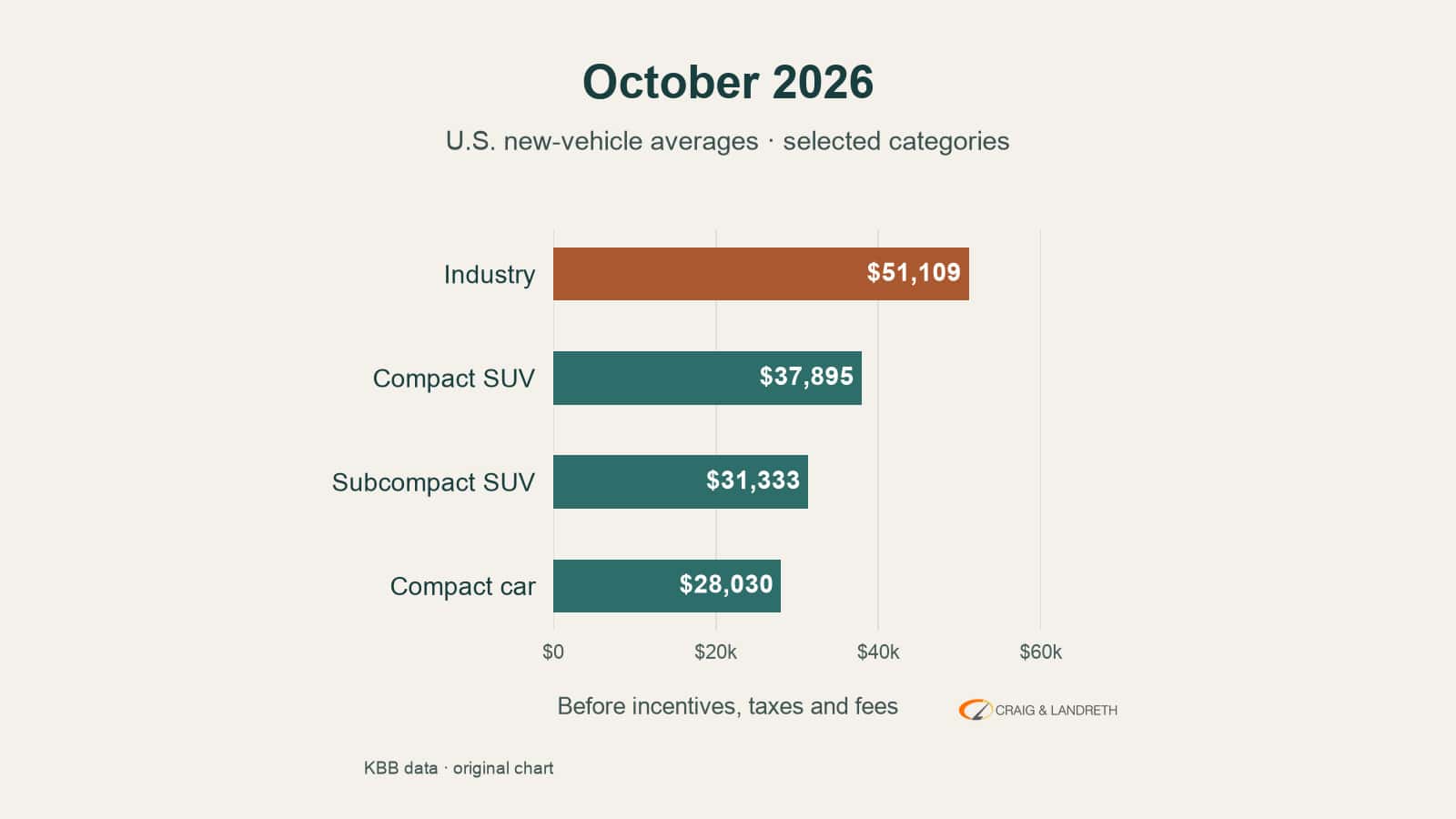
Kelley Blue Book’s November 10 report puts October’s U.S. new-vehicle average transaction price at a record $51,109. That is $649, or 1.3%, above revised September and 2.1% above a year earlier. The comparison uses September’s revised $50,460 figure. The estimate precedes all available incentives, taxes and fees; it is not a final purchase quote. The report attributes the increase partly to prices and strong sales of expensive SUVs and pickups.
An average is not a median
The NIST statistics handbook explains that an arithmetic mean adds the observations and divides by their count. A median instead identifies the middle of the ordered observations. Those are different questions about a group. An average alone cannot establish that half of buyers paid more and half paid less. Nor does a headline average establish the lowest available price.
NIST’s examples show that the mean and median can diverge when a distribution is asymmetric, with extreme values affecting the mean. The new report does not supply a median to compare. Avoid inventing one or treating the national average as the price of a typical vehicle with a particular size, equipment level and location.
A price index asks another question
A separate federal measure answers another question. The Bureau of Labor Statistics’ new-vehicles index methodology, updated May 20, describes a transaction dataset that typically contains about 250,000 observations monthly. It includes rebate information and vehicle characteristics, and BLS applies sales-tax rates. Fleet vehicles, police vehicles, work trucks and cargo vehicles are excluded. This is a defined price-index process, rather than a list of currently available cars.
BLS explains how it compares vehicles across months and model years. Its year-over-year calculation maps a current purchase to the prior model-year equivalent; identifiable quality changes can be adjusted. Newly introduced or redesigned models are excluded from that year-over-year calculation until twelve months after introduction. Monthly calculations also account for the model-year price cycle. Consequently, a dollar average and a price index should not be substituted for each other. Their coverage and treatment differ; a change in either measure does not automatically describe the quote for one specific car.
Compare the actual written offer
For that final comparison, the Federal Trade Commission’s 2022 shopping guidance recommends obtaining a written out-the-door price before visiting a dealer. It should include every charge and fee. Confirm that the vehicle is actually available, and get the offer details in writing. This creates a concrete basis for comparing offers, rather than comparing a national statistic with an incomplete advertised amount.
Eligibility can also change the offer being considered. The FTC describes discounts restricted to certain customers, financing arrangements or models. Ask which requirements apply to your own quote instead of assuming every advertised reduction is available. Keep the vehicle purchase price visible even when a trade-in will be assessed separately. Before signing, compare the purchase price and other contract terms with what the dealer previously supplied; ask about differences and understand the terms. The useful endpoint is a documented offer for the actual vehicle and buyer, with the applicable charges visible.
Our earlier September report preserves the figures available at that time; this is the newly released October period.
0 comment(s) so far on October New-Car Prices Rise