

Mach-E Battery Snapshot
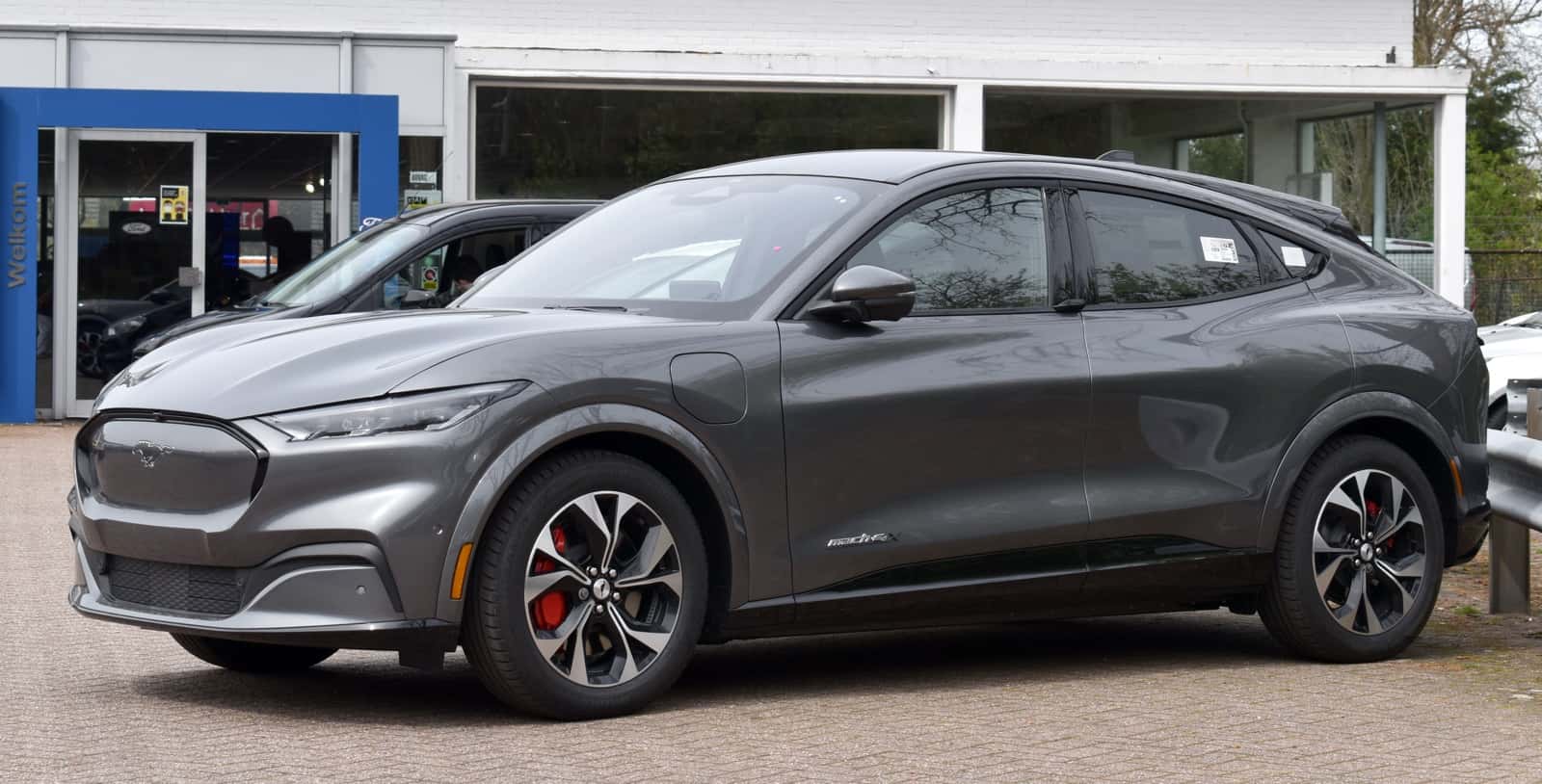

Ford reported average 92% usable battery capacity retained in its 2021 Mustang Mach-E cohort in its November 9 release. The connected-vehicle analysis covers more than 36,000 U.S. and Canadian retail and fleet vehicles, as of August 2026, with average ownership of 5.2 years. Ford says 95% were between 87% and 97% health.
Among mileage subsets: more than 2,000 vehicles past 100,000 miles on their original battery averaged above 91%; more than 30 past 200,000 miles averaged 88%. These are different groups, not one vehicle measured at successive mileages. Joining their averages into a degradation curve adds a conclusion the release does not establish.
Ford describes aggregated, anonymized data without vehicle-level records, a replacement-history table or a controlled charging-habit comparison. Individual remaining life and habit-specific causal effects are not established. The cohort covers one model year.
Separate spread from uncertainty
The reported spread also answers a different question from uncertainty about a mean. NIST’s statistical handbook explains that confidence limits estimate the mean: their width depends on both sample size and variability. A confidence level describes the long-run behavior of the interval-building method across repeated samples. It does not turn an observed band of individual results into an assurance about the next vehicle.
That distinction matters when comparing a headline average with a seller’s individual result. A large cohort can help characterize an average precisely while vehicles within it still differ. Conversely, a range containing most observed vehicles does not disclose the distribution inside that range. Without the underlying observations, readers should not assume results cluster at its midpoint, divide evenly across it or form a bell-shaped curve. No independent confidence interval is calculated here. Mileage thresholds alone leave operating-history differences.
Keep trip conditions in the comparison
Trip range adds another layer. The Department of Energy’s September 2024 temperature analysis drew on laboratory and on-road evidence. Its controlled component examined three model-year 2019–2020 electric vehicles on standard driving cycles at Argonne National Laboratory, rather than this ownership cohort. Cabin temperature was held at 72°F while ambient temperature varied. Ambient tests ranged from 0°F to 95°F. The tests measured both usable battery energy and energy consumption across cycles. That design studies operating conditions; it does not measure years of capacity retention.
DOE identifies cabin heating demand and changes in battery chemistry as contributors to cold-weather range loss. It also notes that results vary with the vehicle’s thermal-management strategy and heating technology. A winter trip can therefore require its own energy planning even when a long-term capacity figure looks reassuring. Applying a laboratory percentage to every vehicle, or treating a chilly-day range estimate as permanent battery deterioration, would mix different measurements. A trip estimate and a capacity assessment require their own stated conditions.
For a prospective owner, the useful advance is a dated, model-specific reference to compare with questions about the actual car. Keep the cohort result, the car’s present condition and the intended trip separate. A seller can address the vehicle being offered; a fleet average cannot substitute for that answer. The new release informs that conversation without resolving every ownership decision.
0 comment(s) so far on Mach-E Battery Snapshot