

Dodge Charger V8 Return Reported for 2028: What We Know
A V8-powered Dodge Charger is back in the product-planning news. Automotive News and MoparInsiders have reported plans for a supercharged Hellcat derivative for the 2028 model year, a potentially important addition for buyers who want a V8 in the current-generation car. The reporting describes a proposed model; Dodge has not supplied production specifications, pricing or ordering information for it.

What the Charger reports establish
Automotive News published its V8 Charger report on October 12. Its public introduction describes Stellantis planning a V8 variant, and the article identifies a Hellcat model planned for 2028. The full report is subscription-access material, so those publicly visible statements should be kept separate from production details repeated elsewhere.
In a separate October 12 report, MoparInsiders said information from an internal powertrain document pointed to a 6.2-liter supercharged Hemi V8. The outlet published an image listing two-door and four-door Charger entries, an eight-speed automatic and rear-wheel drive. Its article supplies the 2028 model-year context. The document’s origin and completeness have not been independently authenticated by this publication.
Road & Track followed the reports on October 13 and said it asked Dodge for comment. The brand declined to discuss future product plans. That is the central limit on the story: there is identifiable reporting to follow, but a manufacturer announcement with a final specification is still needed.
The announced Super Bee is a six-cylinder car
The 2027 Charger Super Bee Launch Edition is a separate development. Stellantis’ August 7 launch release describes a 600-horsepower, 3.0-liter twin-turbocharged SIXPACK engine. That is an inline-six, even though Super Bee is a badge many drivers associate with an earlier V8 era.
| Charger development | Powertrain and status |
|---|---|
| 2027 Super Bee Launch Edition | Announced 3.0-liter twin-turbo SIXPACK inline-six; 600 hp in the launch release. |
| Reported 2028 Hellcat | Reported 6.2-liter supercharged Hemi V8; final production output and specification unannounced. |
Our Super Bee equipment and launch guide explains its larger turbochargers, cooling changes and tire package. Those details belong to the announced six-cylinder model. They cannot be transferred to a prospective Hellcat simply because the cars share the Charger name.
Why the powertrain distinction matters to shoppers
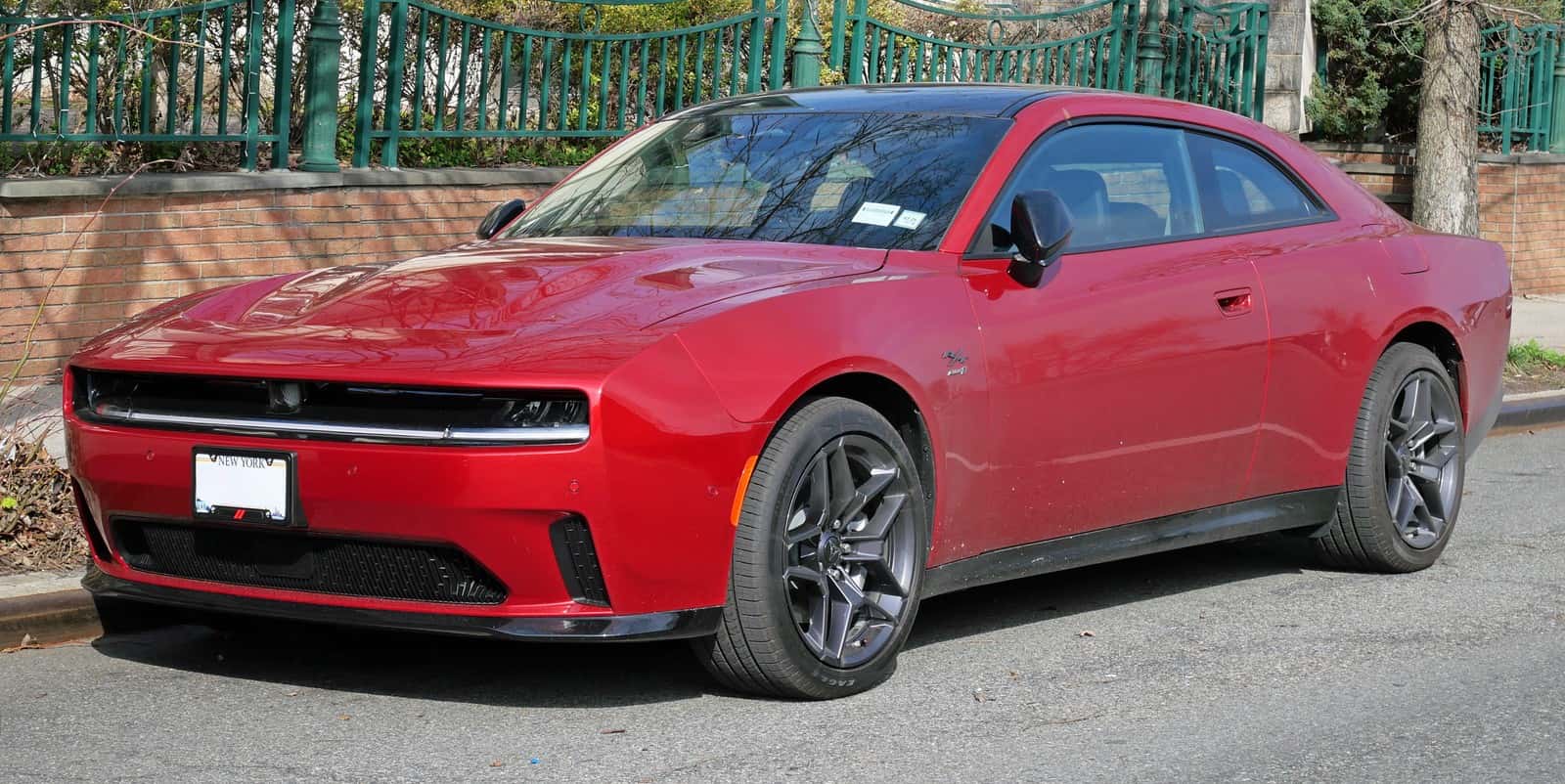
The current Charger generation includes electric and gasoline configurations. An exterior photograph can show the body design while revealing little about the powertrain underneath it. The electric Daytona pictured here is useful design context, not an image of an unannounced V8 prototype.
A supercharged V8 and a twin-turbo inline-six also describe different engine layouts and induction systems. The reported engine size alone cannot establish the future car’s certified output, acceleration, fuel economy or cooling package. Those comparisons need the eventual production specification and, for real-world performance, appropriate testing.
What remains to be confirmed
The next useful milestone would be a Dodge announcement identifying the production car, model year, equipment and ordering schedule. A reported model year is not an individual delivery promise. Pricing, destination charges and available packages would also be needed to compare the proposed Hellcat meaningfully with another Charger.
For shoppers buying soon, the sensible comparison remains the exact vehicles and published configurations available to them. For someone whose requirement is specifically a new V8 Charger, the reports justify watching for confirmation while keeping a possible future model separate from a car that can actually be specified and ordered.
0 comment(s) so far on Dodge Charger V8 Return Reported for 2028: What We Know