

2028 Mercedes-AMG GT SUV: Power, Charging and U.S. Timing
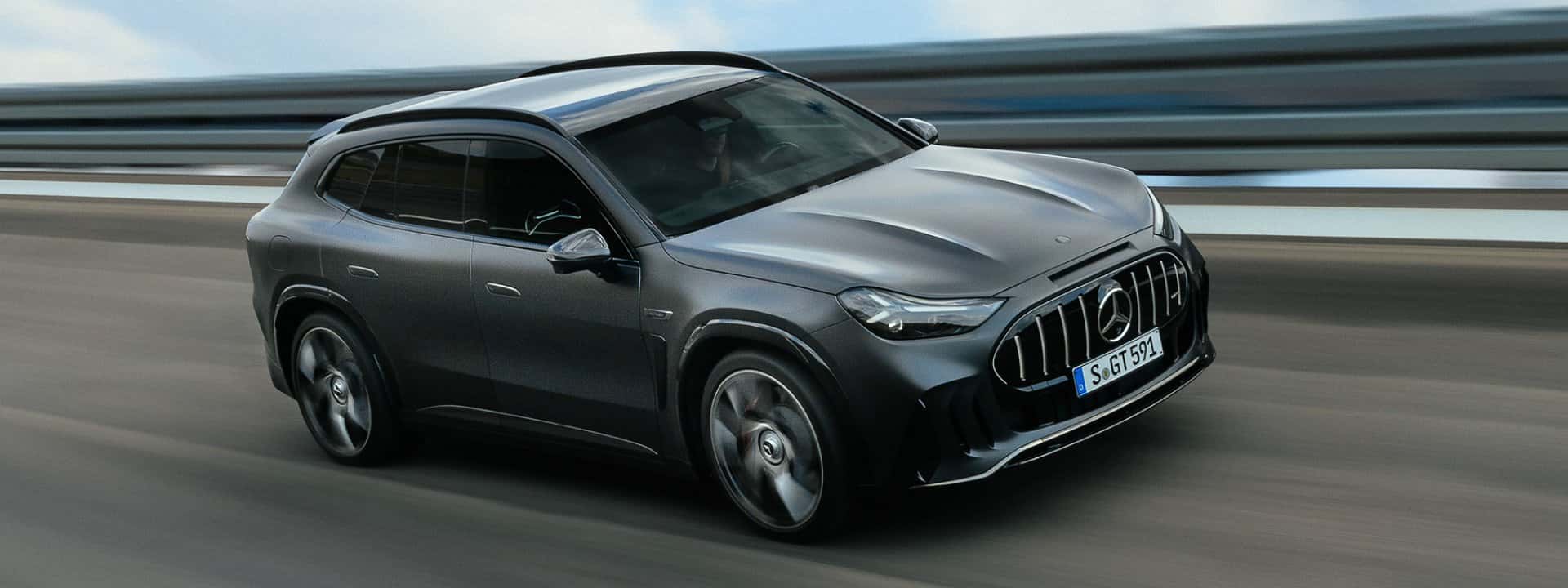
Mercedes-AMG plans a U.S. launch for its electric GT SUV in summer 2027 as a 2028 model. Its three versions are led by a GT 63 with 1,153 horsepower of peak output.
The October 17 U.S. announcement lists these preliminary specifications:
Announced GT SUV specifications
| Version | Peak output | Usable battery | Maximum DC charging |
|---|---|---|---|
| GT 53 SUV | 536 hp | 106 kWh | 600 kW |
| GT 55 SUV | 805 hp | 128 kWh | 710 kW |
| GT 63 SUV | 1,153 hp | 128 kWh | 710 kW |
Mercedes lists a 10-to-80-percent charge in 12 minutes for the GT 55 and GT 63; the GT 53 technical table lists 11 minutes. Maximum charging requires suitable 800-volt equipment. The manufacturer labels its figures preliminary, with official values still subject to confirmation.
Different motors and an active suspension
The global technical release describes three axial-flux motors for the GT 55 and GT 63, compared with two synchronous motors for the GT 53. The front motor can disconnect under light load to reduce drag losses. The GT 53 also has a two-speed rear transmission, with separate ratios for lower-speed acceleration and higher-speed driving.
The high-voltage battery uses directly cooled cylindrical cells. Mercedes describes an electrically non-conductive oil flowing around the cells to control temperature, supporting repeated power delivery. That is a more substantial distinction than a single acceleration headline: the thermal system is part of the design intended to sustain performance.
The release also specifies Active Ride Control+ as standard on the GT 63 and optional on the GT 55. Hydraulic elements control pitch and roll alongside adjustable air springs. Mercedes says the system reduces body movement during acceleration, braking and cornering. These are the manufacturer’s design claims; an independent road test would be needed to judge the ride and handling.
What the charging figures mean on a trip
The Department of Energy’s charging-station guide explains why charging time depends on both the vehicle and the equipment. Relevant variables include the battery’s starting charge, energy capacity and type, the vehicle’s charging capability, and the station’s power and electrical service. A station rating and a vehicle’s maximum acceptance therefore need to be considered together.
A peak kilowatt figure describes power, rather than energy added over an entire stop. It should not be multiplied by the full session time as though the vehicle maintained that peak throughout. Comparing repeated 10-to-80-percent tests under matching conditions will give shoppers a clearer picture of practical charging performance.
The U.S. label answers different ownership questions
The EPA’s electric-vehicle label guide explains the fields that eventually help U.S. shoppers compare range and running costs. Estimated driving range describes the distance available from a full battery. Energy consumption is expressed in kilowatt-hours per 100 miles, while MPGe provides an energy-based comparison with other vehicle technologies.
Those fields answer different questions from a maximum charging rate. Energy consumption helps estimate how much electricity a journey requires; local electricity prices then affect its cost. The label also provides an estimated annual fuel cost under stated assumptions. Its charging-time field describes an empty battery charged using 240-volt service, which is a different measure from a brief DC fast-charging stop.
Match the SUV to the correct GT model
The earlier GT 53 4-Door Coupe announcement describes a separate vehicle, scheduled for U.S. arrival in early 2027. That coupe also lists a 536-hp peak output and a 106-kWh usable battery. Shared names and some shared specifications make the body style essential when researching the range.
Our GT 53 coupe guide provides context for that earlier model. For the SUV, the useful next comparisons are final U.S. equipment, pricing, certification and charging tests on consistent terms. Its unusually high announced charging power is a promising specification, with the operating conditions remaining part of the claim.
0 comment(s) so far on 2028 Mercedes-AMG GT SUV: Power, Charging and U.S. Timing