

Tire Load Index and Speed Rating: How to Check a Replacement
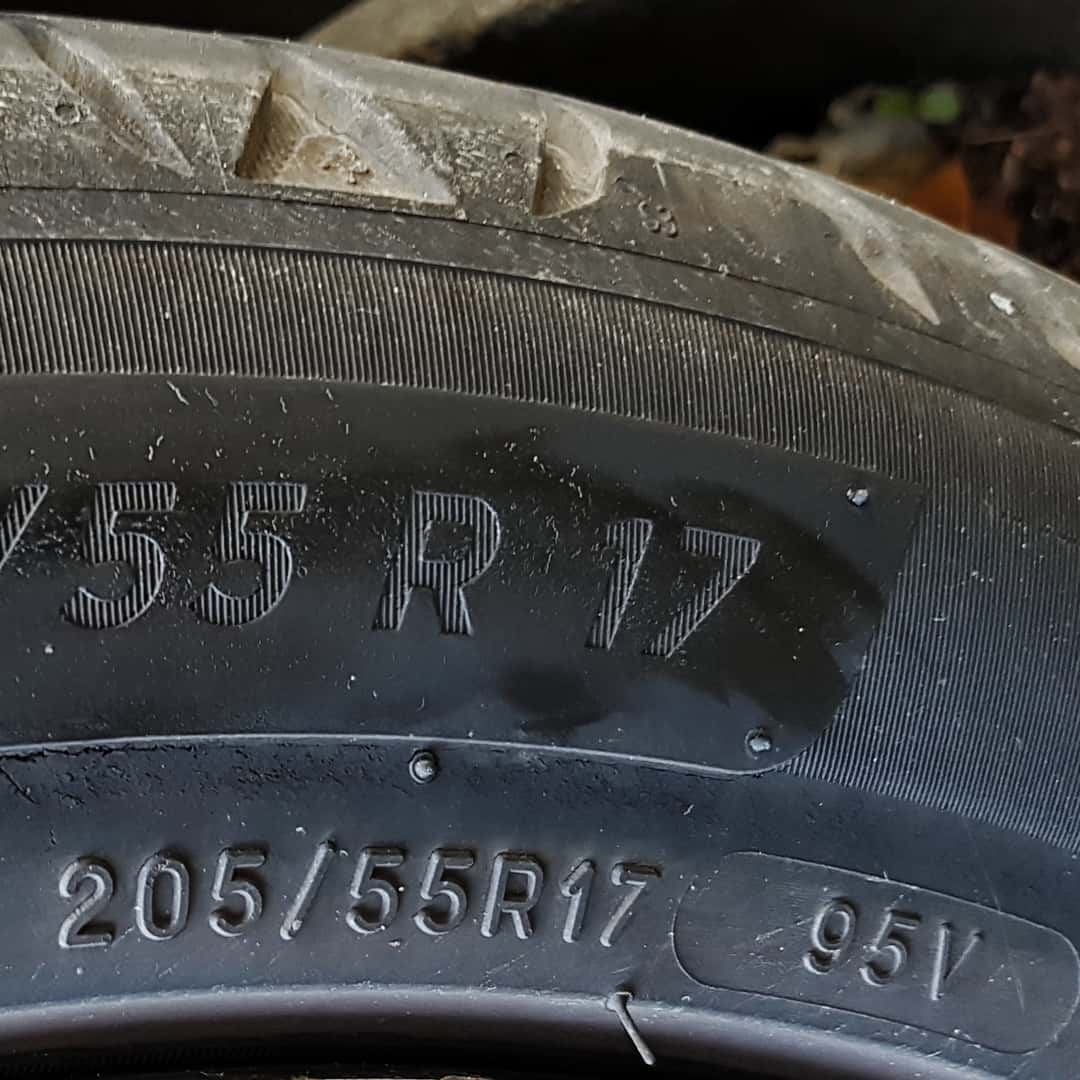

A tire can match the size printed on your old tire and still be the wrong replacement. The last number-and-letter pair in a marking such as 225/65R17 102H describes load and speed ratings. Those ratings affect whether the tire is specified to carry the vehicle’s load and operate within the vehicle maker’s performance requirements.
For shoppers comparing quotes, start with the car’s own tire placard or owner’s manual, then check the complete tire specification. A familiar size alone is not enough.
Read the placard before comparing tires
The tire placard on the driver’s door jamb gives the vehicle’s specified tire size and recommended cold inflation pressure. For replacement fitment details such as load index, speed rating and approved alternatives, check the owner’s manual or the vehicle maker’s fitment information. The U.S. Tire Manufacturers Association advises matching the recommended size, load index and speed rating and not using a smaller size or lower load capacity than specified; Michelin explains how the sidewall identifies the tire itself.
In the example 225/65R17 102H, “225” is nominal width in millimeters, “65” is the sidewall-height ratio, “R” means radial construction and “17” is wheel diameter in inches. The “102” is the load index; “H” is the speed symbol. The index is a standardized code, not a direct weight figure. Look it up in an authoritative chart if you need the rated capacity. Different tires can share the same size dimensions but have different load and speed ratings.
What load and speed ratings tell you
The load index represents the maximum load a single tire can carry when correctly inflated under the rating’s conditions. It does not increase the vehicle’s payload. Even if a replacement has a higher index, the vehicle’s gross vehicle weight and axle ratings remain the limits for occupants and cargo. An “XL” or Extra Load tire uses a reinforced construction and higher inflation pressures to carry more load than a standard-load tire of the same size, but shoppers should not assume XL is automatically the right choice; confirm the vehicle’s specified fitment and pressure.
The speed symbol is a letter rating for the maximum speed at which the tire can carry its rated load under specified conditions. Michelin lists “V” as a 149-mph category in its example table. That is a tire test rating, not a safe or lawful driving speed. Heat, load, inflation, road and weather conditions still matter. The U.S. Tire Manufacturers Association cautions against using a replacement with lower load capacity than specified and recommends matching the maker’s speed rating.
Do not use the “MAX PRESS” molded on a tire sidewall as your everyday inflation target. That marks a tire limit; the vehicle placard gives the recommended cold pressure for the vehicle and its intended tire fitment. NHTSA likewise directs drivers to the placard or certification label for recommended cold pressure.
Compare the whole fitment, not one number
When a quote offers a tire with the same size but a different load index, speed symbol, XL designation or construction, ask the shop to verify it against the vehicle’s placard and manual for your exact year, trim and wheel package. Some vehicles use different specifications front and rear, and some manufacturers approve alternate sizes. A “higher” index by itself does not establish that a tire is a suitable substitute.
If replacing fewer than four tires, follow the vehicle maker’s instructions for your drivetrain and tire combination. USTMA recommends that when only two tires are replaced, the new pair be installed on the rear axle to preserve stability on wet roads. Its guidance also calls for matching the recommended size, load index and speed rating.
Load and speed ratings establish fitment constraints; they do not tell you which tread or seasonal design best suits your driving. For that separate comparison, see our guide to tire models and intended uses.
Before approving an order, confirm the placard’s tire size and recommended cold pressure, then compare the quoted load and speed ratings with the owner’s manual or manufacturer’s fitment information. Ask about any front/rear or all-wheel-drive restrictions. If the vehicle has aftermarket wheels or a nonstandard tire setup, confirm that configuration with a qualified tire professional. The sidewall helps identify what is already mounted; the vehicle documentation tells you what the car was designed to use.
0 comment(s) so far on Tire Load Index and Speed Rating: How to Check a Replacement