

Choosing Tires: Fit, Season and Useful Comparisons
Tire selection
Updated October 16, 2026
Start with the vehicle’s requirements and intended driving conditions. A manufacturer’s tire category helps identify purpose; it does not establish a winner, measured braking performance or fitment for a particular vehicle.
Start with the vehicle’s requirements
The 2021 gasoline Honda CR-V manual includes matching size, load range and speed rating among its replacement-tire requirements. It also calls for wheel specifications matching the originals. These are requirements for that vehicle, not a fitment approval for another model or a different wheel package.
Ask the proposed tire’s full model name, size and service description to be written down against the actual vehicle’s requirements. A familiar brand or similar-looking tread is not that record. If the wheel or tire specification has changed, make the change part of the fitment discussion.
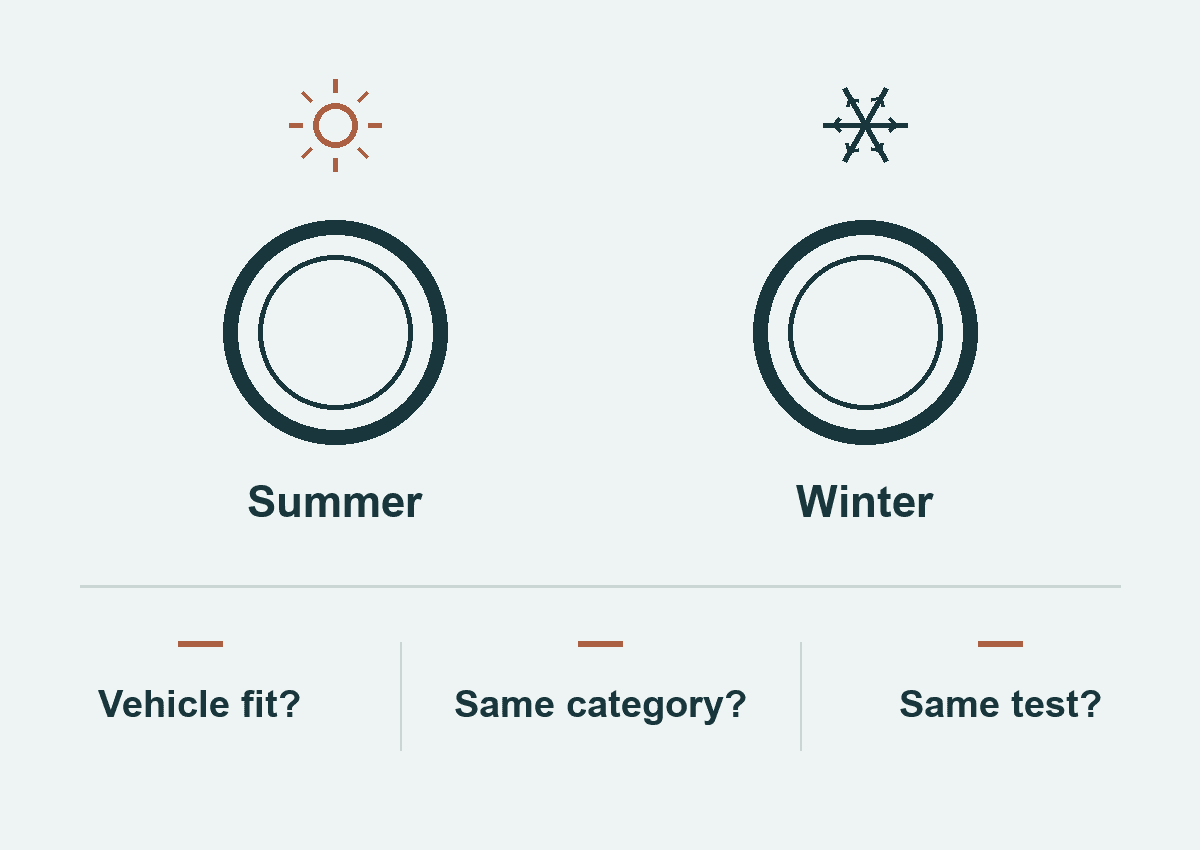
Compare the same kind of tire
| Product | What its manufacturer establishes |
|---|---|
| Michelin Pilot Sport 4 S | Michelin labels it a summer, sport tire. |
| Bridgestone Blizzak WS90 | Bridgestone identifies IcePeak as its lineup replacement. |
Michelin’s Pilot Sport 4 S page describes a summer product; its winter FAQ says it is unsuitable for snow or ice. That category matters when choosing a use case. It does not establish stopping distances against other models.
Bridgestone’s IcePeak announcement says that tire replaces WS90 and DM-V2 in its lineup. Verify the exact model and size on the quote; a lineup statement does not establish which product is being offered for your vehicle.
Ask what the comparison actually measured
If a claim concerns wet braking, noise or wear life, look for the tested size, vehicle, conditions and comparison group. A product description, a customer review and a controlled test answer different questions. Without a matching method, do not turn separate marketing claims into an ordered score.
A written shortlist can instead state the intended season, the verified fitment and the evidence still needed for the attributes that matter to you. Keep the exact quoted product and included work together when comparing proposals. Do not assume that two quotes refer to the same tire merely because the brand and wheel diameter match.
If the existing tires have uneven wear, that is a separate condition question. The uneven-wear measurement guide explains how to request location-specific readings and supporting findings. Choosing a replacement model does not, by itself, establish why the previous set wore unevenly.
0 comment(s) so far on Choosing Tires: Fit, Season and Useful Comparisons