

Uneven Tire Wear: Measurements Before Repair Decisions
Tire condition
Updated October 16, 2026
Uneven tread is a condition to describe and measure. The location of wear can help organize an inspection, but it does not, by itself, identify an alignment setting, incorrect pressure or a failed suspension part. A tire’s appearance and the finding behind a repair recommendation are different evidence.
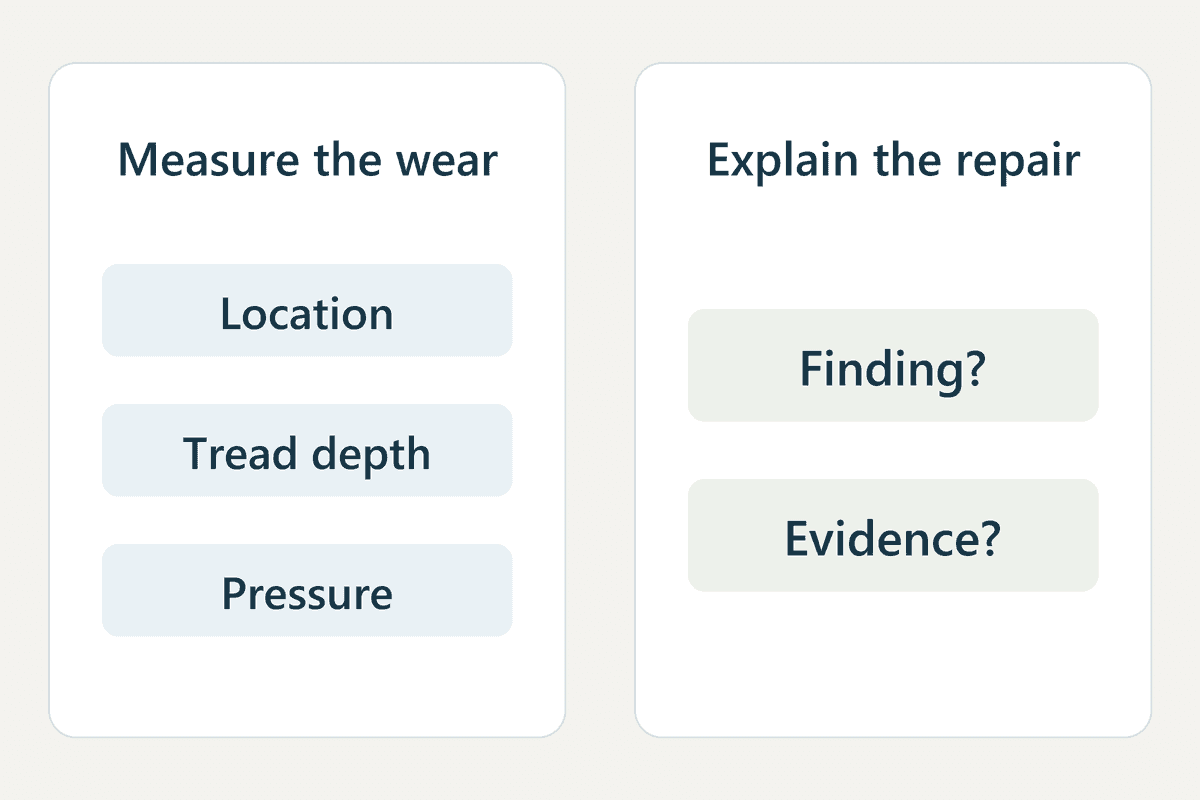
Record where the wear is, not just its nickname
Identify the affected tire and describe whether the difference is on one side, across the tread or in isolated areas. Keep its current position and any earlier rotation record with the description. A photograph can document what was visible at that time; it does not establish how long the condition developed or how a previous owner maintained the vehicle.
Ask for tread-depth readings across the affected tire, identified by position, alongside the inspection findings. This makes a comparison more useful than a single center reading or a general statement that the tires are “fine.” Measurements should describe the condition actually found, rather than assign a part from a pattern chart.
Pressure and tire condition still need separate checks
The 2021 gasoline Honda CR-V manual directs owners to the driver’s doorjamb specification for pressure and says both underinflation and overinflation can produce uneven wear. It also calls for inspection of uneven tread, cuts, bulges and other damage. For that model, uneven wear is a reason to have alignment checked; it is not an alignment measurement or proof that pressure was the only cause.
Our low-pressure response guide explains the separate gauge-and-vehicle-label question. Keep the actual readings and whether they were taken cold with the wear record. A pressure warning that disappears does not document tread condition.
Check the concern before rotating the evidence away
The 2024 Ford Super Duty manual specifically calls for an alignment check before rotation when its tires show uneven wear. It also requires pressures to be checked and adjusted to the vehicle’s requirements afterward. That is a useful order of questions for the covered vehicle: what was found, what was checked, and which maintenance action follows? It is not a reason to order alignment or suspension parts from appearance alone.
The Bridgestone/Firestone tire maintenance manual says one-sided wear or flat spots may indicate a tire or vehicle problem requiring professional evaluation. Rotation aims to minimize irregular wear from extended service in one position. Directional tires, different front/rear sizes and spare-tire arrangements can restrict the pattern. Moving a tire does not restore tread already worn away.
Make the replacement discussion specific
Request the tire-condition finding and any alignment or suspension measurements supporting the recommendation. Separate the need to address an existing worn or damaged tire from work intended to prevent a repeat pattern. Neither a rotation entry nor a newly fitted set of tires, by itself, proves that the earlier cause was identified.
If replacement is advised, match the proposal to the actual vehicle and fitted tires. Record which tires are affected, what was inspected and what remains unresolved. The goal is a condition-based decision, not a universal mileage interval, a road demonstration or a diagnosis from a familiar-looking tread photograph.
0 comment(s) so far on Uneven Tire Wear: Measurements Before Repair Decisions