

2026 Mazda CX-90: Seats, Cargo and Fuel Choices
Family SUVs
Updated October 17, 2026
For a family comparing 2026 Mazda CX-90s, the useful starting point is the exact seating layout, luggage space and powertrain.
Mazda’s 2026 packaging announcement distinguishes the 280-horsepower 3.3 Turbo from the Turbo S, rated up to 340 horsepower with recommended premium fuel. Eight seats are available on the Turbo S Premium Sport, with a second-row bench; optional captain’s chairs make it seven. The Turbo S Premium Plus instead has captain’s chairs and a center console. A higher trim name therefore does not automatically mean more passenger places. Write down which seats must remain occupied before comparing a bench with captain’s chairs. That makes the equipment discussion about the household’s actual passenger arrangement, rather than an appealing maximum seat count.
Compare cargo with passengers aboard
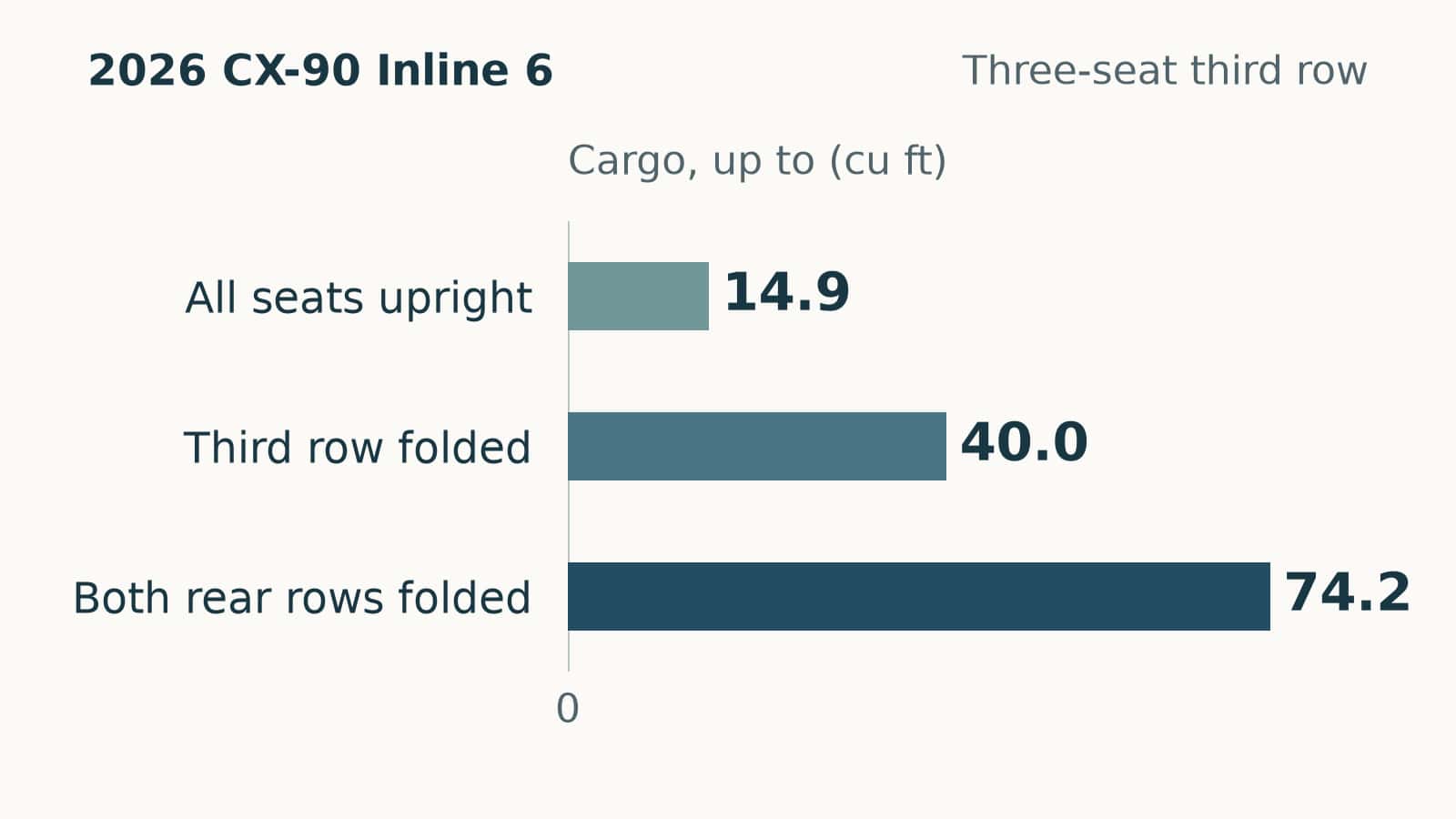
Mazda’s current Inline 6 model page lists 14.9 cubic feet behind the upright three-seat third row, 40.0 with that row folded and 74.2 with both rear rows folded. These are different uses of the cabin. The largest figure does not describe the luggage area available when every passenger seat is needed. Compare the folded stroller, bags or mobility equipment with the space behind the seats that will remain occupied. Volume alone cannot establish whether a particular object clears the opening or fits in the desired orientation. Our family-SUV seating and cargo guide explains that distinction in more detail.
Compare equipment by trim
The official trim comparison identifies the Preferred’s heated front and second-row seats and 21-inch wheels, while Premium Plus highlights its surround-view monitor and adaptive headlights. Turbo S Premium Plus adds ventilated second-row seats. Those are separate equipment decisions from engine output or passenger count. Make a short list of the features that address the actual trip: rear-seat comfort, maneuvering visibility or a preferred seat layout. Then compare the exact trim’s equipment with that list. An attractive feature on one version should not become an assumption about every CX-90 bearing the same model name.
Equal mpg, different fuel
The government’s 2026 CX-90 records for regular gasoline and premium gasoline both show 23 city, 28 highway and 25 combined mpg. Equal mileage does not make their fuel bills equal. At the captured prices, the pages estimate annual fuel costs of $2,600 and $3,200, respectively. Those are comparison estimates using 15,000 annual miles, a specified city/highway mix and current fuel prices. They are not a household quote. Personalize the assumptions before using the difference in a budget, and keep the selected vehicle’s fuel guidance separate from its advertised horsepower. Using the same annual mileage keeps this particular comparison consistent.
Read the plug-in label separately
The 2026 plug-in hybrid record describes a different, 2.5-liter four-cylinder powertrain. Its 56 MPGe electricity-plus-gasoline figure is not 56 miles per gallon of gasoline. The page separately lists 26 combined mpg on gasoline alone and identifies premium gasoline as recommended. A useful comparison therefore needs both the charging portion of ordinary use and the gasoline portion of longer travel. Compare those categories before treating one headline efficiency number as the answer. The government page also offers a plug-in hybrid calculator; its assumptions should reflect the intended use rather than an automatic savings claim for every driver.
0 comment(s) so far on 2026 Mazda CX-90: Seats, Cargo and Fuel Choices