

2027 Kia Telluride Cargo Space: What the Numbers Mean
Family SUV utility
The 2027 Kia Telluride has several legitimate cargo-volume figures, and each answers a different question. Kia’s specifications describe manufacturer-rated volume; Cars.com’s measurements describe its own usable-space method. Compare the same powertrain, seat position and measuring method before deciding how much a number tells you about a family’s luggage.
Updated October 16, 2026
Keep gasoline and hybrid specifications separate
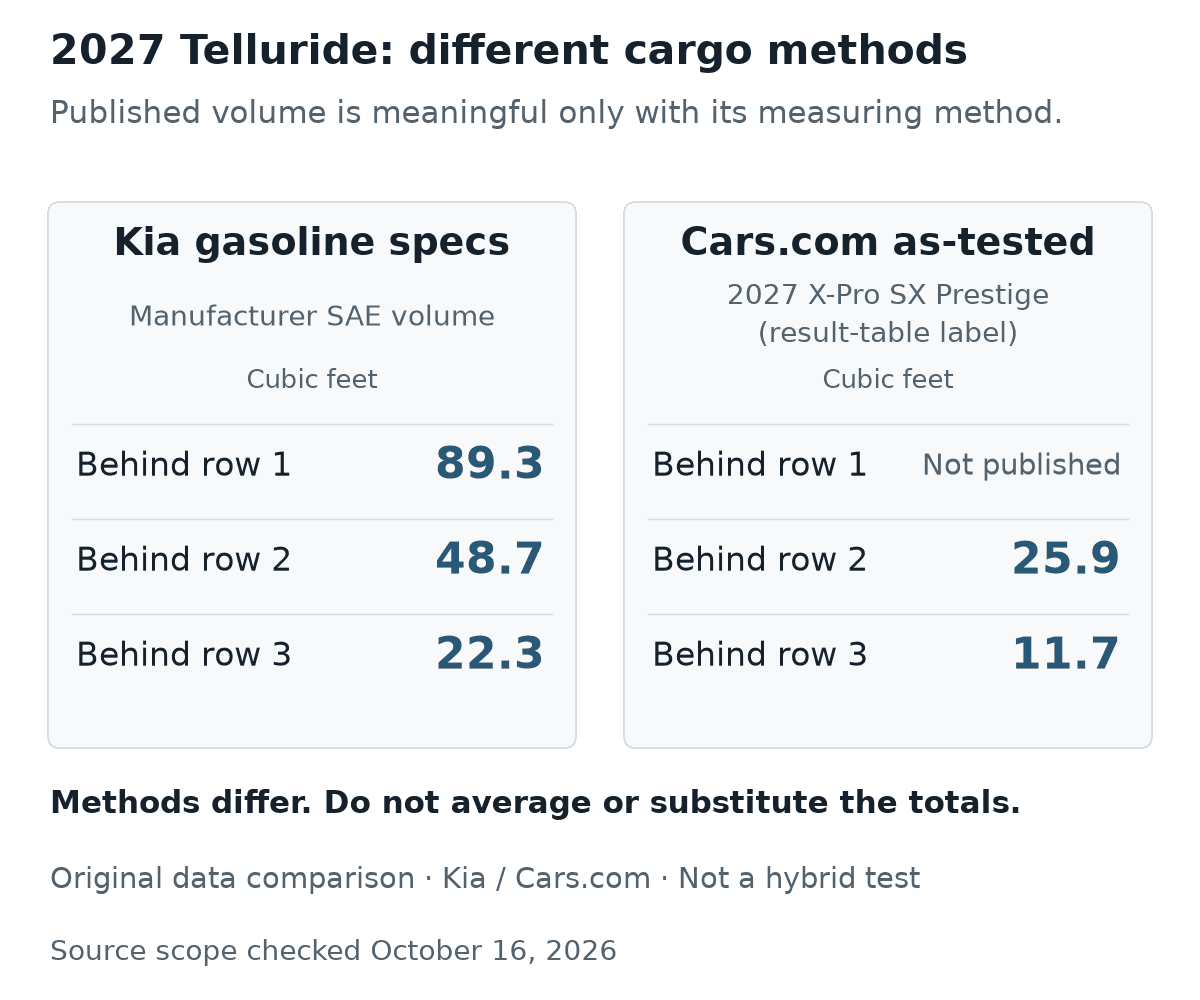
Kia’s U.S. specifications list different 2027 capacities for the gasoline Telluride and Telluride Hybrid. Both retail tables label these figures Cargo Volume (SAE). These are manufacturer-rated figures, rather than results obtained with Cars.com’s measuring method.
| Powertrain | Behind first row | Behind second row | Behind third row |
|---|---|---|---|
| Gasoline | 89.3 | 48.7 | 22.3 |
| Hybrid | 88.3 | 47.7 | 21.3 |
“Behind the first row” is a different seating arrangement from traveling with all three rows upright. A maximum-volume figure is not the space left for suitcases when the rear seats are occupied. Also, a cubic-foot difference does not identify which particular stroller or suitcase will fit. Keep the two powertrains separate, and do not transfer these figures to an earlier Telluride generation.
What the independent measurement actually describes
In its July 31, 2026 report, Cars.com publishes 25.9 cubic feet behind the second row and 11.7 behind the third. Its comparison table identifies the measured vehicle as a 2027 X-Pro SX Prestige. Treat those as that outlet’s as-tested results, rather than results for every Telluride version or a separate hybrid measurement.
Cars.com’s method uses measured dimensions within the main cargo boundaries and accounts for additional usable spaces. It measures open cargo areas to the tops of the seatbacks and sets sliding seats in their rearmost position. It is not a test of how many standardized physical boxes were loaded, and it does not publish an all-rear-seats-folded maximum under that method.
That difference in method is why its smaller totals should not be substituted into Kia’s table or averaged with the manufacturer’s figures. Nor does the difference, by itself, establish that either organization measured incorrectly.
Try the difficult item with the seats you need
Bring the folded stroller, mobility device, pet carrier or largest suitcase that determines the purchase. Check the liftgate opening, floor length, narrow points and height, then confirm the liftgate can close without pressing on the item. Test the arrangement with the passenger seats positioned as they will actually be used.
Underfloor storage can be useful, but only if the intended items fit and remain accessible. Decide whether reaching those compartments would require unloading the rest of the luggage. A single volume total does not describe that routine.
If child restraints will stay installed, include them in the seat-access check. The family car-seat fit checklist separates installation compatibility from third-row access. Do not slide or tilt an occupied seat, or move a seat with a restraint attached, unless the applicable vehicle and restraint instructions permit it.
Finally, check loading instructions and weight limits. Kia’s specification notes call for securing cargo and keeping it below the seatback. Space that an object occupies and weight the vehicle can carry are separate limits. The useful result is a load that fits the exact seating arrangement and can be transported as instructed.
0 comment(s) so far on 2027 Kia Telluride Cargo Space: What the Numbers Mean