

2026 Equinox MPG: FWD and AWD Compared
2026 gasoline SUV comparison
The 2026 gasoline Chevrolet Equinox has a one-MPG combined difference between front-wheel drive and all-wheel drive, yet both versions carry the same highway rating. The EPA records also identify different transmissions. Comparing those exact configurations gives a clearer picture than treating the largest advertised MPG number as an everyday result.
Updated October 16, 2026
The two gasoline Equinox EPA records
The EPA/DOE entries for the 2026 Equinox FWD and 2026 Equinox AWD both identify a turbocharged 1.5-liter four-cylinder engine using regular gasoline. The ratings below belong to those specific records, checked October 16, 2026.
| EPA configuration | City | Highway | Combined |
|---|---|---|---|
| Equinox FWD — variable-ratio automatic | 26 | 29 | 27 |
| Equinox AWD — eight-speed automatic | 25 | 29 | 26 |
Keep the column attached to the number: 26 MPG is the FWD city estimate and the AWD combined estimate. A listing that says only “26 MPG” leaves out information needed for a useful comparison. Neither row is an Equinox EV efficiency or range rating.
Compare the whole configuration
Chevrolet’s 2026 model page identifies the 1.5-liter turbo engine and available all-wheel drive. The EPA separates the FWD automatic with variable gear ratios from the AWD eight-speed automatic. The pair therefore compares complete vehicle configurations, rather than a controlled test changing only which wheels are driven.
The EPA rows do not name individual LT, RS or ACTIV grades. Match the model year, engine, transmission and drive type to the particular vehicle’s fuel-economy label before carrying a rating into a shopping calculation. A trim badge or an Equinox nameplate alone is not the full record identity.
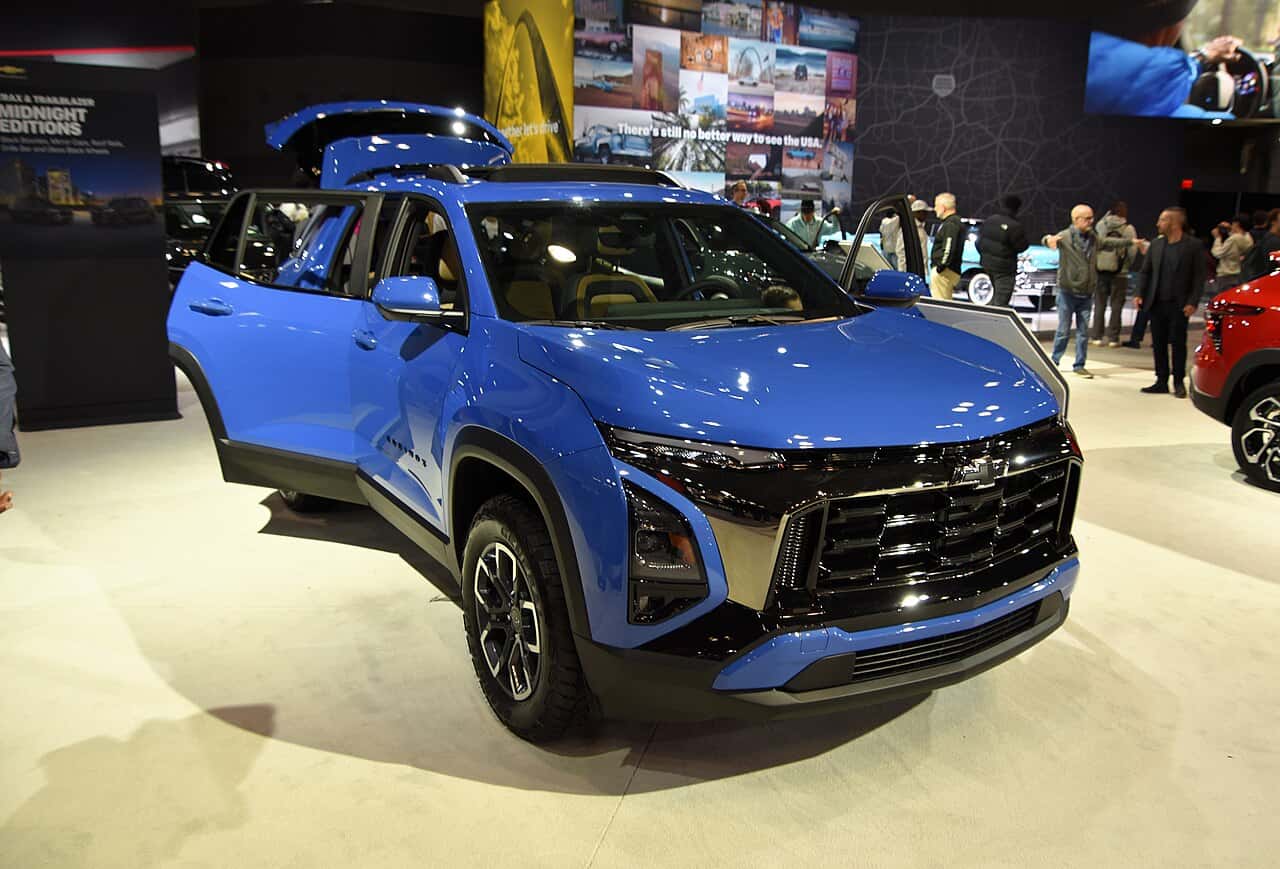

Read city and highway alongside combined MPG
The EPA’s gasoline-label guide explains that combined MPG uses a city/highway weighting of 55% and 45%. It provides a standard comparison; it does not say that your commute has that mix. Do not replace the published combined value with a simple average of the two displayed columns.
Here, the highway estimates are equal at 29 MPG, while the city estimates differ by one MPG. The highway column alone therefore does not distinguish these two versions’ published efficiency. It also cannot establish which one will use less fuel on a particular route. EPA notes that driving, weather, loads, maintenance and accessory use can change actual results.
Turn one MPG into gallons used
Divide a fixed distance by MPG to compare fuel consumption. At the published combined estimates, 100 miles represents about 3.70 gallons at 27 MPG and 3.85 gallons at 26 MPG. The difference is approximately 0.14 gallon per 100 miles, calculated before rounding the two displayed totals.
For a hypothetical 12,000-mile year at those same combined rates, the calculation becomes about 444.4 gallons for FWD and 461.5 gallons for AWD—a difference of about 17.1 gallons. These are arithmetic illustrations, not measured owner results or a prediction of annual driving. Substitute your own distance and, if estimating spending, an explicitly chosen fuel price. This comparison supplies no current gasoline-price quote and does not show that any purchase-price difference is recovered.
Compare alternatives using the right units
A non-plug-in hybrid can still be compared in gasoline MPG. Our 2026 Niro, RAV4 and CR-V hybrid comparison shows exact configurations and gallons consumed, which helps test whether the gasoline-use difference matters for the distance you drive. It does not establish a universal SUV ranking or an ownership-cost winner.
Keep the gasoline Equinox separate from the Equinox EV that Chevrolet lists alongside it. EPA explains that MPGe expresses energy-equivalent efficiency for vehicles using other fuels; it is not gasoline MPG or miles of electric range. A useful next comparison keeps the energy units, actual vehicle configuration and assumed distance explicit.
0 comment(s) so far on 2026 Equinox MPG: FWD and AWD Compared