

Affordable EVs Compared: Prices, EPA Range and Charging
EV shopping comparison
The entry-price Bolt, Leaf and Uncharted differ in more than their advertised figures. Here are three exact U.S. configurations with destination included, current EPA range ratings and the charging questions to settle before comparing a quote.
Updated October 16, 2026
Put destination beside the advertised price
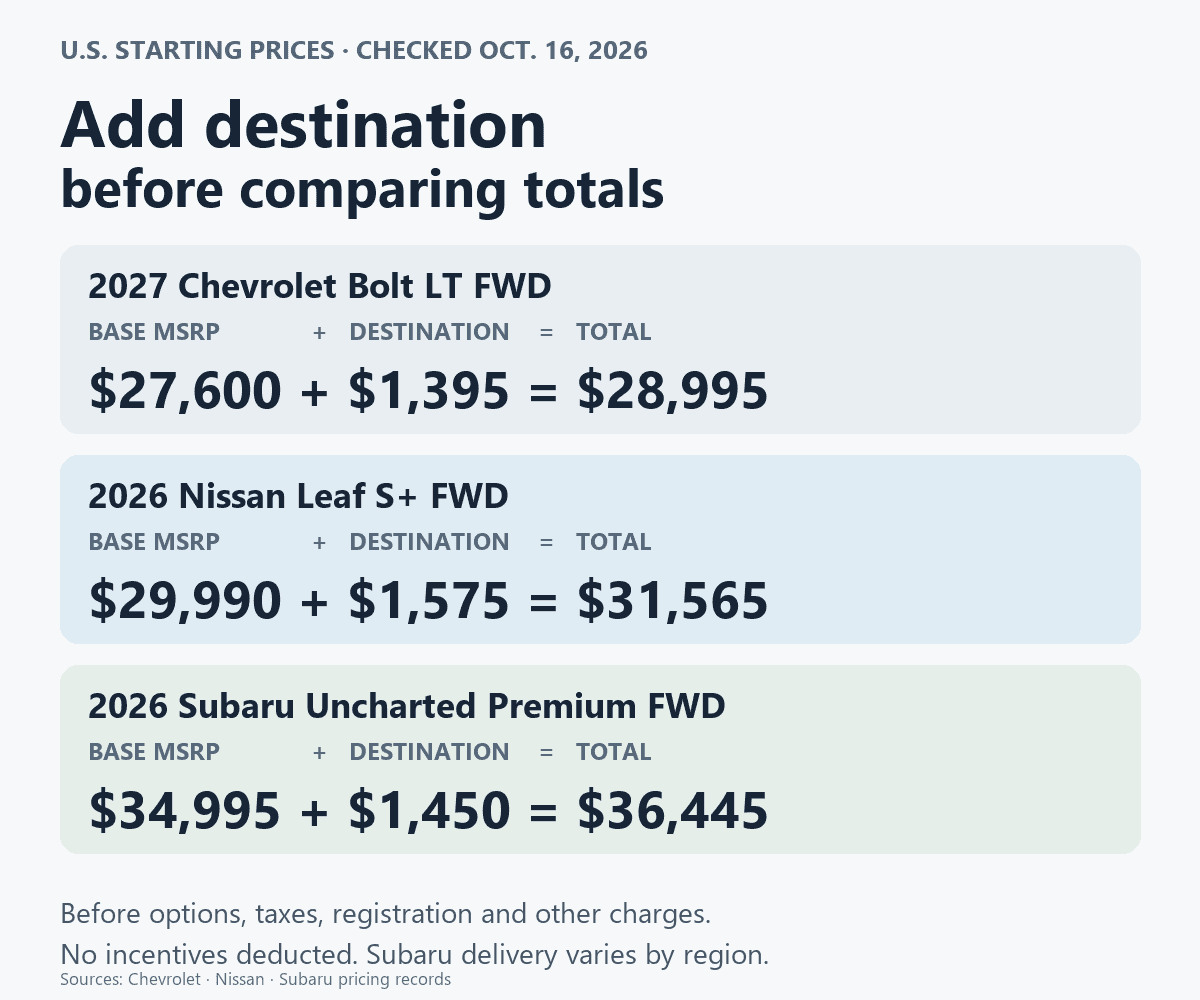
These three U.S. configurations offer a useful starting comparison. Each is front-wheel drive, and each row names the model year and trim attached to its price and range. This is a selected comparison checked October 16, 2026, rather than a complete ranking of every EV or a statement about vehicles in stock.
| Exact configuration | Base MSRP | Destination | MSRP + destination | EPA-estimated range |
|---|---|---|---|---|
| 2027 Chevrolet Bolt LT FWD | $27,600 | $1,395 | $28,995 | 262 miles |
| 2026 Nissan Leaf S+ FWD, 75-kWh battery, 18-inch steel wheels | $29,990 | $1,575 | $31,565 | 303 miles |
| 2026 Subaru Uncharted Premium FWD | $34,995 | $1,450 | $36,445 | 308 miles |
Chevrolet’s freight-charge schedule supplies the Bolt’s $1,395 line. Nissan’s current trim table supplies its $1,575 charge. The Subaru figures come from its December 9, 2025 pricing announcement, which lists $1,600 delivery in Alaska and possible variations in several other states. Confirm the destination charge on the actual quote.
The model-year labels matter even when shopping on the same day: the Bolt here is a 2027 model, while the other two are 2026s. An announcement, current specification page and individual seller’s offer serve different purposes. None of these published figures establishes the price or availability of a particular car.
Separate additional range from additional equipment
At these prices, the Leaf costs $2,570 more than the Bolt and has a 41-mile higher EPA range estimate. The Uncharted adds $4,880 over the Leaf for a five-mile increase in the rating. Those differences describe the selected complete vehicles; they do not establish what an extra mile is worth or which car has the lowest ownership cost.
Range also changes within a model line. Nissan lists 303 miles for S+, 288 for SV+ and 259 for Platinum+. Those versions have different equipment and wheel specifications. Carrying the longest-range headline into a higher trim would misstate the comparison.
The Uncharted row is the front-drive Premium, not an AWD version. Our Uncharted trim comparison explains the price, equipment and range changes for Sport and GT. Use that distinction if AWD is part of your shopping requirements rather than attaching the entry price to a different drivetrain.
A fast-charge time is only one part of the charging plan
Chevrolet advertises a GM-estimated 25 minutes from 10% to 80% on public DC fast charging. Subaru quotes approximately 28 minutes over the same percentage window. These are manufacturer claims, not an independent test under identical conditions, and neither describes a full recharge from empty.
The Department of Energy’s charging guidance explains that battery state, capacity and type, the vehicle’s charger, station output and electrical service affect charging time. A high-powered station’s label does not establish the power your car will receive throughout a session.
For home charging, identify the equipment, electrical work and parking permission required at your address before assigning a cost. For public charging, check compatible stations on the trips you actually take, their posted prices and the time you would spend there. A nearby map pin alone does not answer those questions.
Build the final comparison around your use
Keep three records beside each other: an itemized vehicle quote, a realistic charging plan and the exact configuration’s range rating. Add insurance quotes and any home-charging installation proposal separately. This table makes no assumption about rebates, financing, fuel savings or resale value.
Then check the physical details a price list cannot settle: driving position, rear-seat access, luggage fit and the controls you use every day. The lowest starting figure can narrow a shortlist, but the car and charging arrangement still need to work together for your routine.
0 comment(s) so far on Affordable EVs Compared: Prices, EPA Range and Charging