

2026 Grand Highlander Hybrid: MPG, MAX and Family Space
Three-row hybrids
Updated October 16, 2026
The 2026 Toyota Grand Highlander’s regular Hybrid and Hybrid MAX use different powertrains. Start a family-SUV comparison with the engine and transmission, then check seating and space.
Hybrid and Hybrid MAX are different choices
Toyota’s 2026 U.S. brochure lists the regular Hybrid’s 2.5-liter engine, 245 combined net horsepower and ECVT. Hybrid MAX pairs a turbocharged 2.4-liter engine with 362 net combined horsepower, a six-speed automatic and full-time electronic all-wheel drive.
Nightshade uses the regular Hybrid’s ECVT and on-demand AWD. Confirm the engine and transmission when a listing only says “hybrid AWD.”
Our eCVT versus CVT guide explains why similar abbreviations can conceal different designs. Its Corolla and Accord examples are model-specific; they are not instructions for servicing a Grand Highlander. For this SUV, match the full powertrain description to its own maintenance documentation.
Compare the EPA configurations before using an MPG number
The federal fuel-economy database separates the 2026 front-drive 2.5-liter Hybrid, AWD 2.5-liter Hybrid and AWD turbocharged 2.4-liter hybrid. The last matches Toyota’s Hybrid MAX powertrain description. Their rounded city, highway and combined estimates are:
| Configuration | City | Highway | Combined |
|---|---|---|---|
| 2.5-liter Hybrid, FWD | 37 | 34 | 36 |
| 2.5-liter Hybrid, AWD | 36 | 32 | 34 |
| 2.4-liter turbo hybrid, AWD | 26 | 27 | 27 |
For a highway-heavy trip, read the highway column rather than assuming the combined figure describes that route. A rating is a comparison estimate, not a promised trip result. Before purchasing, check the exact vehicle’s fuel-economy label rather than assigning one database row to every trim or equipment combination.
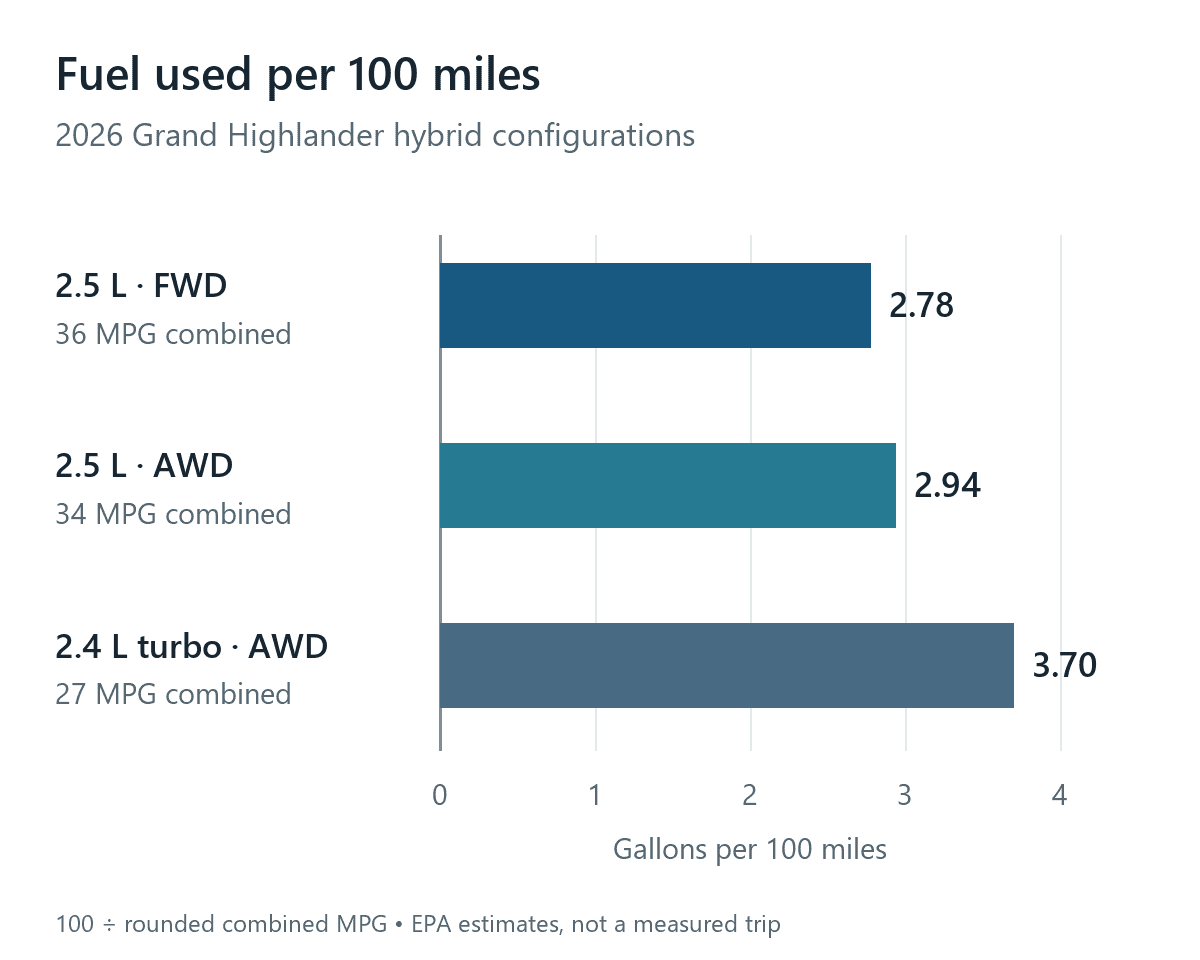
Another way to read the combined estimates is fuel per 100 miles: divide 100 by MPG. The three rows become approximately 2.78, 2.94 and 3.70 gallons, respectively. Those are calculations from rounded estimates, not measurements from our own drive. They show consumption on the same distance basis without inventing a fuel price, annual mileage or payback period.
Keep the third row and luggage in the same plan
Toyota publishes 20.6 cubic feet behind the third row with both rear rows upright. Assess luggage in that arrangement; folding a seat to add room changes the passenger plan. Cargo and load capacity are limited by weight and distribution, and luggage must be secured.
Nightshade has seven seats with second-row captain’s chairs; the brochure does not list an eight-seat bench option for that grade. Confirm the actual seating layout before comparing prices.
Bring the luggage or everyday equipment that determines your space needs when evaluating a vehicle while parked. Decide which seats must remain available, then assess access and storage in that arrangement. A cubic-foot figure cannot tell you whether your particular stroller, instrument case or other bulky item fits through the opening.
Make the comparison about your use
Start with the required seating and luggage arrangement. Next identify the powertrain and compare its appropriate fuel-economy estimate. Only then compare written vehicle prices and equipment. An additional horsepower rating, a higher MPG figure and an extra seat answer different questions; none alone establishes the right purchase or a particular used vehicle’s condition.
0 comment(s) so far on 2026 Grand Highlander Hybrid: MPG, MAX and Family Space