

2027 Porsche Taycan: Battery, NACS and E-Shift
Electric car updates
Updated October 16, 2026
The 2027 Porsche Taycan update changes battery equipment and charging hardware as well as the driving interface. The details matter when comparing a new model with an earlier car.
What Porsche announced for 2027
Porsche’s June 17, 2026 U.S. announcement identifies the following changes.
| Feature | Announced scope |
|---|---|
| Performance Battery Plus | 105 kWh; standard across the range |
| DC connection | Passenger-side NACS, except Turbo GT with Weissach Package; CCS adapter provided |
| AC connection | Driver-side J1772 retained |
| Battery information | New state-of-health display |
| E-Shift | Optional; standard on Turbo GT |
E-Shift’s eight paddle-selected gears are simulated, and the feature can be switched off.
The rear-drive Taycan was announced at $111,900 plus $2,350 delivery, processing and handling: $114,250 before taxes, title, registration, options and dealer charges. Fall 2026 deliveries were projected.
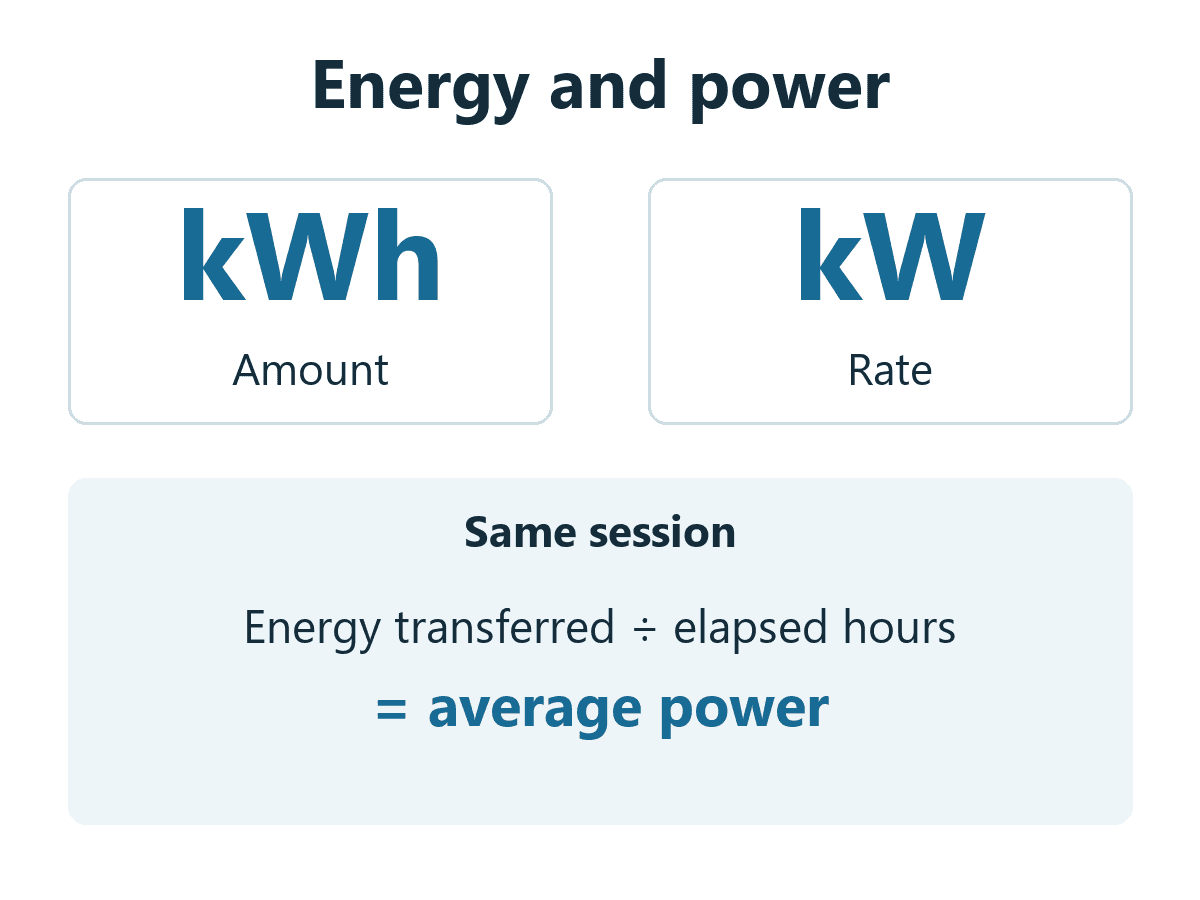
Battery capacity is different from charging power
Kilowatt-hours describe stored or transferred energy; kilowatts describe the rate of transfer. A battery-capacity figure therefore cannot tell you how long a charging stop will take. Nor does the connector identify the power the car will receive throughout a session.
The Department of Energy’s charging-equipment explanation identifies battery state of charge, capacity and type, vehicle charging capability, station output and electrical service as relevant factors. The equipment and the car each impose limits. Comparing only the largest number on a charger misses the conditions that determine a stop.
For a practical comparison, use a charging interval with its starting and ending battery percentages and documented conditions. Our explanation of charger ratings versus session averages shows why a peak and an average answer different questions. Its arithmetic example is illustrative, not a Taycan test.
Compare the exact vehicle’s equipment
Separate the connection needed at a regular AC charging location from the connection needed at a DC travel stop. Check the vehicle’s supported equipment and the operator’s station details together, including any adapter requirement. A connector change is useful information, but it is not a promise that every station supports every vehicle.
When comparing an older Taycan, read that model year’s equipment and battery documentation alongside the 2027 list.
0 comment(s) so far on 2027 Porsche Taycan: Battery, NACS and E-Shift