

Used Cars Under $20,000: Compare the Costs That Matter
Used-Car Buying
Updated October 16, 2026
A car advertised below $20,000 may not fit a $20,000 purchase budget. Compare its written transaction total and documented work before debating mileage. Leave room for the vehicle’s needs as well as the purchase.
Define what the $20,000 must cover
Separate a vehicle-price ceiling from the whole purchase budget. The FTC recommends written out-the-door prices. An itemized quote identifies taxes, registration, fees and chosen extras rather than assuming the advertised price is final.
Keep insurance, fuel and a repair or maintenance reserve visible. Use an insurance quote and the particular vehicle’s needs; the amount left after signing must also cover any ownership expenses included in your budget.
Let documented work change the comparison
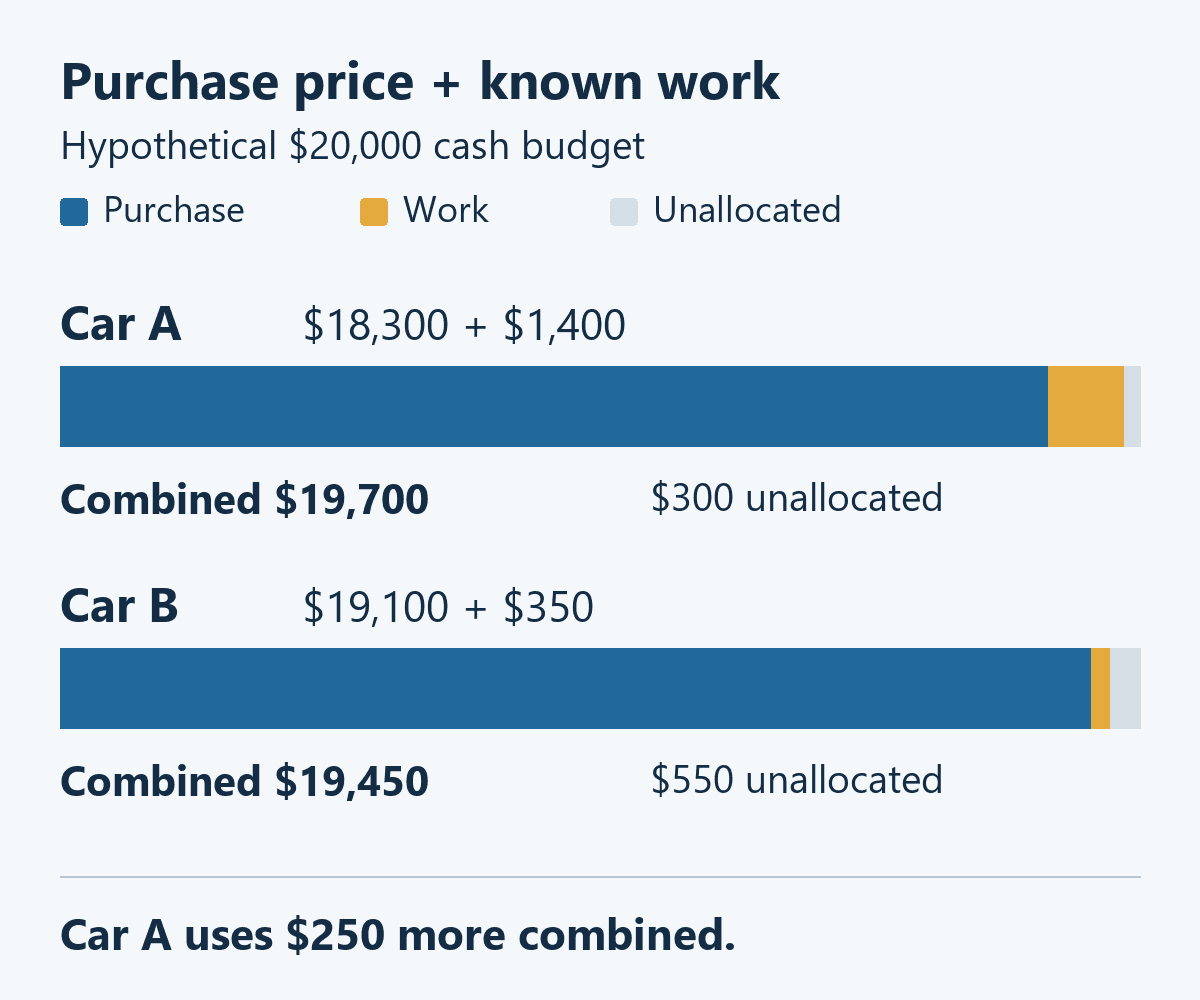
The following example uses a hypothetical $20,000 cash budget and invented comparison amounts. Assume the written purchase totals include the applicable transaction charges, and that independent inspection has produced the stated repair estimates. These are not listings, dealer quotes or evidence about any actual car.
| Budget item | Car A | Car B |
|---|---|---|
| Written out-the-door purchase total | $18,300 | $19,100 |
| Estimated work identified before purchase | $1,400 | $350 |
| Combined amount | $19,700 | $19,450 |
| Unallocated from $20,000 | $300 | $550 |
Car A has the lower purchase total but uses $250 more once the stated work is included. That arithmetic does not establish Car B as the better vehicle. The estimates could change, and neither remaining amount establishes an adequate reserve for insurance, ordinary running costs or an unexpected repair.
Compare the same kind of value
Kelley Blue Book’s value definitions use details such as year, mileage, trim, equipment, location and condition. They also distinguish trade-in and private-party values. Do not compare a dealer’s asking price with a trade-in estimate as though both describe the same transaction, or treat a valuation range as an inspection.
Check what the extra money buys in the actual car: the fitted driver-assistance equipment, seats, cargo space or phone connection you need. Compare those features at the same model-year and trim level before paying a premium for a badge or a generic listing description. A feature that is essential to your use deserves confirmation, not an assumption from the model name.
Make condition evidence useful to the budget
The FTC distinguishes a history report from independent mechanical inspection, even for a seller-inspected or certified car. Request findings and repair estimates tied to the make, model and VIN, separating work needed now, scheduled maintenance, completed repairs and items not checked.
Revise the comparison using those findings. Neither an assumed “normal” mileage nor an arbitrary repair allowance resolves an unanswered condition question, and low mileage does not supply missing maintenance records.
Keep financing separate from the vehicle comparison
If financing is involved, the CFPB distinguishes amount financed, APR, finance charge and total of payments. A monthly payment does not show the whole credit cost. Our guide to monthly payment versus total car cost explains how to keep the purchase, borrowing and running budget separate. Compare actual written terms without assuming an approval or rate.
0 comment(s) so far on Used Cars Under $20,000: Compare the Costs That Matter