

2026 Honda CR-V Interior: Cargo Space by Trim
Cabin space
The 2026 U.S. Honda CR-V has five seats across its gasoline and hybrid trim lines, but its published cargo figures are not interchangeable. Powertrain and trim affect the numbers, and maximum cargo volume describes a different arrangement from carrying rear-seat passengers. Start with the version you are considering, then compare the seating and luggage layout you will actually use.
Updated October 16, 2026
Gasoline and hybrid cargo space differ
Honda’s 2026 U.S. specifications identify LX, EX and EX-L as the turbocharged gasoline trims. Sport, TrailSport, Sport-L and Sport Touring use the two-motor hybrid powertrain. This comparison covers those conventional gasoline and hybrid models; the separately specified CR-V e:FCEV is outside its scope.
| Trim group | Behind second row | Published maximum behind first row |
|---|---|---|
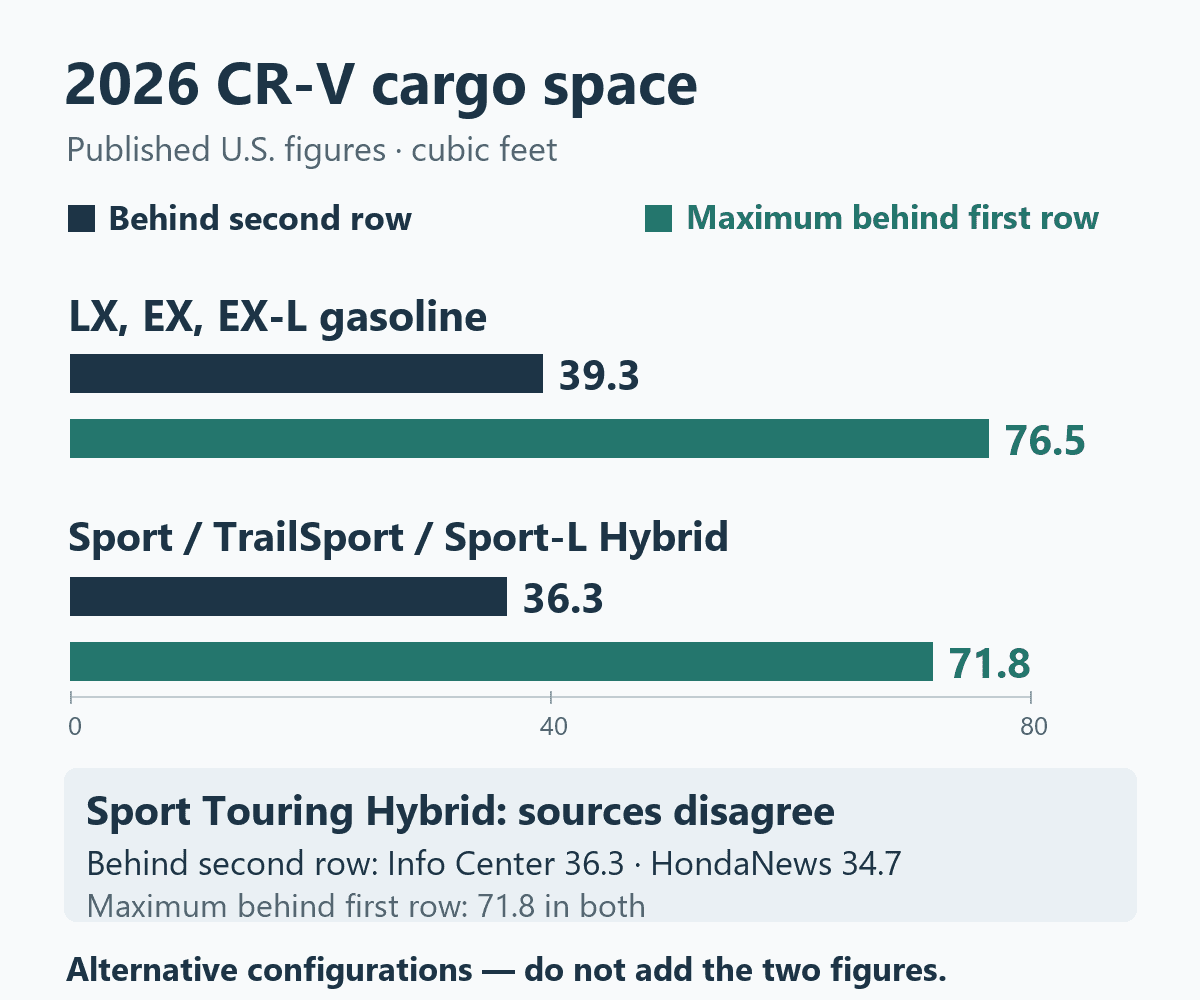
| LX, EX, EX-L gasoline | 39.3 | 76.5 |
| Sport, TrailSport, Sport-L Hybrid | 36.3 | 71.8 |
| Sport Touring Hybrid | 36.3 in Info Center; 34.7 in Honda’s dated newsroom table | 71.8 |
The distinction is useful before choosing a powertrain. A hybrid’s economy or equipment appeal does not make its published cargo figure the same as a gasoline EX-L’s. Likewise, the gasoline model’s 76.5-cubic-foot maximum should not be assigned to the hybrid lineup.
Honda’s Sport Touring pages disagree
Honda’s 2026 Info Center table lists 36.3 cubic feet behind the Sport Touring Hybrid’s second row. Honda’s August 25, 2025 newsroom specification table lists 34.7. The publications do not explain the difference. That trim’s exact seats-up figure remains unresolved in the published specifications.
Read the measurement footnote
Honda’s newsroom cargo footnote cites SAE J1100 and adds, where applicable, floor space between seating rows with seats in their forward-most and upright position. That qualification matters when a maximum number is compared with space available behind a driver’s normal seating position.
The standard and maximum entries are alternative configurations, not amounts to add together. The maximum behind-first-row figure also is not the luggage allowance for five seated people. For a passenger-and-cargo trip, begin with the behind-second-row specification, then check the actual seatback position and usable opening. A volume total does not supply the width, height and shape of the particular item you need to load.
Equal legroom does not mean identical cabin space
Honda lists 41.3 inches of front legroom and 41.0 inches of rear legroom throughout this lineup. Passenger volume is 106.0 cubic feet in LX and 103.5 in every other trim. Front headroom is 40.0 inches in LX versus 38.2 elsewhere; rear headroom is 38.2 across the range.
Those figures describe different dimensions rather than extra space that can be exchanged between occupants. The greater LX passenger-volume total does not mean it has more listed rear legroom. When comparing seating, set the front seat for its intended occupant before assessing the space behind it. Otherwise, an artificially forward seat can make the rear accommodation look better than it will be in regular use.
Seats, screens and everyday cabin equipment
Cargo room is only part of the 2026 CR-V interior comparison. Honda’s U.S. equipment table lists a 9-inch touchscreen, wireless Apple CarPlay and wireless Android Auto throughout the gasoline and hybrid lineup. A larger trim number does not buy a larger center touchscreen in this model year.
The seating equipment does change. LX has manual driver-seat height adjustment; the other trims have a power driver’s seat and heated front seats. EX-L, Sport-L Hybrid and Sport Touring Hybrid add leather-trimmed seats and two-position driver-seat memory. Rear USB-C charging ports are listed on every trim except LX. Those are specific equipment differences to check alongside headroom and the driving position.
Sport Touring Hybrid also lists Google built-in. That system should not be confused with the phone-based Android Auto connection offered across the range. Our Android Auto and Apple CarPlay comparison explains what depends on the phone and what depends on the vehicle. These specifications describe the 2026 U.S. lineup; verify equipment separately on an earlier used CR-V.
Compare the arrangement, not just the total
Honda’s rear-seat feature guide describes reclining, 60/40-split seatbacks. Folding one section can accommodate a longer item while retaining another seating position, but the remaining space still needs to match the passengers and load. Its cargo-area guide identifies four tie-down anchors; the opening and securing arrangement are part of practical utility, too.
Use the 2026 owner’s instructions when folding and restoring the seats. Honda warns that a folded seatback must not press against the front passenger seat because it can interfere with the weight sensors. It also calls for secured cargo and properly latched seating components before driving.
For a stroller or rigid case, comparing the actual item with the tailgate opening and the seating arrangement answers a more specific question than the largest advertised volume.
0 comment(s) so far on 2026 Honda CR-V Interior: Cargo Space by Trim