

AAA’s EV Weather Study: Read the Assumptions
Efficiency research
Updated October 17, 2026
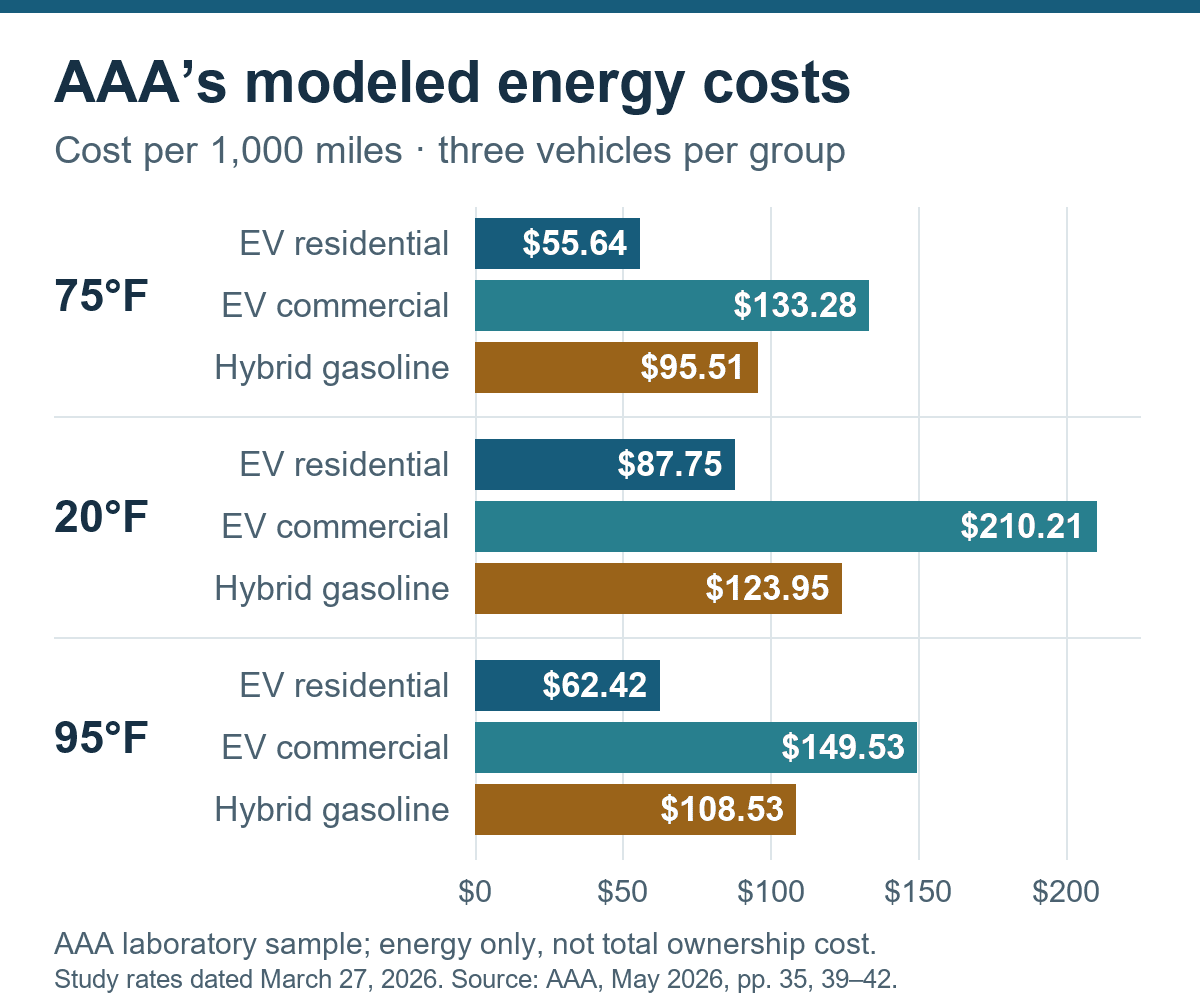
AAA’s May 2026 study tested three battery-electric vehicles and three conventional hybrids at 20°F, 75°F and 95°F, with cabin climate control set to 72°F. Its modified laboratory procedures differ from EPA certification testing.
The full study comparison
Our full AAA weather-study analysis explains the fleet, separate range/efficiency measures and modeled energy costs.
Range and cost answer different questions
EPA/DOE’s label explainer defines MPGe using the energy equivalent of a gallon of gasoline. It describes kWh per 100 miles as consumption. Neither unit is a price. Keep consumption and the applicable electricity rate together when estimating energy cost. A label’s cost estimate also has mileage and energy-price assumptions; read them rather than treating the displayed amount as your bill.
Apply the question to the actual journey
The Department of Energy’s consumer guidance asks drivers to consider daily mileage and compatible charging along longer routes. Hills, heavy loads and substantial heating or air-conditioning use can reduce range. Check the stops the journey requires and leave an appropriate buffer. Those details are more useful than applying a single study percentage to every vehicle.
0 comment(s) so far on AAA’s EV Weather Study: Read the Assumptions