

2026 Sequoia Towing Test: Results, Setup and Limits
Towing test context
Updated October 16, 2026
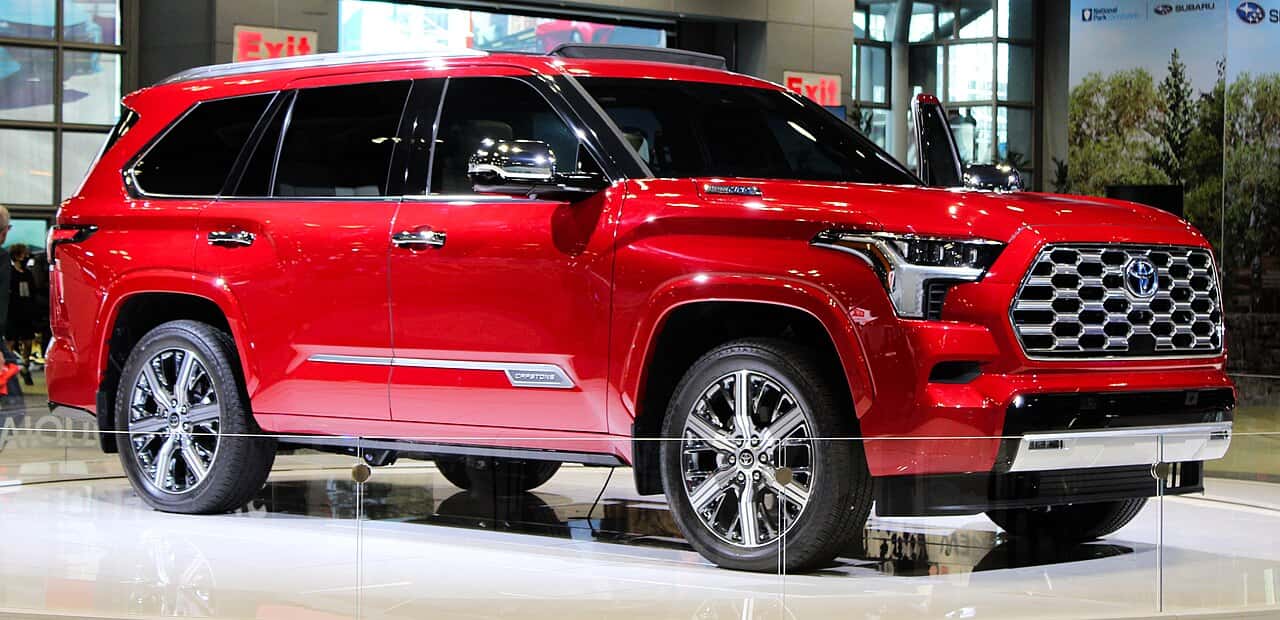
Cars.com reported strong towing power but some trailer push in its 2026 Toyota Sequoia Capstone test. It returned 10 mpg with a travel trailer reported at 4,850 pounds; different weather during its towing and unladen runs limits a direct fuel-economy comparison.

The reported test and its limits
Matt Barnes’ May 5, 2026 Cars.com report used a Sequoia Capstone with a reported 4,850-pound travel trailer on a 63-mile freeway, city and mountain route. Equipment included optional towing mirrors, adaptive shocks and rear load-leveling air suspension. Barnes used an adjustable-height ball mount rather than the weight-distribution and sway-control setup he discussed.
The report put unladen fuel economy at 22.8 mpg, with both results averaging trip-computer and calculated readings. Barnes reported no wind. Towing temperatures were in the mid-40s to mid-50s Fahrenheit; the unladen run was in the mid-70s to low 80s.
The report gives no measured tongue load, occupant-and-cargo weight or loaded axle weights. Those figures are still needed for the specific SUV and trailer being evaluated.
What Toyota’s equipment list establishes
Toyota’s 2026 Sequoia brochure lists the i-FORCE MAX twin-turbo V6 hybrid at 437 horsepower and 583 pounds-feet of torque, with a 10-speed automatic. Its equipment table lists a Class IV receiver, a 7-pin/4-pin connector and an integrated trailer brake controller across the trims. These are equipment descriptions, not a weight measurement of the tested vehicle.
The brochure says Tow/Haul and Tow+ change transmission settings. Its trailer-brake-controller disclosure describes operation with an electrically braked trailer and explains that the controller does not replace safe towing practices. A towing mode, air suspension or a powerful engine does not increase the vehicle’s published limits.
Compare standard and optional equipment when evaluating a different Sequoia. A shared trim name does not establish which available suspension or mirrors were fitted to an individual used example. The brochure also warns that cameras do not provide a comprehensive view; a camera image cannot establish every clearance around a vehicle and trailer.
Build the comparison from the actual records
Start with the model year, drivetrain, installed equipment and labels of the SUV being considered. Toyota’s manuals and warranties portal is the manufacturer starting point for the matching owner’s information. Use the applicable vehicle and trailer instructions to resolve the limits, rather than substituting a model-wide maximum or another owner’s setup.
A useful comparison file separates the following evidence. A missing entry is a question to resolve, not spare capacity to assume.
| Record | Question it helps answer |
|---|---|
| Vehicle identity and loading records | Which configuration, limits, passengers, cargo and added equipment are involved? |
| Loaded trailer and hitch records | What are the actual trailer and tongue loads, and which hitch equipment is installed? |
| Trip conditions and fuel records | How closely does the intended use resemble the reported route and conditions? |
The towing and payload checklist explains how to put occupants, cargo, added equipment and hitch load on one worksheet. Its Ford examples and hypothetical amounts are not Sequoia ratings. Use the recording framework with the correct Toyota information and actual measurements.
Keep towing miles separate from ordinary-driving miles in a fuel budget. A review can answer the power and equipment questions while leaving the household’s loading question open. Resolve that question from the specific vehicle, trailer, instructions and weight records.
0 comment(s) so far on 2026 Sequoia Towing Test: Results, Setup and Limits