

Used Luxury Cars Under $30,000: What to Check Before Buying
Used-luxury buying
A $30,000 limit can narrow a used-luxury search, but it cannot tell you which car will fit your budget after the purchase. Start with the exact vehicle, its equipment and the work it needs. A lower asking price is useful only when the rest of the numbers make sense.
Updated October 16, 2026
Decide what the $30,000 has to cover
If $30,000 is your total purchase budget, leave room for taxes, registration and other purchase charges rather than treating it as the maximum advertised price. Ask for an itemized written out-the-door quote for the actual car. The FTC’s used-car guidance also recommends considering insurance, fuel and maintenance before shopping.
Keep money for initial work separate from the purchase payment. Request an insurance quote using the VIN, then price the maintenance and repairs identified for that car. Use those estimates to decide how much cash should remain after the purchase.
Identify the powertrain before comparing brands
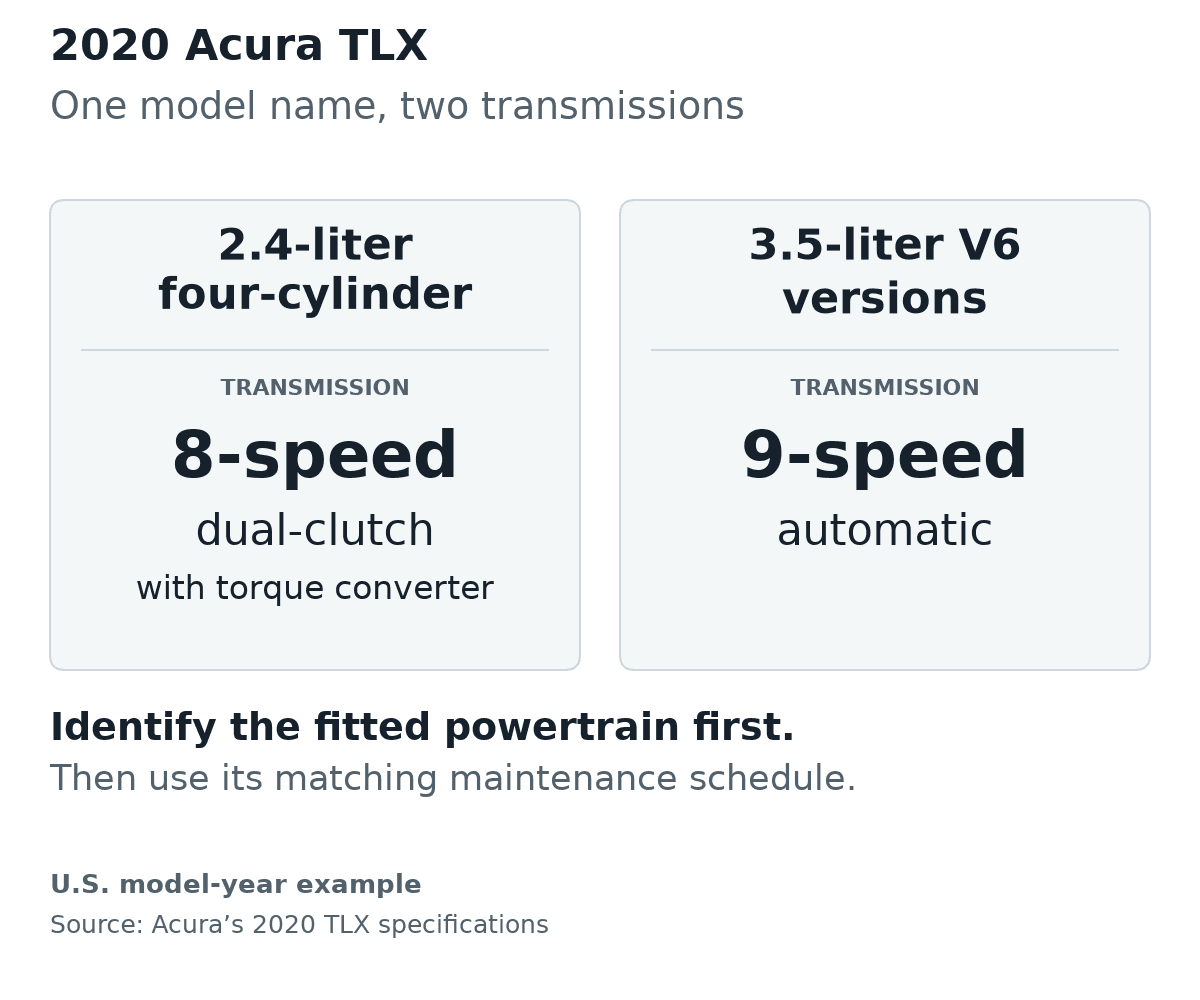
Record the model year, engine, transmission, drive system and installed options. A model name alone may conceal a meaningful difference. Acura’s 2020 TLX specifications, for example, list an eight-speed dual-clutch transmission with a torque converter for the 2.4-liter four-cylinder, while the 3.5-liter V6 versions use a nine-speed automatic. Match the service schedule to the powertrain actually fitted.
That same specification sheet lists premium unleaded 91-octane fuel as recommended for all three powertrain columns. Read the matching owner’s manual for the exact fuel instructions, including any minimum grade. Do not turn one model’s recommendation into a rule for every luxury car.
Turn the service history into a work list
Compare dated invoices and mileages with the applicable maintenance schedule. Audi’s service resources provide a lookup by VIN or model year, model and trim, with mileage available for more specific recommendations. Use that level of detail rather than a generic transmission-fluid interval copied from another model.
Ask which engine-oil, brake-fluid, spark-plug and transmission-service items apply, which are documented as complete and what is next due by time or mileage. A service entry should identify the work; a missing entry should remain a question. Ask for written estimates before assigning a budget.
| What to identify | What to request |
|---|---|
| Tires and wheels actually fitted | Sizes, condition and tread measurements, plus a replacement quote for the correct specification. |
| Scheduled maintenance | The matching schedule, completed invoices and an estimate for items coming due. |
| Optional equipment | Confirmation of what is fitted and whether it works; investigate a fault before pricing an assumed replacement. |
| Unresolved inspection findings | Written findings, access limits and estimates tied to this VIN. |
Check remaining coverage by component
A hybrid badge does not settle the warranty question. Lexus’s announcement for U.S. 2020 hybrids extended hybrid-battery coverage to 10 years from first use or 150,000 miles, whichever comes first, including subsequent owners. Other listed hybrid-system components retained eight-year/100,000-mile coverage. The battery and the rest of the system therefore have different stated limits.
For the actual car, verify its original in-service date, mileage, warranty documents and applicable exclusions with the manufacturer. A model-year announcement does not prove that an individual repair is covered, establish battery condition or cover the entire vehicle.
Make the inspection change the comparison
The FTC recommends an independent mechanical inspection even when a vehicle has already been inspected or certified. A history report does not replace it. Our used-car inspection checklist helps record observations and questions for the mechanic. Request written findings and estimates, with immediate repairs separated from future maintenance.
Also check the VIN through NHTSA’s recall lookup. It has limits, including some newly announced recalls and older campaigns, and does not show recalls already repaired. A zero-result screen is not a condition report.
Compare the cars again using the written purchase quote, identified work, running costs and unresolved questions. Choose the equipment you will use and the obligations you can support, rather than treating a former luxury-car sticker price as proof of today’s value.
0 comment(s) so far on Used Luxury Cars Under $30,000: What to Check Before Buying