

Buying a Used Jeep Wrangler: What to Verify
Wrangler buying guide
Updated October 16, 2026
A used Wrangler is easier to compare when its model year, equipment and modification history are clear. Start with the actual vehicle and its records, then check whether its condition, space and intended use fit what you need.

Identify the Wrangler generation
Pay particular attention to the model name on a 2018 listing. Jeep published both a 2018 Wrangler JK owner’s manual and an all-new 2018 Wrangler JL user guide. The model year alone does not tell you which vehicle or instructions you have.
Choose the body style for the space you use
Compare the two-door and four-door vehicles in the same model year using their published dimensions, seating and equipment. Try the rear-seat access and load the items you normally carry, with the seats you need in use. Door count alone does not settle a trail, trip or towing plan.
Inspect modifications, structure and roof components
Pay particular attention to modifications, underbody condition and removable-roof components on the actual Wrangler.
Lift kits and modifications: Ask for the installed part numbers, installation records and any related work. The 2025 U.S. Wrangler manual warns that alterations can affect roadworthiness and safety. Have a qualified shop assess fitment, condition and compatibility with the actual vehicle. A lift’s height, price or brand alone does not establish that the installation is suitable.
Frame rust: Ask a qualified inspector to assess the frame, mounting points, crossmembers and underbody. Visible rust needs context; appearance alone does not establish structural condition or the extent of corrosion.
Transfer case and axles: Verify the equipment actually installed and ask about leaks, damage and service records. Have any operating concern evaluated using the exact vehicle’s manual and service procedures rather than trying an unfamiliar four-wheel-drive mode during a casual test drive.
Soft-top or hard-top condition: Check fabric, windows, seals, latches and mounting points as applicable. Confirm that all panels, hardware and any included alternative top are present. Obtain a quote for the exact replacement parts and labor before assuming a repair cost.
Water intrusion: Note damp carpet, odors, stains or corrosion and ask for the cause to be investigated. A removable roof or the presence of drain plugs should not be taken as reassurance that water damage is harmless.
Check the VIN and recall records
Use the actual VIN when checking recalls. NHTSA distinguishes a VIN result from a general year, make and model search. Its tool reports unrepaired recalls, with limits that include some newly announced recalls and previously completed work. A model-year list or a history report does not establish this Wrangler’s current recall or repair status. Ask for the campaign number and documentation of the specified work.
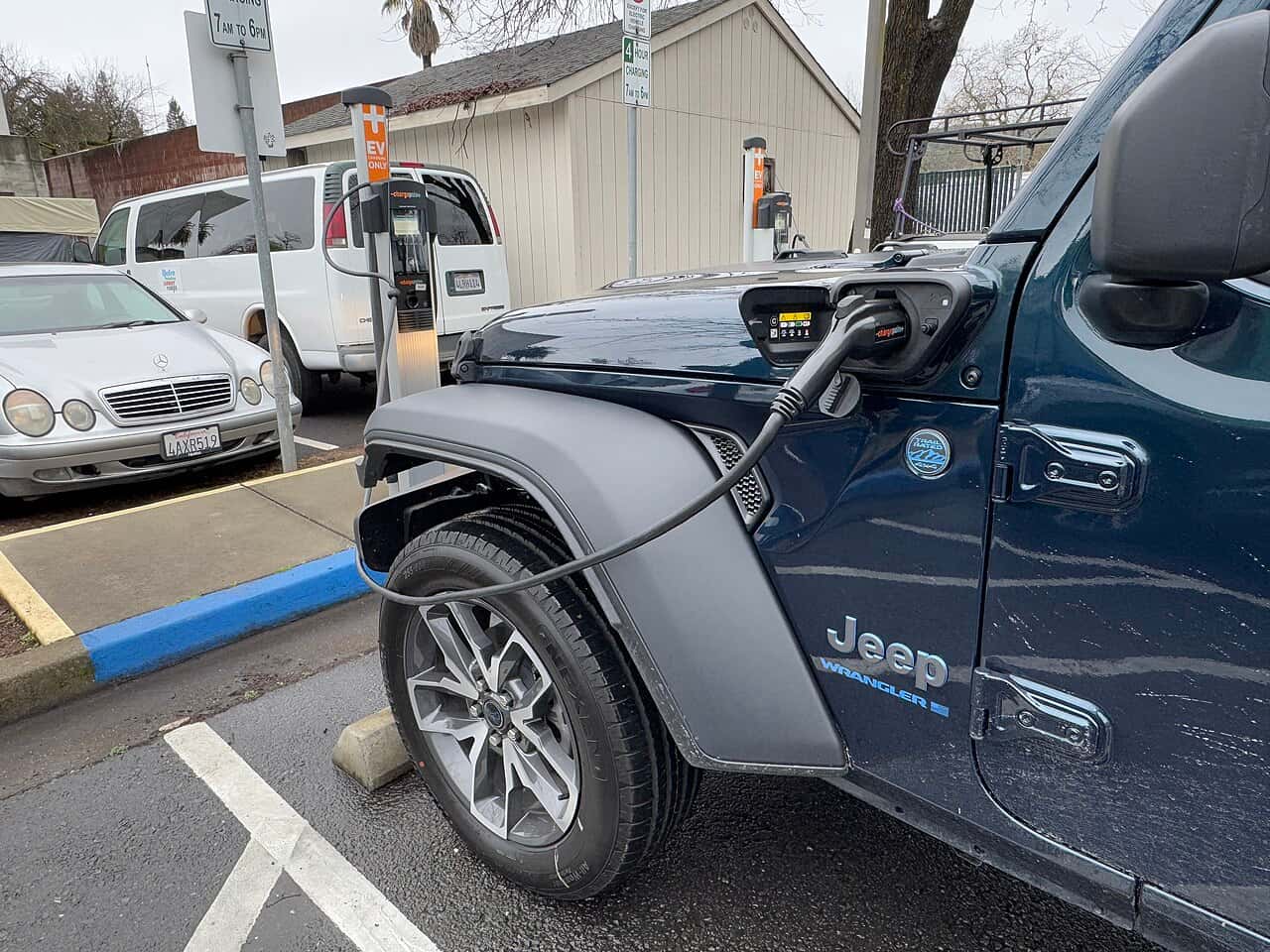
Powertrain matters here too. The December 2025 filing for recall 68C / 25V741 covers certain 2020–2025 Wrangler plug-in hybrids and directs affected owners not to recharge and to park away from structures or other vehicles until remedied. That is an affected-vehicle instruction, not a finding about every Wrangler or the vehicle in a photograph.
If you plan to tow it behind a motorhome
Recreational towing is a separate question from how much trailer weight a Wrangler can pull. The 2025 Wrangler flat-towing guide explains the manual, equipment and weight checks for its specific U.S. gasoline 4WD example. It does not establish eligibility or a preparation procedure for a 4xe, a different model year or a modified drivetrain; use the applicable instructions for that vehicle.
Verify the equipment behind the trim badge
Match the build information to the engine, transmission, transfer case, roof and options actually fitted. On a modified Wrangler, have the installed axles, lockers, suspension and other changed components identified and assessed. A Sport, Sahara or Rubicon badge does not establish that the hardware is original or properly maintained.
Compare the actual purchase cost
Use current listings for the exact year, body style and equipment you are considering. Compare:
- Mileage, service records and documented condition.
- Factory equipment, installed modifications and included top components.
- Any work identified by inspection and its written estimate.
- The itemized out-the-door price, including charges not already in the listing.
Inventory and asking prices change. Confirm the exact vehicle’s availability and quote rather than applying an old range to today’s purchase.
Review the inspection findings
Craig & Landreth uses an inspection. For the Wrangler you are considering, ask which checks were performed, what was found, what work was completed and what remains due. Review the modification records alongside those findings.
The FTC recommends an independent mechanical inspection even when a dealer has inspected or certified a used car. Ask for a written report identifying the vehicle and VIN, with an estimate for necessary repairs. A history report and a checklist count do not replace the findings on this Wrangler.
0 comment(s) so far on Buying a Used Jeep Wrangler: What to Verify