

Five Reasons to Have Tires and Alignment Checked
Tires and handling
Updated October 16, 2026
Pulling, uneven tread and a crooked steering wheel are reasons to describe a handling problem, not enough evidence to prescribe an alignment. Before booking work, separate what changed from what you think caused it. These five observations help explain the concern without turning a symptom into a parts diagnosis or assuming an adjustment will fix it.
1. A persistent pull to one side
Tell the shop when you first noticed the pull and whether it followed tire work or an impact. Distinguish a directional pull from a vibration through the wheel or seat. Describe conditions already encountered; do not release the steering wheel or arrange another drive to demonstrate the concern.
Michelin’s handling guidance identifies pressure differences, wear and tire damage among relevant checks. Alignment may be part of the investigation, but a pull alone does not establish which angle is wrong or whether a tire is damaged.
2. A steering wheel that sits off-center
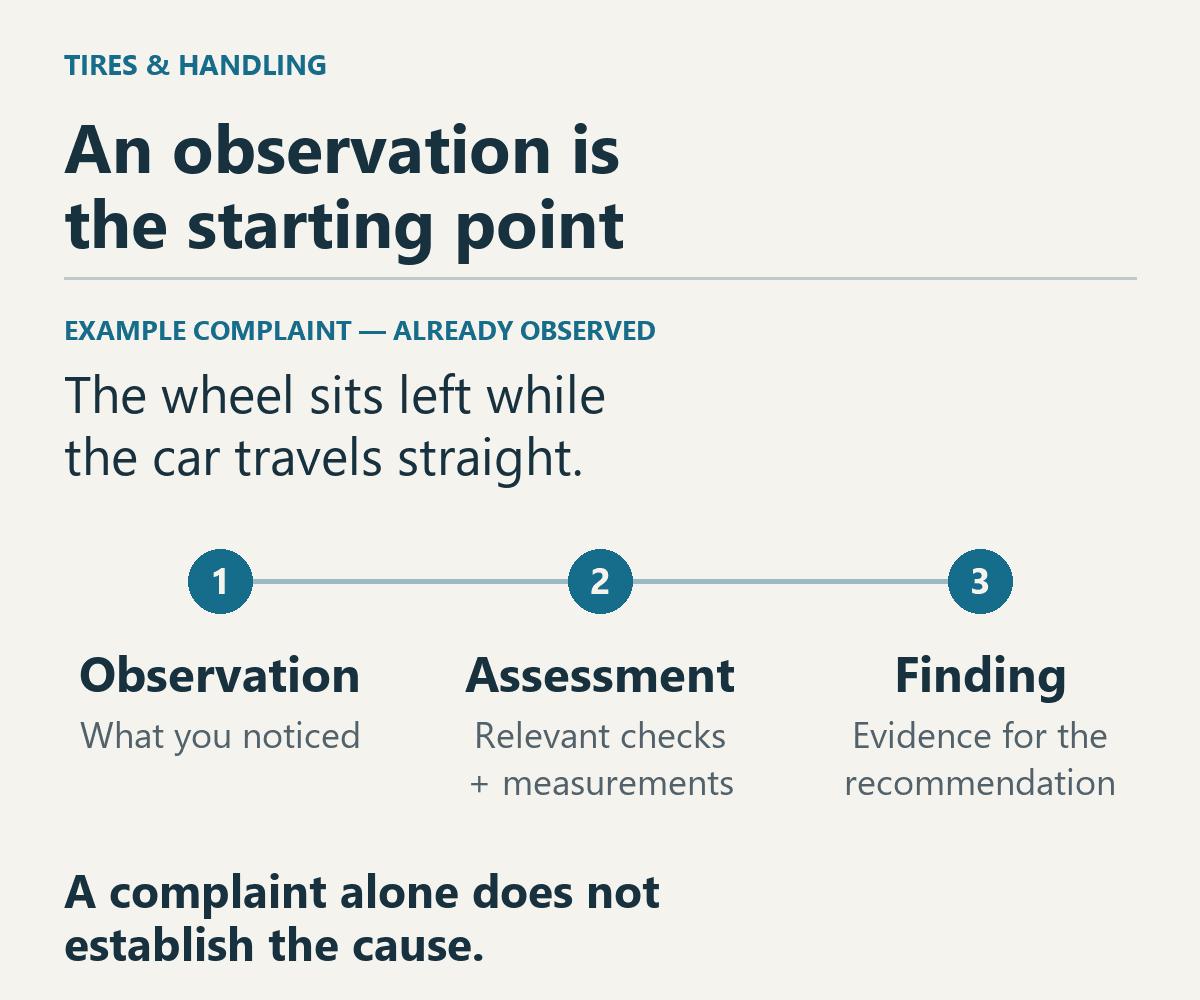
Describe the steering-wheel position separately from the vehicle’s direction of travel. “The wheel sits left while the car travels straight” conveys a different observation from “the car pulls left.” Mention any recent alignment, steering or tire work, and keep the previous invoice if available.
An off-center wheel warrants assessment against the vehicle’s specifications. It does not, on its own, prove that a steering component has failed or show which adjustment is appropriate. Ask for the finding that connects the observation to the proposed work.
3. Uneven tread wear
Record which tire and which part of its tread look different. Photographs taken while parked can preserve the pattern for the technician. Avoid assigning a precise alignment fault from an edge-wear photograph: inflation, geometry and component condition need to be considered together.
The 2021 gasoline Honda CR-V manual calls for an alignment check when tread wears unevenly. It separately warns about damaged or excessively worn tires. That model-specific example supports checking both questions; adjusting the wheel angles cannot restore tread that is already gone.
4. Vibration that changes with speed
Note where the vibration was felt and the conditions in which it already occurred. A shake through the seat, floor or steering wheel is useful information. It is not a measurement of wheel alignment, and describing it precisely is more useful than requesting an alignment as the assumed cure.
Michelin distinguishes alignment from balancing: one concerns wheel geometry, the other the rotating assembly’s weight distribution. Correct wheel angles do not rule out imbalance. An alignment invoice therefore should not be treated as proof that a vibration has been diagnosed or resolved.
5. Changed handling after a curb or pothole impact
Record the impact and what changed afterward, including a new pull, vibration or visible tire damage. Michelin notes that an impact can disturb alignment and damage a tire at the same time. An angle adjustment addresses only one of those possible findings.
Do not use this list as permission to continue driving on a damaged tire or to recreate the symptom. Describe the concern when arranging assistance or inspection. A normal-looking tread surface does not establish that an impact left the tire’s internal structure intact.
Turn the observation into a clear work request
Bring a short account of the change, recent work and any existing photographs or invoices. Ask which tire-condition checks and measurements support the recommendation, then keep the findings with the bill. Our alignment-report explanation covers how geometry readings differ from balancing and condition findings.
0 comment(s) so far on Five Reasons to Have Tires and Alignment Checked