

Wheel Alignment Symptoms: Pulling, Vibration and Tire Wear
Tires and handling
A car that pulls sideways, a steering wheel that sits crooked and a vibration through the seat are different complaints. Wheel alignment can address incorrect wheel angles, but it does not correct every cause of those symptoms. Understanding what alignment measures helps you make sense of a tire inspection, a balancing recommendation and the numbers on an alignment report.
Updated October 16, 2026
Wheel angles and rotating weight are different
Michelin distinguishes alignment from balancing: alignment sets wheel angles to the vehicle manufacturer’s specifications; balancing addresses uneven weight distribution in the rotating tire-and-wheel assembly. A vehicle can have correct alignment and still vibrate because of imbalance. A balanced assembly can still wear unevenly when alignment is wrong.
The familiar alignment terms describe geometry. Camber is the wheel’s inward or outward tilt when viewed from the front. Toe describes whether the wheels point inward or outward relative to their direction of travel. Caster describes the steering-pivot angle viewed from the side. These are measurements to compare with the applicable vehicle specifications, rather than a set of angles that should all be adjusted to zero.
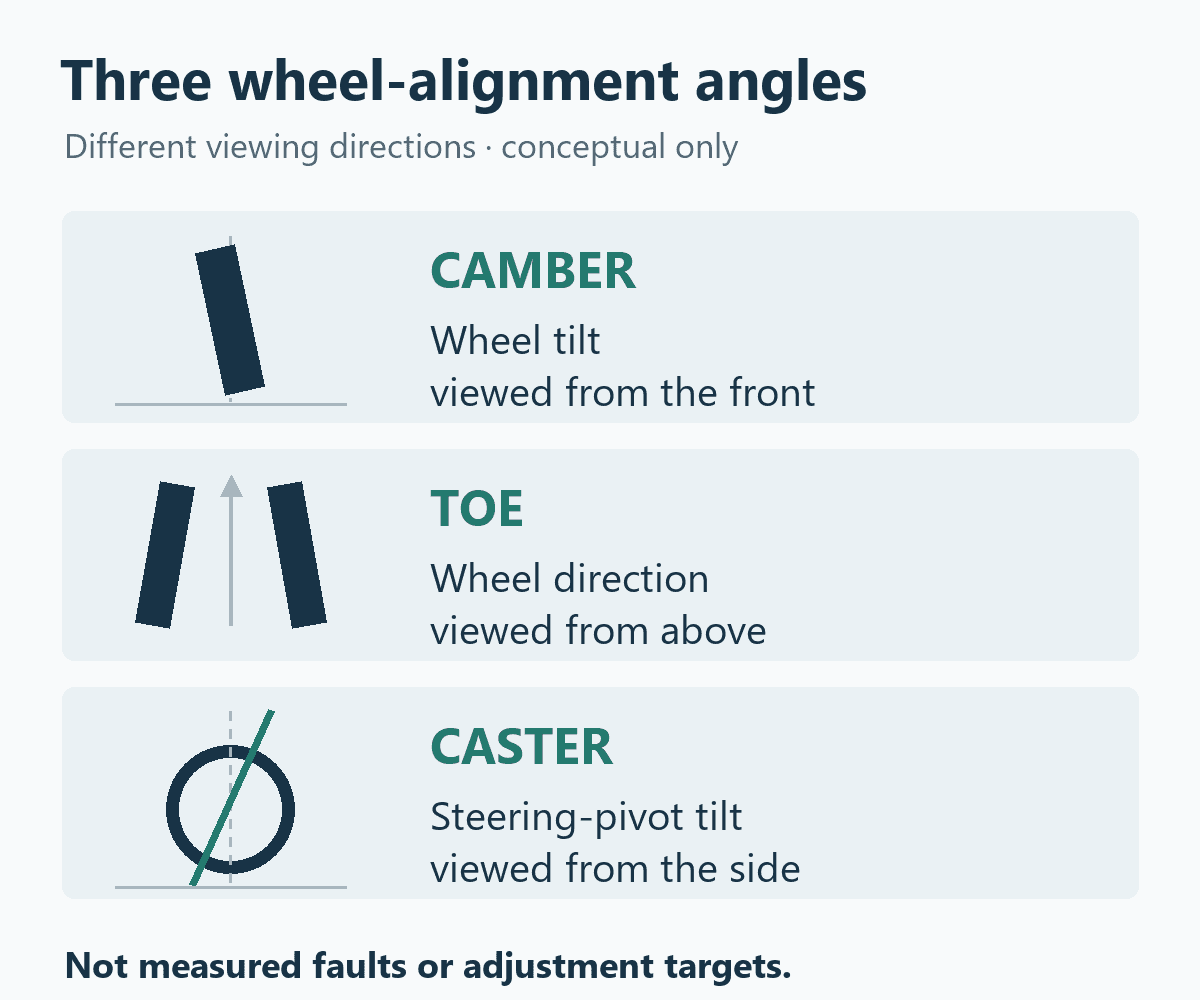
Separate the complaint before choosing the work
A persistent directional pull is different from a shake that changes with speed. Michelin’s handling guidance identifies pressure differences, uneven wear and impact damage among the tire-related causes of changed handling. An impact can damage a tire and disturb alignment at the same time; correcting only the angles would not establish that the tire is sound.
| What you notice | Relevant distinction | What the symptom does not establish |
|---|---|---|
| Pulling to one side | Pressure and tire condition alongside measured wheel angles | That alignment is the only cause |
| Off-center steering wheel | Steering position and alignment measurements | A confirmed failed steering component |
| Vibration through the wheel, seat or floor | Rotating tire-and-wheel behavior versus alignment geometry | That an alignment will remove the shake |
| Uneven tread wear | Wear location, pressure history, geometry and suspension condition | A precise angle or failed part from appearance alone |
Describe conditions you already noticed, including when the change began and whether tires were recently fitted or an impact occurred. There is no need to arrange an on-road demonstration or release the steering wheel to investigate a pull.
Establish pressure and tire condition first
Use the vehicle manufacturer’s specified cold pressures, rather than treating the maximum molded into a tire’s sidewall as the target. The 2021 gasoline CR-V manual, printed page 596, provides a useful example: it directs owners to the doorjamb label or specification page and distinguishes uneven wear, which warrants an alignment check, from consistent vibration, which warrants checking the tires. It also calls for proper balancing after tires are newly installed or removed and reinstalled.
That manual separately warns about improper inflation and damaged or excessively worn tires. A pressure correction is not a finding that an impact-damaged tire is usable. Follow the instructions for your own vehicle; Honda’s model-specific TPMS calibration requirements should not become a universal reset procedure.
Read the measurements, not just the colors
Hunter’s alignment-equipment guidance emphasizes vehicle-specific specifications and printouts containing the captured readings. A useful report therefore identifies the vehicle specification used and the angles measured, alongside the applicable limits. A green or red display has meaning in relation to those limits; the color alone is not a diagnosis.
Compare the readings before and after the work. Which measurement was outside its specified range? Which adjustment changed it? Available adjustments depend on the vehicle, so a measured angle and an adjustable angle are not necessarily the same thing. Keep any finding about worn or damaged parts distinct from the angle readings.
Finally, alignment cannot replace tread that has already worn away. Cupped or scalloped wear can overlap balance and suspension problems, while edge wear can accompany incorrect geometry. The existing pattern still matters after an adjustment. A completed alignment report documents measured geometry; it does not, by itself, establish tire condition or prove that a vibration has been resolved.
0 comment(s) so far on Wheel Alignment Symptoms: Pulling, Vibration and Tire Wear