

Brake Service: Read the Symptoms and Repair Advice
Brake care
Updated October 17, 2026
Brakes that squeal, shake or feel different need different explanations. A changed pedal or warning can also change how urgently you need help.
Start with the pedal and warnings
The 2021 gasoline Honda CR-V manual says that no resistance from the brake pedal calls for stopping immediately in a safe place. It also calls for a safe stop and immediate inspection when a red brake-system indication continues together with amber. Those instructions apply to that vehicle.
Tell the assistance provider about reduced stopping response, unusual pedal travel and the complete warning before arranging help. Use your vehicle’s emergency instructions; a quiet brake or a lamp that disappears does not answer whether you can continue driving.
Read the whole warning
The 2024 Ford Super Duty manual distinguishes the brake indicator from the ABS indicator. Its brake indicator can illuminate with the parking brake applied; other conditions concern low fluid or a brake-system fault. The ABS indication has its own explanation. A brief ignition check and a warning during use are different situations.
Its noise guidance says continuous grinding or squeal can mean worn lining and calls for a check. That is more specific than treating every squeak as proof that the pads are gone. Tell the shop the exact message, whether it stayed on or flashed, and which other lamps appeared.
A soft pedal does not name the cause
HELLA’s brake-fluid explanation describes how hydraulic pressure carries braking force. It lists several reasons for a soft or spongy pressure point, including air, leaks and bleeding errors. Moisture also lowers fluid’s boiling point. A change in pedal feel therefore does not, by itself, tell you that old fluid is responsible.
If fluid work is recommended, ask why: is it due under the vehicle’s maintenance schedule, supported by a fluid-condition check, or part of a hydraulic repair? Color alone cannot reliably show moisture or boiling point. Low fluid can also reflect leaks or wear. Adding fluid does not explain why the level fell.
Shaking needs more than a rotor label
HELLA’s workshop inspection guidance separates sideways disc movement, called lateral runout, from variation in disc thickness. It also includes hubs, bearings, calipers, hoses and chassis components in an investigation. Feeling a shake is not a measurement of a warped rotor.
Explain whether the sensation came through the pedal, wheel or seat, and whether you had already noticed it without braking. Our braking-vibration guide explores those distinctions. Ask the shop what it measured and how that compares with your vehicle’s specification. You do not need to recreate the complaint with repeated stops or inspect underneath the car yourself.
Ask to see pad and disc measurements
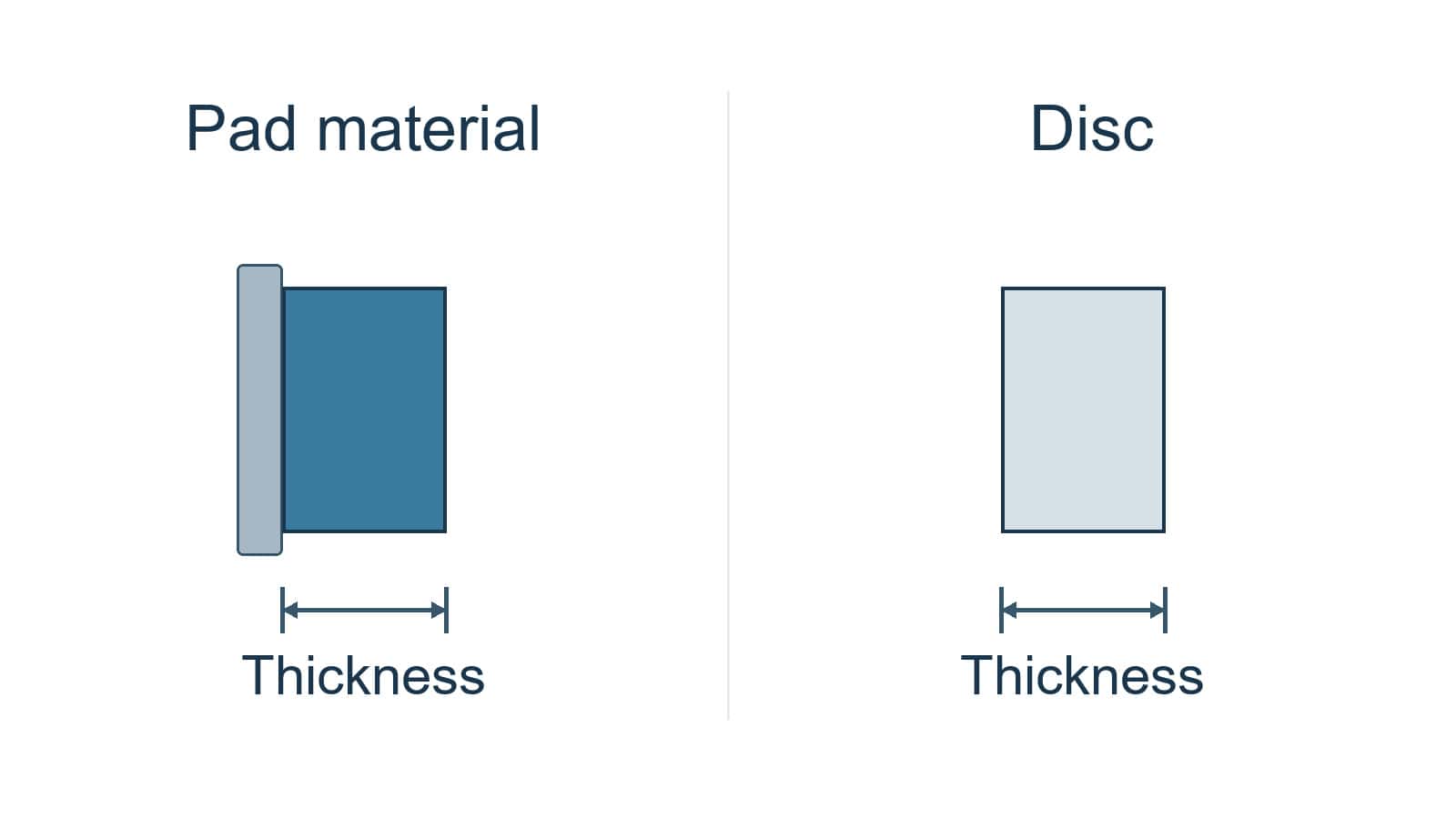
Brembo’s disc-thickness guidance explains that discs wear as well as pads. A disc’s measured thickness is compared with its specified minimum, commonly marked MIN TH. Worn pads do not tell you how thick the disc is, and mileage alone supplies neither measurement.
Disc thickness matters to heat dissipation and strength. Its limit is a service specification, not a forecast of remaining miles. If an estimate includes pads and discs, ask the shop to show the separate measurements and explain which axle needs work. That gives you a clearer reason for the recommendation than a list of parts or a broad claim that everything is worn out.
0 comment(s) so far on Brake Service: Read the Symptoms and Repair Advice