

September 2026 New-Car Prices Near Record: Buyer Takeaways
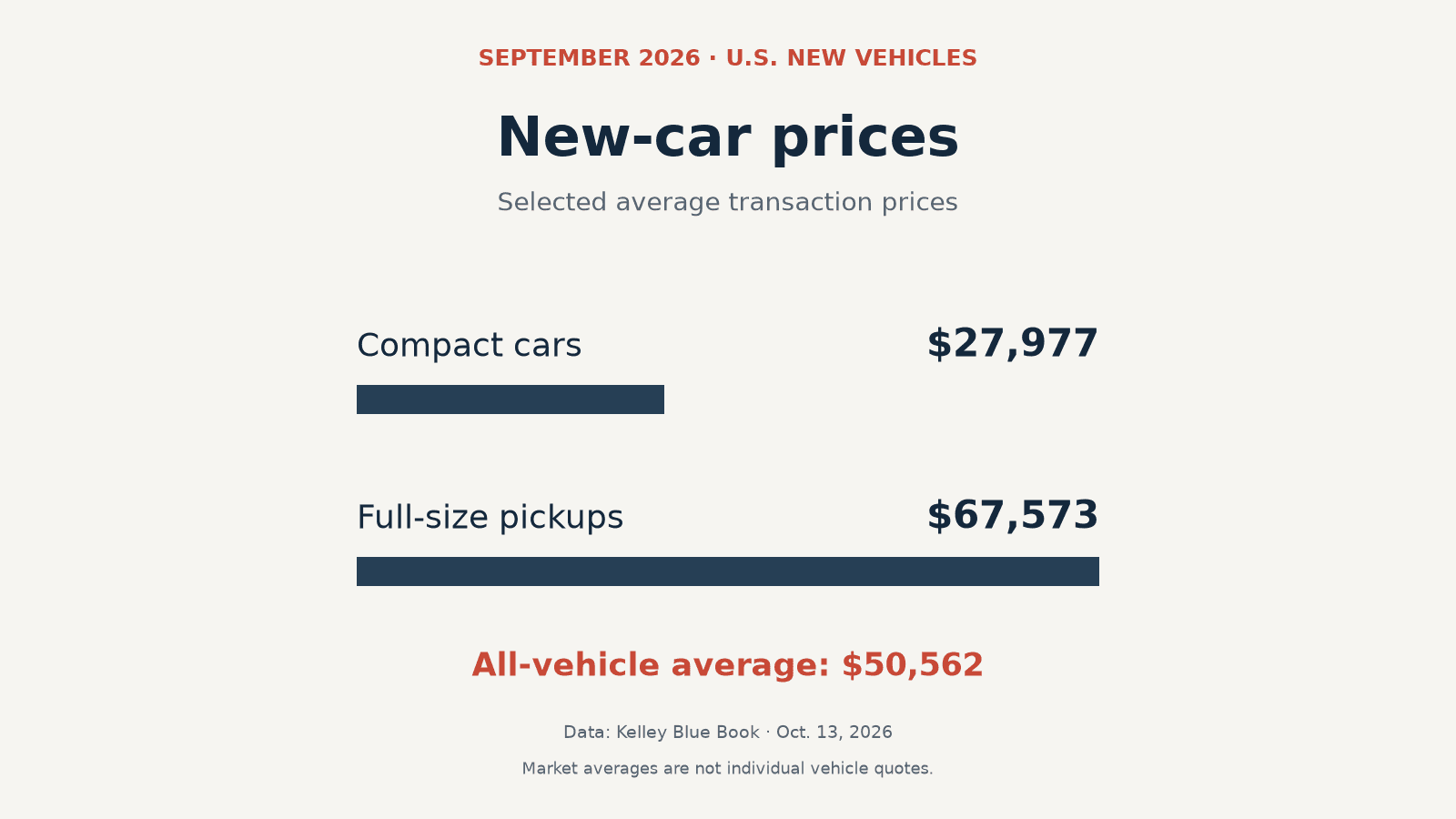
Average new-vehicle transaction prices approached a record in September 2026, according to Kelley Blue Book. The report also shows why a market average is a poor substitute for comparing the vehicles and costs that fit an individual buyer.
What the September report shows
The Kelley Blue Book report, released October 13, put the industry average at $50,562, up 0.9% from August and 0.7% from a year earlier. It was $52 below December 2025’s record. Average MSRP was $52,342; estimated incentives were $3,359, or 6.6% of transaction price.
Segment averages ranged from $27,977 for compact cars and $31,213 for subcompact SUVs to $37,614 for compact SUVs, $50,630 for midsize SUVs and $67,573 for full-size pickups. Compact SUV prices were down 0.4% year over year. Kelley Blue Book attributed the modest industry increase partly to a stronger mix of affordable vehicles and slower arrival of next-model-year stock.
EV transaction prices averaged $55,879, down 3% year over year, while EV incentives averaged 11%. These market figures provide context, not a quote for a particular vehicle.
What buyers should compare before choosing a vehicle
Start with an all-in budget instead of a monthly-payment ceiling. The Consumer Financial Protection Bureau’s auto-loan worksheet provides a way to compare vehicle costs, the amount financed, loan length and total payments. Compare the annual percentage rate in the lender’s written offer as well. A longer term can lower the monthly payment while increasing total interest and extending the period when the loan balance may exceed the vehicle’s value.
Next, compare several vehicles within the same practical category. A shopper who needs five seats and moderate cargo space may find meaningful price differences among compact cars, subcompact SUVs and compact SUVs. Current used-vehicle listings can provide another reference point for model years, mileage and equipment, while the financing information page provides vehicle-financing resources. Neither replaces a written purchase and loan comparison.
Evaluate a trade-in separately from the replacement vehicle. Record the current vehicle’s mileage, condition, service history and payoff amount, then compare a written trade value with the replacement vehicle’s negotiated price. The trade-in information page is one way to begin that process. Keeping the two figures separate makes it easier to see whether a strong trade value is being offset by a higher purchase price or less favorable financing.
Use the market report as context, not a quote
The fair price for a particular VIN depends on its equipment, model year, condition and available alternatives. For used vehicles, compare mileage and service records too. Keep a copy of each written offer so that a change in the vehicle, price or financing terms is visible before a decision.
Before signing, ask for the vehicle price, trade allowance, fees, taxes, amount financed, APR, term and total of payments in writing. The Federal Trade Commission’s auto-financing guidance also advises shoppers to focus on total cost and review the contract carefully. Readers following broader pricing and ownership developments can find additional updates in the site’s automotive news and buying guides.
0 comment(s) so far on September 2026 New-Car Prices Near Record: Buyer Takeaways