

September Auto Credit Improves as Longer Loans Gain Ground
Auto credit became more accessible in September, but the latest data also show buyers stretching repayment over more years. The combination makes the structure of a loan an important part of evaluating an otherwise affordable-looking monthly payment.
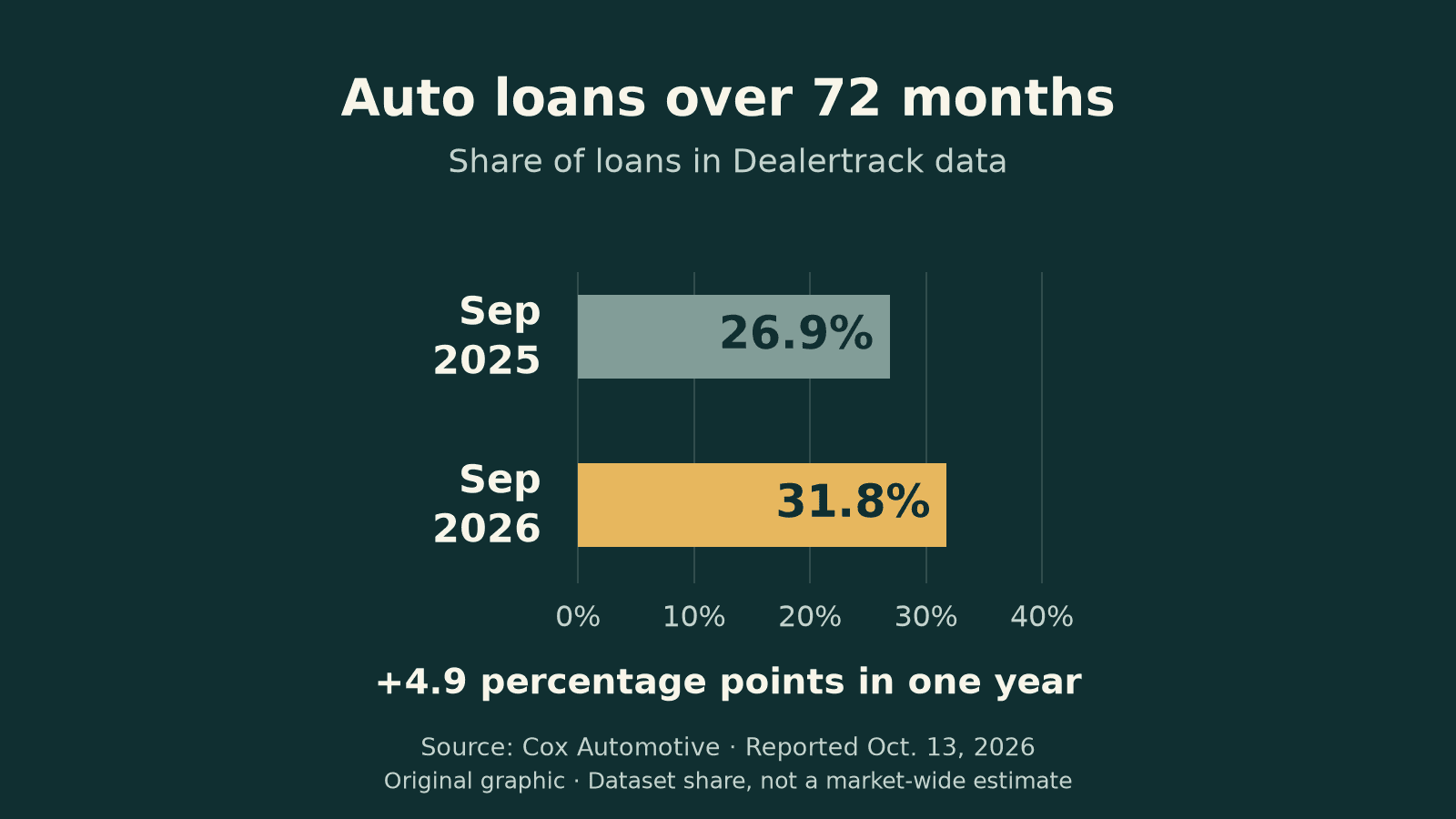
In its October 13 report, Cox Automotive’s Dealertrack Credit Availability Index rose to 107.1, a 1.9% increase from August’s 105.1. It was the fifth consecutive monthly improvement. Loans with terms longer than 72 months represented 31.8% of the dataset, compared with 26.9% a year earlier, reaching a series high.
What a credit-access index measures
Dealertrack combines six measures: approvals, subprime share, yield spreads, term length, negative equity and down payments. A higher reading describes conditions across that dataset. It is not an individual approval decision, a credit score or a promise that every borrower will receive a lower rate.
The distinction matters because easier access can arrive through several channels. A longer repayment period changes the payment calculation even when the vehicle price and interest rate stay the same. In September, Cox reported an overall approval rate of 73.9%, while the average contract rate increased to 11.22%. Those figures describe the report’s lending population; they are not a quote for a particular shopper.
The same balance can produce very different payments
Consider an illustrative $25,000 balance financed at a fixed 7% annual interest rate, with equal monthly payments and no additional fees. Standard amortization produces a payment of about $495 over 60 months, with about $4,702 in interest. Stretching the same example to 84 months lowers the payment to about $377, while interest rises to about $6,695. These are calculations using hypothetical inputs, not advertised financing terms.
The longer version creates room in the monthly budget by spreading principal repayment across two additional years. That can be a deliberate choice, but it also changes the balance of debt and future flexibility. A comparison based only on the payment conceals how long the obligation continues.
Build the comparison around the whole vehicle budget
The Consumer Financial Protection Bureau’s budgeting guidance recommends accounting for interest, taxes and fees, insurance and ongoing maintenance. Establish those costs before treating the loan payment as the entire cost of ownership. A vehicle that fits one payment target may still require a different overall budget once those recurring expenses are included.
The agency’s auto-loan comparison worksheet separates the vehicle transaction from the loan terms. Use the same vehicle price, down payment and financed balance when comparing alternatives, then record the rate, term, monthly payment and total payments. If more than one input changes, identify each change before deciding which proposal better fits the plan.
A buyer comparing replacement vehicles can use current used-vehicle listings to examine different price points and equipment. The useful comparison is between vehicles that meet the same transportation need, rather than between two unrelated monthly payments. The financing information page provides a separate starting point for the borrowing process.
September’s report supplies market context. The individual decision still depends on the actual vehicle, the written loan terms and the time the buyer expects to keep it. Set those pieces beside one another so that easier access remains compatible with a workable ownership plan.
0 comment(s) so far on September Auto Credit Improves as Longer Loans Gain Ground