

Electronic Parking Brake Service Mode: Why Rear Brakes Need It
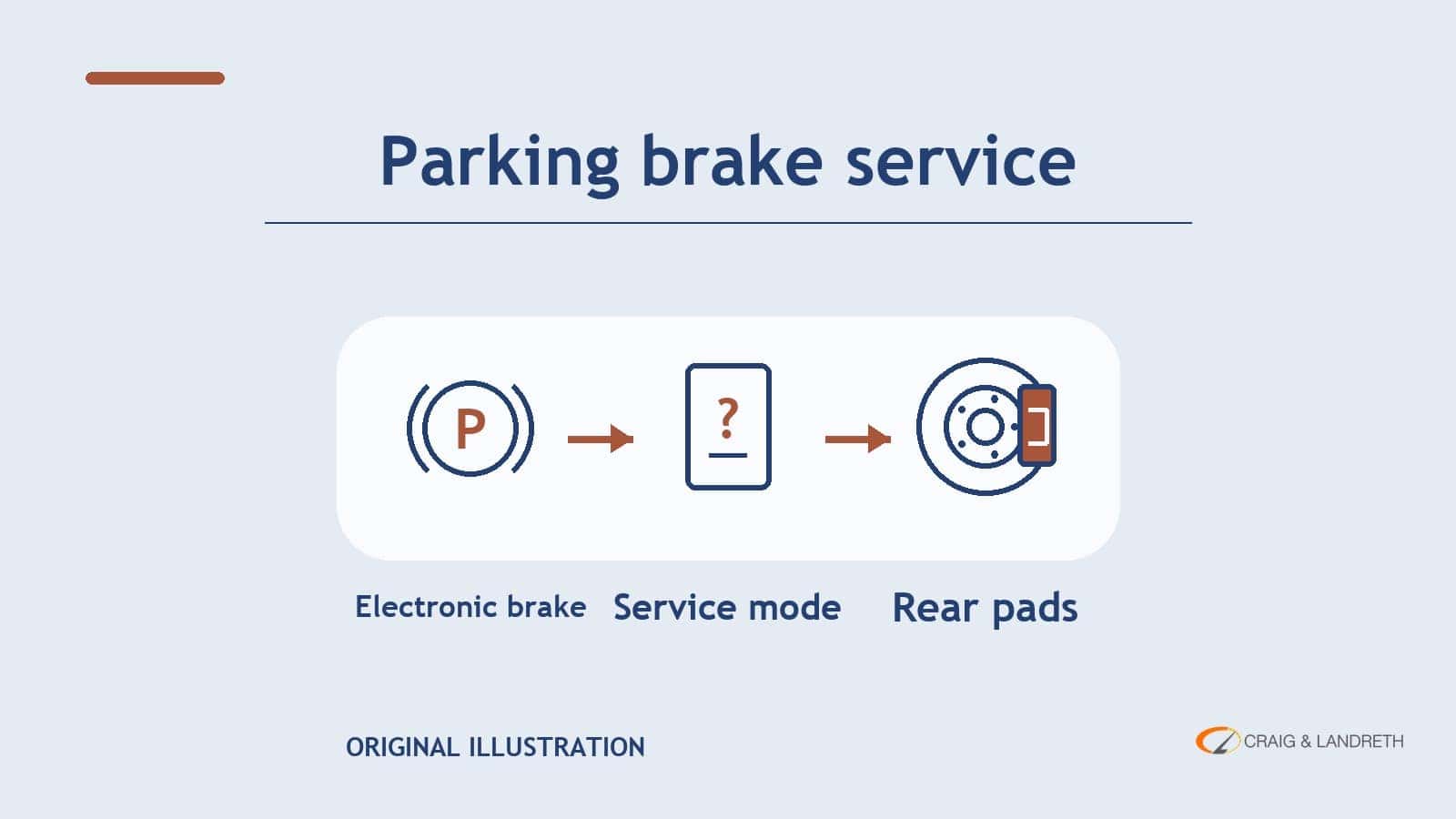
On some vehicles, the technician must put the electronic parking brake in service mode before replacing rear brake pads. Releasing it with the cabin switch does not necessarily retract the mechanism far enough for the work. Ask the shop which procedure applies to your vehicle and whether it has verified the parking brake after returning it to normal operation.
The rear brake can do two jobs
One common design uses hydraulic pressure for normal stops and a separate electric actuator at the rear caliper for parking. HELLA’s overview of electric parking brakes also shows designs that operate through cables. The architecture affects what the technician must do. A button on the console alone cannot tell you which service procedure applies.
On some calipers with an integrated actuator, the manufacturer’s service procedure moves the mechanism so the technician can service the brake. A technician may use a scan tool or another manufacturer-specified method. HELLA’s Mazda CX-5 example illustrates separate steps to enter and exit maintenance mode. Follow the procedure for the exact vehicle rather than trying a switch sequence from another model.
Before approval and at pickup
- Tell the shop if a parking brake warning appeared before the visit, if the brake failed to apply or release, or if recent battery work preceded the message.
- Ask whether the quote covers only pads and related parts or includes investigating an existing parking brake problem.
- At pickup, ask whether service mode was exited and how the shop checked the parking brake, dashboard messages and normal brake function.
If the visit includes pads or rotors as well as parking brake work, review what a brake inspection covers and ask which findings apply to the rear axle.
ADVICS’ brake service guidance describes a general pad and rotor workflow, including checks after assembly. The exact vehicle instructions determine what the technician must add for the parking brake. A dashboard warning can also have a cause separate from worn pads, so keep the original message and note when it appeared.
If the message appears after the job
Call the shop if the warning stays on, the brake will not apply or release normally, or you notice a new drag or burning smell. Keep the exact message or a photo. If the parking brake seems stuck on, you smell a brake overheating, or normal braking has changed, pull over safely or leave the vehicle parked and arrange help. A warning that was present before the job gives the shop a different starting point from one that began afterward.
Separate a planned step from a separate fault
Entering and exiting service mode can be part of ordinary rear brake labor. A separate repair should come with a reason, such as an actuator that did not move when commanded or a fault found during diagnosis. Ask the shop to distinguish a normal setup step from any failure it found and explain how it confirmed normal operation at handoff.
You can also ask where the parking brake service procedure appears on the invoice. A separate line may document setup and verification, while another shop may include the same steps in rear pad labor. Compare the work described before comparing totals.
If your rear brakes are due for inspection, request a visit with Cooper Automotive and mention any dashboard wording or recent rear brake work.
0 comment(s) so far on Electronic Parking Brake Service Mode: Why Rear Brakes Need It