

How Shops Check Transmission Fluid Without a Dipstick
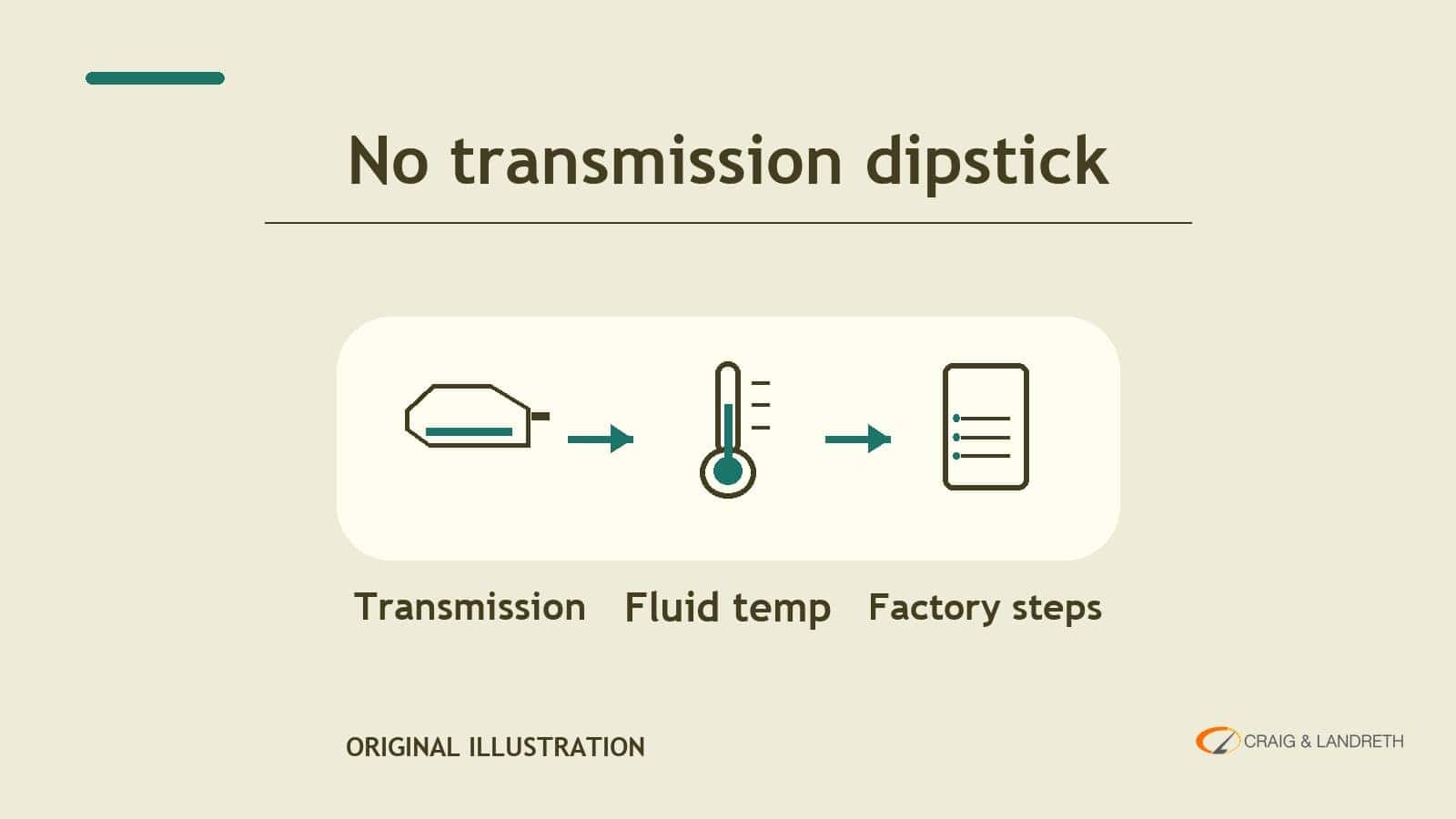
A transmission without a dipstick can still have a procedure for checking the fluid level. Some designs use a level or overflow plug with the vehicle level and the fluid at a specified temperature. Whether the engine runs during the check depends on the transmission. Check the manual before touching any plug, and have a technician perform the measurement if the manual directs you there.
Read the manual for your exact combination
“Sealed” is shorthand. Look for the maintenance and inspection instructions for your vehicle and transmission. One Ford owner’s manual describes a transmission without a dipstick and directs owners to service for level checks. A GM service bulletin gives a temperature-dependent procedure for specified models. A Toyota bulletin for selected transmissions also calls out the correct fluid, fill method, and plug locations. Those examples explain what the shop checks without turning any one procedure into a general rule.
There can also be a dipstick on a different transmission in the same vehicle line. Avoid following a video just because the engine bay looks familiar. Check the model year, engine, drivetrain, and transmission. The correct method can also differ between checking an existing level and setting it after a repair.
Tell the shop why you want it checked
A leak spot, delayed engagement from Park, or a new shift concern can justify an inspection. A manufacturer’s maintenance reminder can be a separate reason to make an appointment. Give the shop the sequence. If the complaint started after a service, bring that invoice. If you saw a drip on level ground, note where it landed and whether the vehicle had just been driven. Avoid using color alone to decide which system it came from.
Ask the technician to document the observed level, fluid specification, and check conditions on the work order. If the level is low, ask whether the shop traced a leak or found evidence of an incorrect fill during prior work. If the level is correct and the symptom remains, ask what diagnostic test comes next.
Know when the concern changes the trip
If the vehicle loses propulsion, has a significant active leak, or displays a warning telling you to stop, pull over safely and arrange help. Topping off an unknown fluid through an unidentified opening can create a second problem. Follow the manual’s towing method. Some drivetrains require particular equipment to avoid damage.
To check the service options, see Cooper’s transmission service page and parts and service support. When you request service, include the vehicle details and whether the issue is a scheduled fluid change, suspected leak, or shift symptom.
0 comment(s) so far on How Shops Check Transmission Fluid Without a Dipstick