

E15 vs. E85: Which Fuel Can Your Car Use?
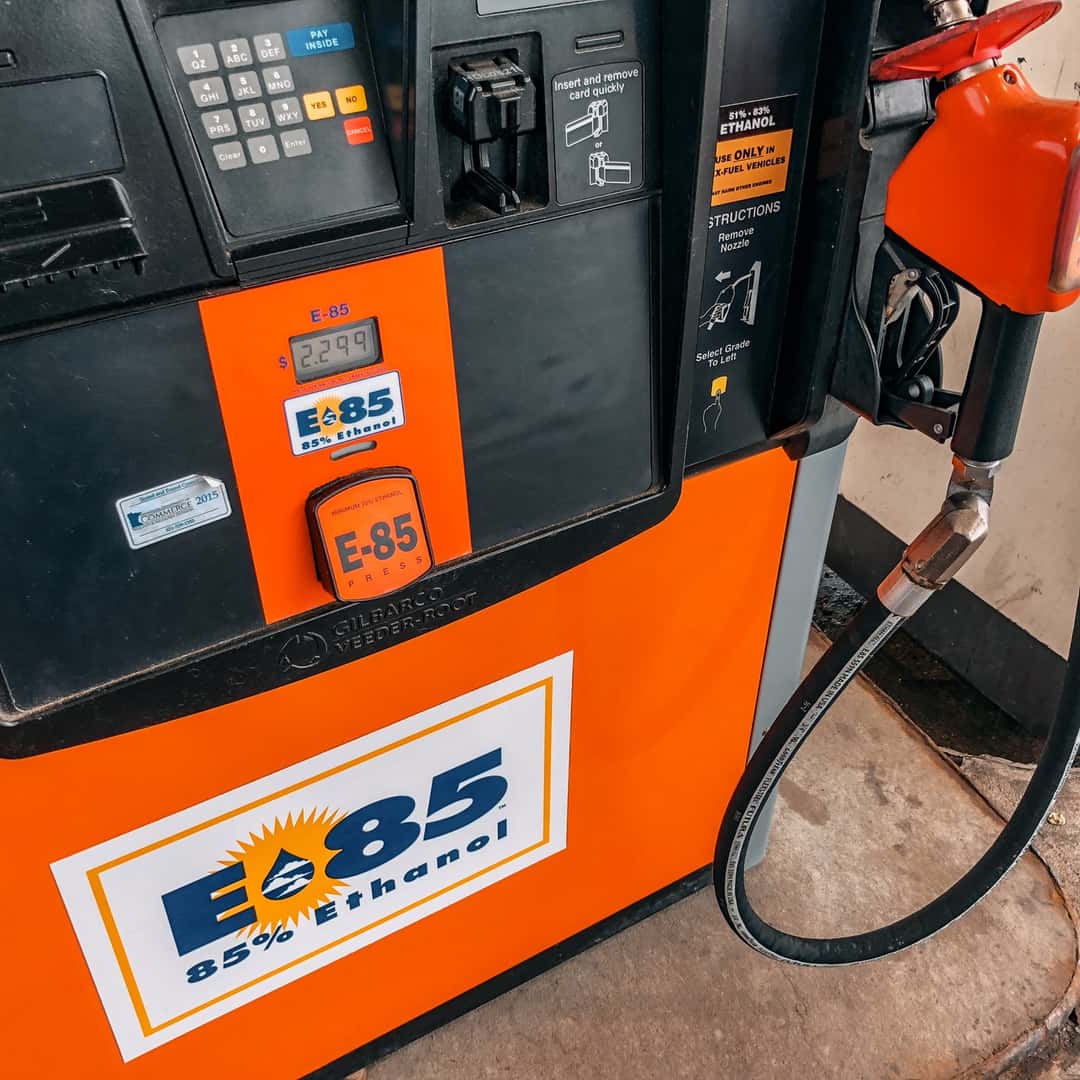

E15 and E85 are both ethanol-gasoline blends, but their similar names do not make them interchangeable. E15 is a lower-ethanol blend approved for many newer light-duty vehicles under federal guidance. E85 contains substantially more ethanol and is intended for flexible-fuel vehicles (FFVs). For a driver at the pump, the useful question is whether the exact vehicle is approved for the blend, not whether it is a certain size, brand or trim.
What the numbers mean
The U.S. Department of Energy’s Alternative Fuels Data Center describes E15 as a blend containing 10.5% to 15% ethanol. E85, despite its name, can contain 51% to 83% ethanol depending on location and season. Ordinary E10 gasoline contains 10% ethanol. The labels describe ethanol content; they are not octane grades or a simple ranking of fuel quality.
DOE’s E15 guidance lists flexible-fuel vehicles and conventional model-year 2001-and-newer light-duty vehicles among those approved to use E15. It also lists exclusions, including motorcycles, heavy-duty engines, off-road vehicles and equipment, and conventional vehicles from model year 2000 or earlier. The model-specific owner’s manual remains an important check, especially when a vehicle has an unusual engine or its fuel-door label differs from general guidance.
E85 requires a flex-fuel vehicle
E85 is intended for FFVs, which are built to operate on gasoline, E85 or other approved ethanol-gasoline mixtures. DOE’s flexible-fuel vehicle overview explains that FFVs can look much like gasoline-only models, so appearance alone is not a reliable way to identify one. A fuel-door label, owner’s manual or official vehicle record can help confirm the specific year and engine.
That distinction matters because E85 is not approved for gasoline-only vehicles. A used-car listing or a badge by itself is not a substitute for checking the vehicle’s documentation. Model names and engines may change between years or trims, and even familiar-looking versions can have different fuel requirements. When the vehicle’s status is unclear, follow the manual’s approved-fuel information before choosing a higher-ethanol blend.
Compatibility and cost are separate decisions
Approval to use a fuel does not establish that it will cost less to drive. DOE notes that fuel economy in miles per gallon generally decreases as ethanol content rises in FFVs, although the exact result depends on the vehicle and operating conditions. A lower price per gallon therefore does not, by itself, tell a driver which option costs less per mile. Compare actual local prices with fuel-economy information for the vehicle and its expected use.
For a hypothetical comparison, a fuel costing $3 per gallon at 30 mpg costs 10 cents per mile. A different approved blend costing $2.40 per gallon at 24 mpg also costs 10 cents per mile. These invented inputs illustrate price-per-gallon divided by miles-per-gallon; they are not current pump prices, a vehicle’s rated mileage or a prediction of either fuel’s performance. Actual results depend on the vehicle, fuel and conditions.
A quick check before choosing a pump
Start with the fuel section of the owner’s manual and the label inside the fuel door. Confirm the model year and engine, then check whether the vehicle is conventional or flex-fuel. If the manual is missing, retrieve an official copy using the vehicle’s identifying details or ask the manufacturer how to locate the right one. Do not infer compatibility from color-coded parts, appearance or another vehicle’s instructions.
The short version: E15 is a lower-ethanol blend with federal approval for many newer conventional light-duty vehicles, subject to exclusions. E85 is a higher-ethanol blend for FFVs. Checking vehicle-specific guidance before fueling turns the pump labels into a straightforward compatibility question.
0 comment(s) so far on E15 vs. E85: Which Fuel Can Your Car Use?