

Average Used-Car Price Hits Highest Level Since 2022
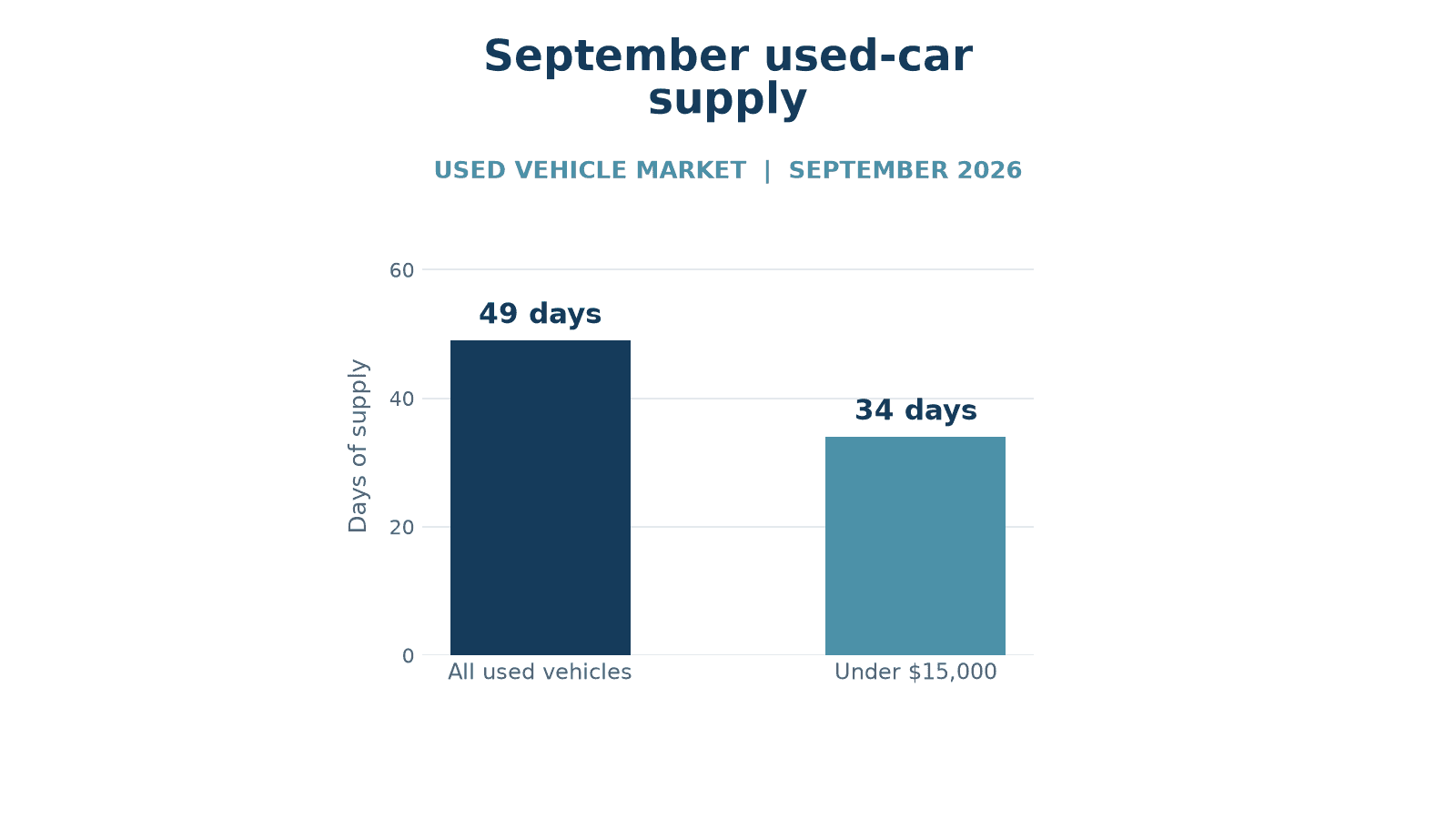
The average used vehicle was listed for $27,235 in September, the highest monthly average since December 2022, according to Cox Automotive’s October 16 report. Prices were nearly flat compared with August’s revised $27,223 average but almost 6% higher than a year earlier. Growing overall inventory has not eliminated the shortage of choices below $15,000.
Dealers held 2.21 million used vehicles, up 3.9% from August and 3.3% from a year earlier. Overall days of supply reached 49, compared with 44 in August. Vehicles below $15,000, however, had just 34 days of supply, 15 fewer than the market average.
The affordable segment is a smaller part of the pool
The September retail inventory report says the under-$15,000 band accounted for 15.7% of used inventory, down from 19.4% a year earlier. Supply in that band fell 16.2% year over year. Those figures help explain why a shopper’s narrow budget search can feel different from a headline describing rising national inventory.
An average listing price describes advertised inventory across a changing mix of vehicles. It is not the final amount paid for a particular car.
Days of supply is a relationship, not a countdown
Cox calculates this supply measure using the estimated recent retail sales pace. It relates available stock to how quickly the market has been selling vehicles. A higher figure can result from more inventory, slower sales, or both. It does not promise that one listing will remain available for that number of days.
That matters when translating a national report into an individual search. The total inventory pool contains different vehicle ages, mileages, body styles and equipment levels. A broad increase does not establish that a specific configuration has become easy to find, or that its advertised price should move by the same percentage.
Retail and wholesale figures answer different questions
Cox’s earlier September Manheim wholesale report uses an index adjusted for factors including vehicle mix, mileage and seasonality. That is a different measure from the unadjusted average listing price of retail used inventory. The two series can move differently without either describing the price of an identical car offered to a consumer.
A shopper should therefore avoid treating a wholesale-index change as a ready-made discount on every retail listing. Compare vehicles that are actually similar, keep the date and type of each price visible, and distinguish an advertised asking price from an itemized purchase offer.
Build a comparison around the actual vehicles
For a limited budget, the useful response is to make tradeoffs explicit. Compare age, mileage, condition, equipment and the intended job of the vehicle together. Expanding a search to a different body style or equipment package changes what is being compared, so note that change rather than assuming the two alternatives offer the same utility.
Purchase price is also only one input. The Department of Energy’s vehicle cost calculator offers a way to explore vehicle and driving assumptions, including energy costs. A calculator estimate should be kept separate from actual insurance, financing and purchase quotations for the cars being considered.
The new report establishes a national inventory pattern in September, not a forecast of what one vehicle will cost next month. Its practical message is to check the relevant price band and the specific alternatives. Overall supply growth can coexist with a thinner selection where a budget-conscious buyer is looking.
0 comment(s) so far on Average Used-Car Price Hits Highest Level Since 2022