

Mercedes S-Class Brake-Hose Recall Expands to More Cars
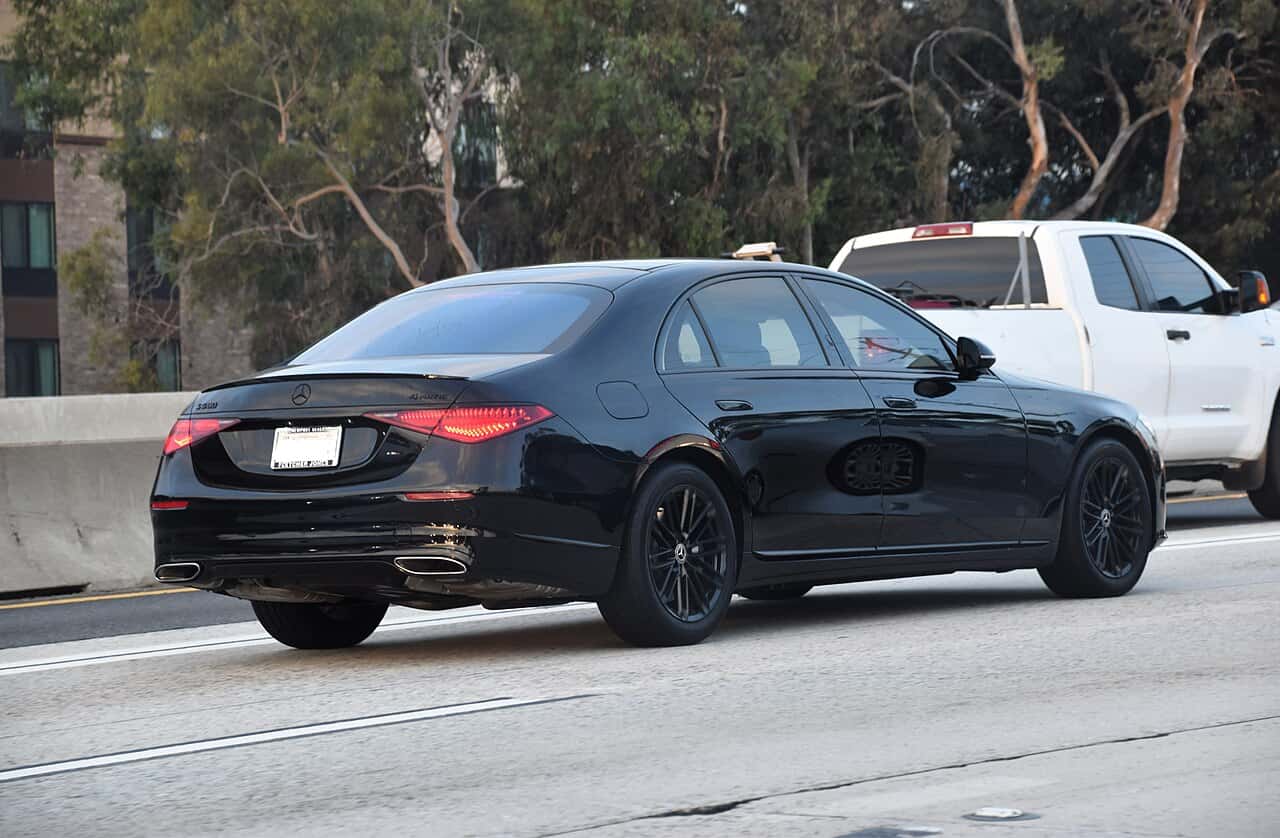

Mercedes-Benz has expanded a front brake-hose recall affecting certain S-Class sedans after investigating reports beyond the production dates and climates covered by an earlier campaign. For owners, the practical change is straightforward: an older recall check may no longer answer whether their car is included.
NHTSA’s current campaign record identifies campaign 26V638 and lists 30,064 potentially affected vehicles. The issue involves front brake hoses that may deteriorate and leak fluid over time, reducing braking performance in one of the vehicle’s two brake circuits. The filing identifies an increased crash risk.
Which S-Class models are listed?
The current campaign record covers specific examples within the 2022–2025 model-year range, including Mercedes-Benz, Mercedes-AMG and Mercedes-Maybach versions. The model years below describe the campaign’s scope; a model badge or production date alone cannot establish whether an individual car is affected.
| Model | Model years |
|---|---|
| Mercedes-Benz S 580 4MATIC | 2022–2025 |
| Mercedes-Benz S 500 4MATIC | 2022–2025 |
| Mercedes-Benz S 580 e 4MATIC | 2023–2025 |
| Mercedes-AMG S 63 E PERFORMANCE | 2024–2025 |
| Mercedes-Maybach S 680 4MATIC | 2022–2025 |
| Mercedes-Maybach S 580 4MATIC | 2022–2025 |
These are potentially affected vehicles, not a tally of failures. The manufacturer’s October 2 filing attributes the hose concern to material fatigue from accumulated thermal and mechanical stresses. Mercedes-Benz says the production change to an optimized hose took effect on November 29, 2024.
Why an earlier check may need updating
This campaign expands recall 25V116, filed in February 2025. That earlier report listed 20,339 vehicles and described a concern associated with use in hot, humid environments and an earlier production period.
The newer filing says subsequent field reports and analysis led the manufacturer to broaden its assessment beyond those original limits. That distinction matters when reviewing a used car’s paperwork: a previous recall search or service visit describes the information available then. It does not automatically resolve a campaign announced later.
For that check, use the VIN from the actual car rather than searching only by its year and model. NHTSA identifies the lower left of the windshield, registration card and insurance card as places to find it. A year-and-model search describes campaigns for that model; a VIN search addresses whether the particular vehicle has an unrepaired recall.
Owners should use the current VIN result and have an authorized Mercedes-Benz dealer reconcile any earlier brake-hose work with the new campaign. The two recall population totals should not be added together to estimate unique affected cars; the later action is explicitly an expansion.
What warning might appear?
Mercedes-Benz says there is no advance warning before this failure mechanism occurs. A red brake-fluid warning message may appear once the problem develops. The absence of a dashboard warning is therefore not a way to rule out recall eligibility.
The October report says the manufacturer knew of three U.S. reports in the expanded population and was not aware of related crashes, injuries or property damage in that population. That describes the reports available for the filing, not an assurance about an individual vehicle’s condition.
The planned repair and owner next step
The remedy described in the filing is replacement of the front-axle brake hoses at an authorized Mercedes-Benz dealership. It lists November 27, 2026 as the planned owner-notification date. That schedule is not confirmation that parts or appointments are available for every VIN today.
Mercedes-Benz’s recall lookup accepts a 17-digit VIN and provides current campaign information. Its customer-support page also directs owners to an authorized dealer to arrange a recall repair and lists U.S. assistance at 1-800-367-6372. Ask about the campaign number, remedy availability and the appropriate next step for the specific car.
NHTSA’s recall tool is another useful check, with a distinction worth remembering: VIN results focus on unrepaired recalls and do not display recalls already repaired. NHTSA also cautions that newly announced campaigns can take time to include every affected VIN. If the result and a notice appear inconsistent, reconcile them with the manufacturer rather than assuming the car is excluded.
0 comment(s) so far on Mercedes S-Class Brake-Hose Recall Expands to More Cars