

IIHS Rear-Seat Crash Ratings: What Shoppers Should Read
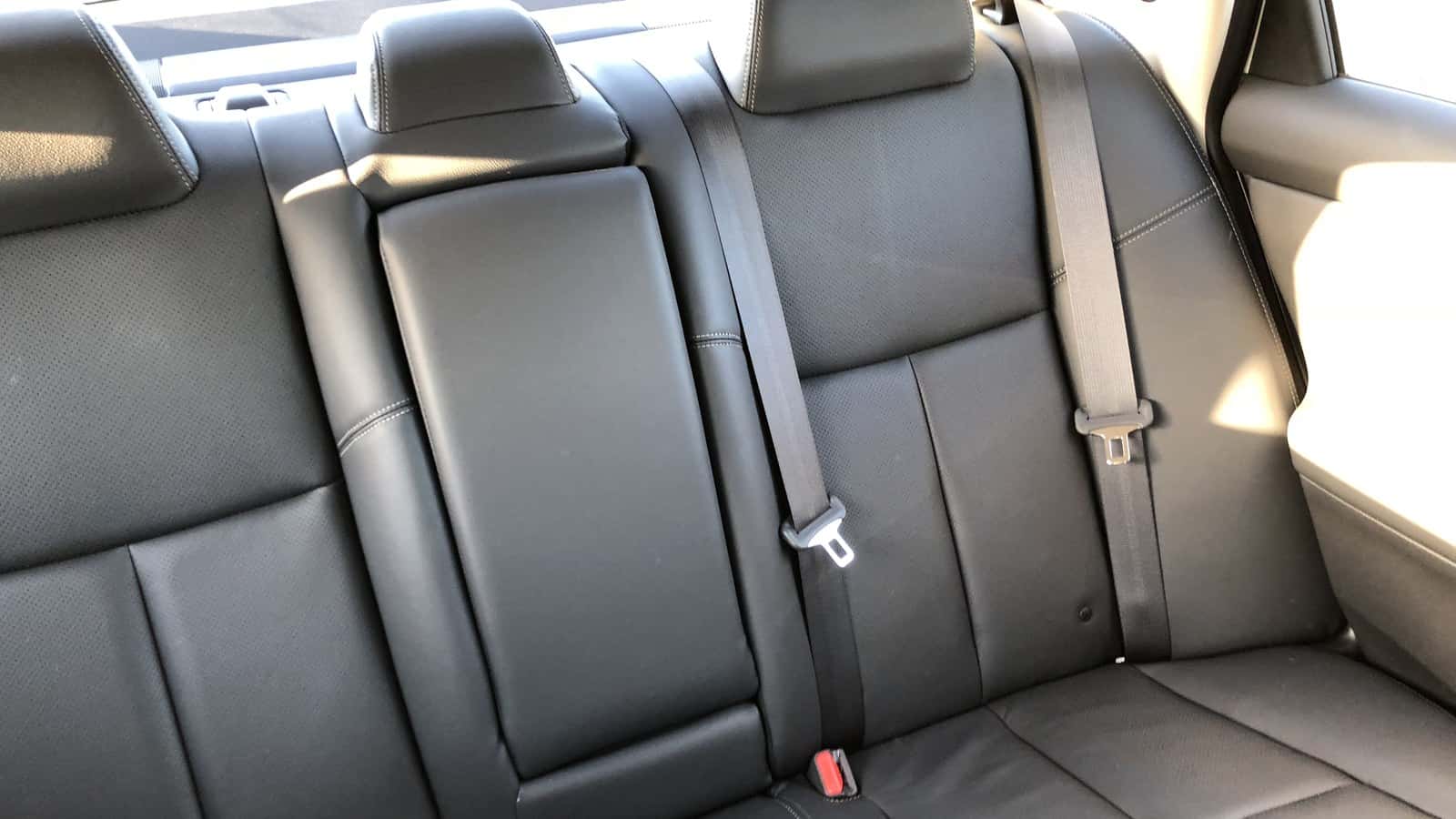

A strong result for a driver does not describe every rear-seat injury measure. When comparing family vehicles, open the detailed IIHS crash-test results and look for the rear passenger entries. They explain something that a model’s reputation, an equipment list or a single award badge cannot show on its own.
The important section is called “Moderate overlap front: updated test.” Despite the word “front,” this frontal crash evaluation also examines an occupant in the second row. Its purpose is different from checking child-seat anchor access or whether a belt reminder sounds.
Why a frontal test includes the back seat
IIHS added a rear dummy to its moderate-overlap evaluation in 2022. In its explanation of the updated test, the institute describes a dummy representing a small woman or a 12-year-old child seated behind the driver. The vehicle strikes a stationary barrier at 40 mph with 40% of its front end overlapping the barrier.
That is a controlled test configuration, rather than a prediction of every collision or every passenger’s injuries. IIHS says results should be compared only among vehicles of similar weight. A rear seat can have ample legroom and comfortable cushions without those observations telling a shopper how its restraint system manages crash forces.
Read the injury measures and the movement assessment
A detailed results page separates rear head/neck, chest and thigh injury measures from “restraints and dummy kinematics.” Kinematics describes how the dummy moves. Reading both parts helps distinguish the measured loads on the dummy from the way the belt and seating system control its motion.
The 2026 Toyota Corolla sedan entry illustrates the distinction. In its updated moderate-overlap evaluation, driver injury measures are Good, while the rear chest measure and rear restraints/kinematics are Marginal. Rear head/neck and thigh measures are Good. Those separate entries are more informative than treating the entire page as one undifferentiated score.
Scope matters just as much as the letters. That section applies to 2025–26 models and explicitly excludes the hatchback and hybrid sedan. Other sections on the same page have their own applicability notes. Carry the qualification attached to the particular test into a comparison; do not apply every result to every car sharing the name.
The belt’s design matters beyond whether it buckles
IIHS’s seat-belt research overview explains two technologies that help manage a crash. Tensioners tighten the belt at crash onset. Force limiters allow controlled webbing release to reduce excessive belt forces on the chest. Rear-seat adoption has lagged front-seat adoption, helping motivate the updated evaluation.
A photograph of a shoulder belt cannot establish which mechanisms are installed, how they operate with the seat, or the vehicle’s test result. Nor does identifying a tensioner in an equipment description substitute for reading the measured outcome. Hardware descriptions and test results answer related, separate questions.
Use the detailed test alongside the award
For the 2026 IIHS awards, a Good updated moderate-overlap result is required for both Top Safety Pick levels. The award also incorporates other evaluations. It remains useful shorthand, while the individual results show what was tested and where the distinctions lie.
Begin with the exact model year and body style, open the updated moderate-overlap section, and read the rear entries with their applicability notes. Then consider the separate side-impact and crash-avoidance results. This approach keeps a passenger’s protection in view without turning one test into a guarantee or assuming that the best front-seat result answers every back-seat question.
0 comment(s) so far on IIHS Rear-Seat Crash Ratings: What Shoppers Should Read