

2026 Car Ownership Costs: Look Beyond Fuel Savings
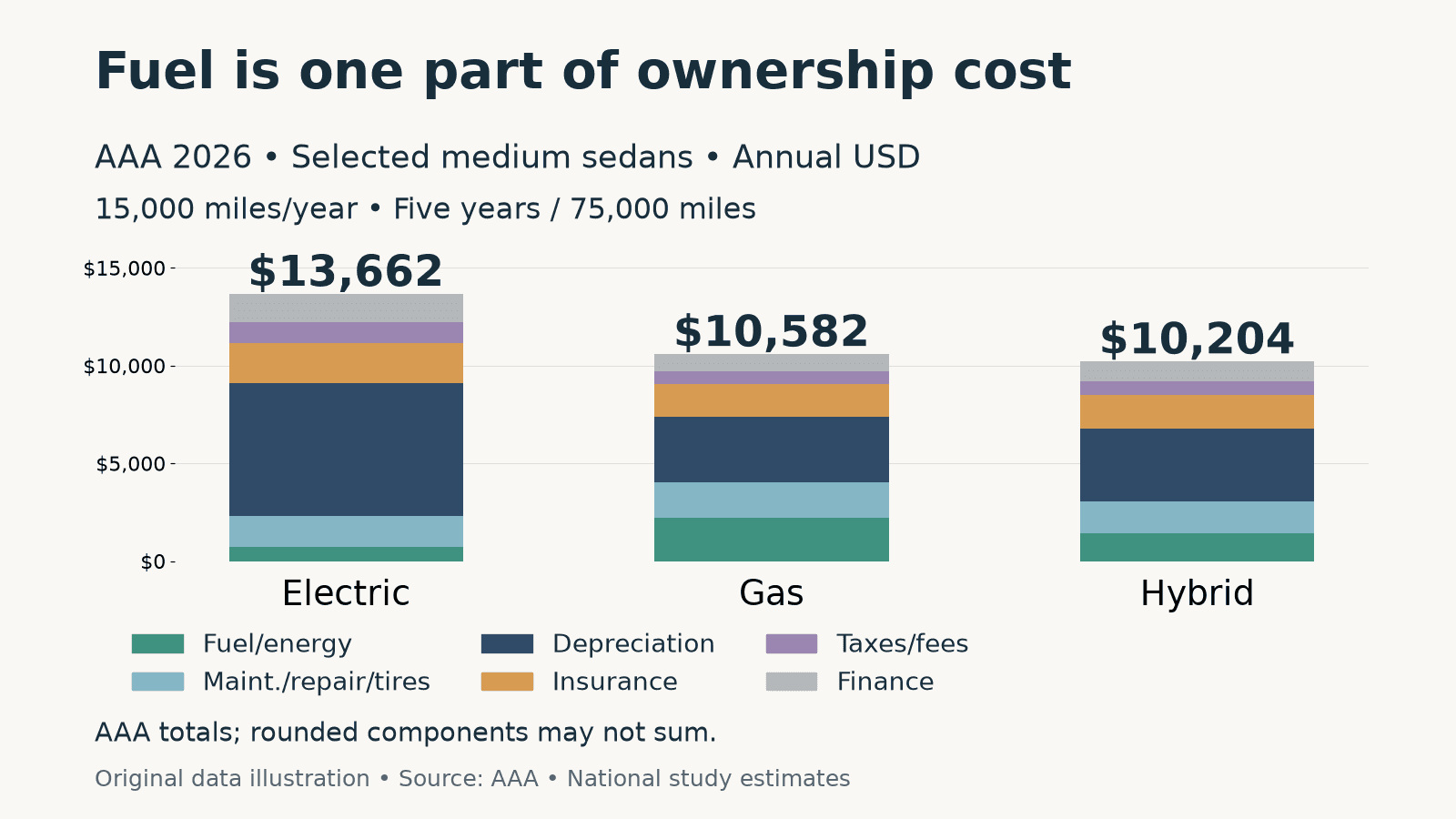
Fuel savings are only part of the cost of choosing a vehicle. AAA’s 2026 Your Driving Costs study, released September 15, makes that distinction visible by comparing selected electric, gasoline and hybrid models within four vehicle categories. Lower energy spending does not consistently produce the lowest total ownership estimate.
For shoppers, the useful question is how the costs work together over the years they expect to keep a car. A vehicle can save money at the pump or charger while costing more in depreciation, financing or insurance. Another can have a higher fuel bill yet a lower overall estimate. The comparison needs a common time period and mileage.
What AAA’s estimate measures
AAA’s September 15 release says the main study evaluates seven vehicle categories and 34 top-selling models. Its separate powertrain comparison covers medium sedans, compact SUVs, medium SUVs and pickups. That smaller comparison should not be treated as another version of the full study’s overall average.
The 2026 fact sheet puts the full-study annual average at $12,863, based on five years and 75,000 miles. It includes fuel, maintenance, repairs, tires, insurance, taxes and fees, financing and depreciation. The last category averages $4,422 annually and represents estimated value lost between purchase and a later trade-in.
Depreciation is a cost of ownership, but it is not a separate monthly cash bill. That distinction matters when building a budget: money needed for payments, energy and insurance is a different view from the economic cost of using and eventually selling the car. Simply adding depreciation to a loan payment would not reproduce AAA’s calculation.
Compare within the category
AAA’s powertrain tables give these annual totals for selected 2026 models at 15,000 miles per year:
| Vehicle category | Electric | Gasoline | Hybrid |
|---|---|---|---|
| Medium sedan | $13,662 | $10,582 | $10,204 |
| Compact SUV | $11,888 | $11,656 | $11,201 |
| Medium SUV | $14,332 | $14,431 | $13,698 |
| Pickup | $17,414 | $16,626 | $16,117 |
For medium sedans, the electric sample’s annual fuel cost is $712.50, versus $2,215 for gasoline: a $1,502.50 saving. Its depreciation is $6,786, compared with $3,330 for gasoline. That $3,456 difference exceeds the energy saving before the other categories are considered. Across the table, the electric and gasoline medium-SUV totals are much closer.
These are selected-model averages, not matched trims with identical prices and equipment. A difference between columns can reflect the vehicles included as well as their powertrains. The table is evidence about this sample; it cannot establish which technology will cost every buyer less.
Replace the assumptions you can verify
Start with the body style and capability you need, then compare actual vehicles over the same ownership period. Use the agreed purchase price, loan terms, annual mileage, an insurance quote and applicable taxes. For an EV, distinguish electricity bought at home from paid public charging. A single energy price may poorly describe a driver who regularly uses both.
AAA’s Your Driving Costs calculator accepts vehicle, state, mileage and city/highway inputs, and lets users adjust fuel or electricity prices. The Department of Energy’s Vehicle Cost Calculator offers another estimate using vehicle choices and driving habits. Treat both as comparison tools and confirm the specifications and prices for the vehicles under consideration.
Separate firm inputs from uncertain ones. An insurance quote or proposed loan has a different evidentiary basis from a future resale estimate. Try more than one plausible resale outcome rather than making the purchase depend on a single prediction. Likewise, show energy savings on their own before deciding how much they change the whole ownership estimate.
Read the date and limits
AAA says methodology changes prevent a direct comparison with its 2025 overall result. The fact sheet’s fuel averages cover the 12 months ending May 2026, so they are study inputs rather than today’s prices. This September report is most useful as a framework for a current buying decision: keep the cost categories visible, then test whether its assumptions fit the vehicle and driver.
0 comment(s) so far on 2026 Car Ownership Costs: Look Beyond Fuel Savings