

Tesla Roadster Fan Downforce: How It Works at Low Speed
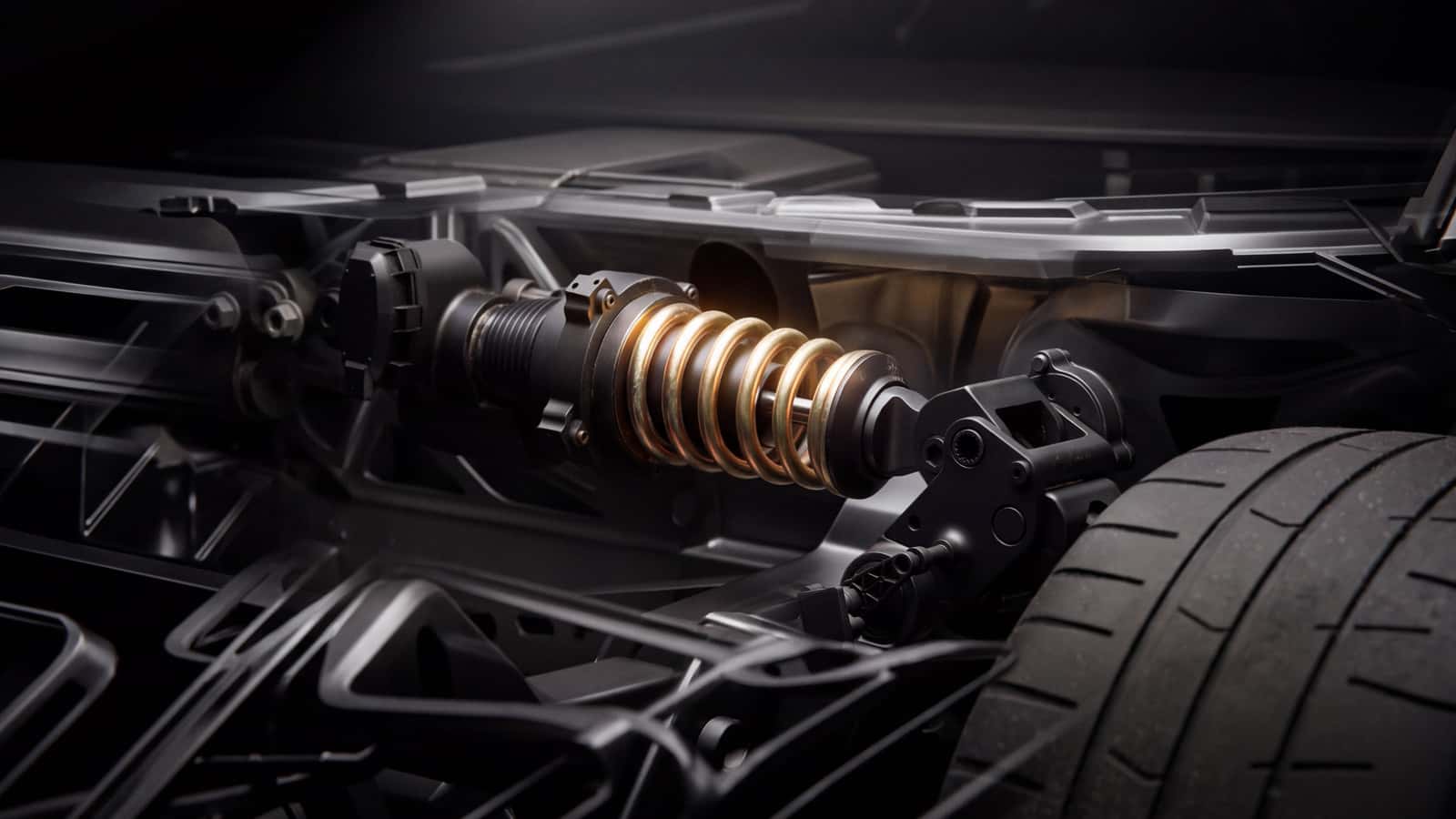
The Tesla Roadster’s fan system addresses a familiar limitation of performance-car aerodynamics: a conventional wing needs airflow before it can do much work. Tesla says its new Roadster can generate substantial downforce while standing still. A powered fan makes that possible by moving the air itself, rather than waiting for the car to build speed.
That is a different job from the cold-gas thrusters highlighted in the Roadster reveal and configuration report. The fan is intended to help keep the tires loaded against a surface. A thruster produces a directed force by expelling gas. The Roadster Rocket thruster explainer examines what the second mechanism means for lift and control.
How a fan creates downforce at zero speed
On its updated Roadster page, Tesla describes a fan and ground-sealing system that removes air from beneath the vehicle. Tesla also qualifies the page’s displayed features and specifications as reflecting the optional Thrust augment. Performance separately lists a suction system, so that disclaimer should not be read as saying every fan-related capability is standard across configurations.
In physical terms, lowering pressure under a controlled area of floor allows the higher pressure outside that area to produce a net force toward the road. The fan must keep moving air; a stationary car does not mean a stationary aerodynamic system.
The potential advantage is tire loading before the car reaches the speeds where conventional aerodynamic surfaces become most effective. That can matter when accelerating from a slow corner or braking into one. It does not establish a particular stopping distance or lap time: tires, suspension, the surface and control-system calibration still affect the result.
Downforce also differs from adding vehicle mass. It can increase the load pressing the tires against the road without adding the equivalent amount of material to the car. That does not make the equipment weightless or guarantee that grip rises in direct proportion to the added force.
McMurtry provides a useful comparison
McMurtry’s Spéirling PURE technical release gives a more detailed description of its own implementation: two high-speed fans extract air through filters from a sealed region beneath the chassis. The company describes fan motors, cooling, a downforce skirt and an onboard compressor as parts of that system. These are Spéirling components, not a disclosed Tesla parts list.
In April 2025, McMurtry also documented an inverted-driving demonstration on a purpose-built rotating rig. It described the event as a proof of concept using its validation prototype. The example illustrates why fan-generated force does not require forward speed; it is not evidence of the Roadster’s measured performance or a feature intended for ordinary road use.
Watch McMurtry Automotive’s official demonstration. This comparison shows a different manufacturer’s car and a specially constructed rig.
Why the suspension and operating mode matter
Tesla describes Track Mode as lowering the Roadster and changing its suspension, with high-downforce and low-drag settings. An underfloor system, ride height and tire loading need to work together; a fan is one element of the chassis rather than a separate promise of grip. Tesla has not published enough detail on the reviewed page to quantify how that interaction changes everyday ride quality.
There are also different ways to use a fan. Gordon Murray Automotive’s T.50 technical explanation describes a rear fan working with ducts, diffusers and active spoilers across operating modes that balance downforce and drag. Its design and claimed results belong to the T.50. A fan-equipped badge does not mean two cars use the same aerodynamic architecture.
The engineering questions still open for Roadster
Powered airflow requires energy and hardware. McMurtry’s account makes the associated cooling, filtering and sealing equipment explicit, and describes the sound of its own fan system. Those are useful engineering considerations, but they do not establish the Roadster’s power consumption, noise, range impact or service requirements.
Tesla’s current page does not quantify those ownership effects or provide a detailed fan-system specification. Its stationary hold-down statement remains a company claim in the material reviewed here. The useful follow-up evidence will be configuration-specific operating limits, energy demand, noise measurements and repeatable driving tests. The principle explains how low-speed downforce is possible; those details will determine how Tesla’s implementation works for a driver.
0 comment(s) so far on Tesla Roadster Fan Downforce: How It Works at Low Speed