

Can the Tesla Roadster Fly? Rocket Thrusters Explained
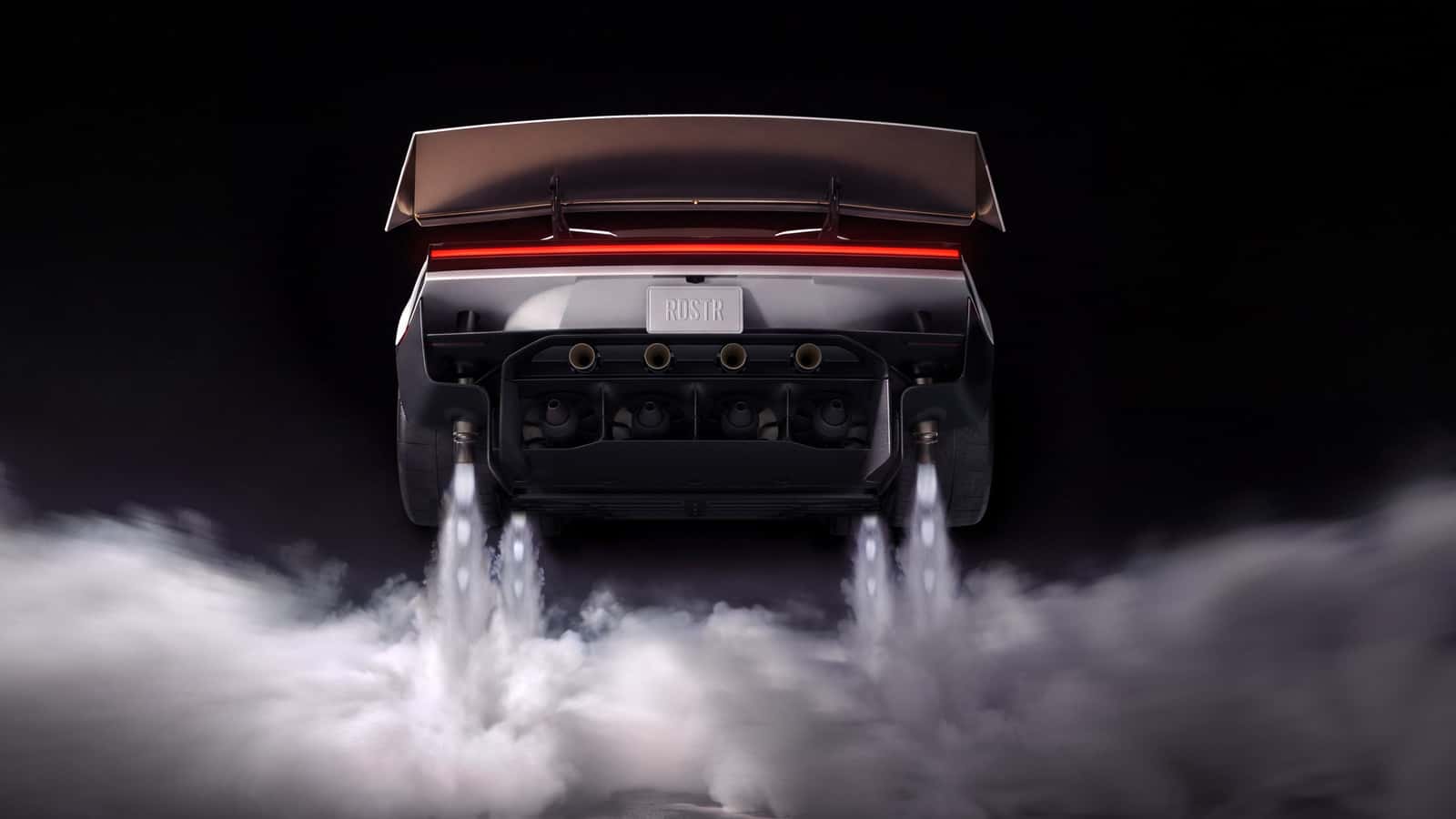
Tesla says the Rocket configuration of its new Roadster can fly. That statement applies to a one-seat, invitation-only version with cold-gas thrusters positioned around the vehicle. It does not mean every Roadster has the same hardware, or that Tesla has published a complete set of flight specifications for customers.
The useful question after the Roadster reveal is how that propulsion could work. A cold-gas thruster uses a familiar physical principle: accelerate gas in one direction and the vehicle experiences a reaction force in the other. Turning that principle into controlled movement depends on how much force the system produces, where it acts and how long it lasts.
Tesla’s official demonstration post, captioned Do a kickflip!, provides the company’s short showcase footage. A demonstration and a complete operating specification answer different questions. The clip should not be treated as an independent measurement of endurance, thrust or a customer’s usable flight envelope.
Do a kickflip! pic.twitter.com/DJ1Bq1yu8m
— Tesla (@Tesla) October 16, 2026
Cold gas means thrust without combustion
NASA’s small-spacecraft propulsion overview explains that cold-gas systems expel gaseous propellant through a nozzle without combustion. The word rocket therefore does not automatically mean a flame-producing engine. Stored gas provides a supply of material that can be expelled to create force.
NASA describes precise maneuvering as a useful characteristic of this type of system, alongside limits on its total impulse. Impulse is force accumulated over time: a strong, short pulse and a weaker, longer pulse can produce a similar overall change in momentum. A momentary push and an extended hover still require very different operating information.
The NASA examples concern spacecraft. They explain the propulsion category; their dimensions and performance are not Roadster specifications, and NASA is not evaluating or endorsing Tesla’s implementation.
Lifting, hovering and rotating are different tasks
As NASA Glenn’s explanation of rocket forces sets out, thrust and weight have both magnitude and direction. For a vehicle to lift from rest under thruster power, its upward thrust must overcome its weight. To hold a steady height, the vertical forces need to balance. Changing orientation adds another control problem: forces applied away from the center of mass can produce rotation.
That is why nozzle placement and control matter as well as peak thrust. The same total force can produce a different motion when its direction or point of application changes. Tesla’s current Roadster page describes perimeter thrusters for forward and upward acceleration and lateral rotational movement, with electrically actuated adjustments intended to stabilize flight. Those remain Tesla’s descriptions of its system.
The suction fan serves another purpose
The Roadster presentation also includes a fan and ground-sealing system. That system draws air from beneath the vehicle to help press it toward a nearby surface. It should not be confused with a downward-pointing thruster producing an upward reaction force. Both involve moving gas, but they create force in different ways and support different parts of Tesla’s proposed performance package.
Our explanation of Roadster fan downforce examines that pressure-based system and compares it with other fan-assisted cars. Separating the two mechanisms helps explain why a statement about grip while stationary does not establish the duration or controllability of a maneuver above the ground.
What the product page does and does not specify
The Tesla product page reviewed for this report does not specify Rocket’s total thrust, usable propellant quantity, maximum firing time, sustained hover duration or a complete operating envelope. The page also says Rocket is not approved for public road use and is unavailable in some regions. An invitation-only designation does not answer those technical questions.
Missing figures are not proof that a vehicle cannot lift. They mean a reader cannot calculate its capabilities from the published specifications reviewed here. Assessing a usable system would require configuration-specific data, repeatable tests and clearly defined conditions, rather than applying a spacecraft example or a generic thrust calculation to an unspecified car.
Tesla’s claim is striking; the engineering distinction is straightforward. Producing an upward impulse, maintaining controlled flight and providing a repeatable customer capability are separate questions. A useful customer specification needs to explain which maneuvers Rocket supports, for how long and under what conditions.
0 comment(s) so far on Can the Tesla Roadster Fly? Rocket Thrusters Explained