

2027 Audi Q9: U.S. Specs, Seating and Cargo Explained
New models
Audi revealed the 2027 Q9 on July 29, 2026 as its largest SUV, with six- or seven-seat layouts and a U.S. twin-turbo V6 rated at up to 429 horsepower. The important distinction is how that space is configured: the advertised 87.7 cubic feet is a maximum with both rear rows folded, not luggage space with seven people aboard. Audi’s announced North American launch window was the fourth quarter of 2026.
Updated October 16, 2026
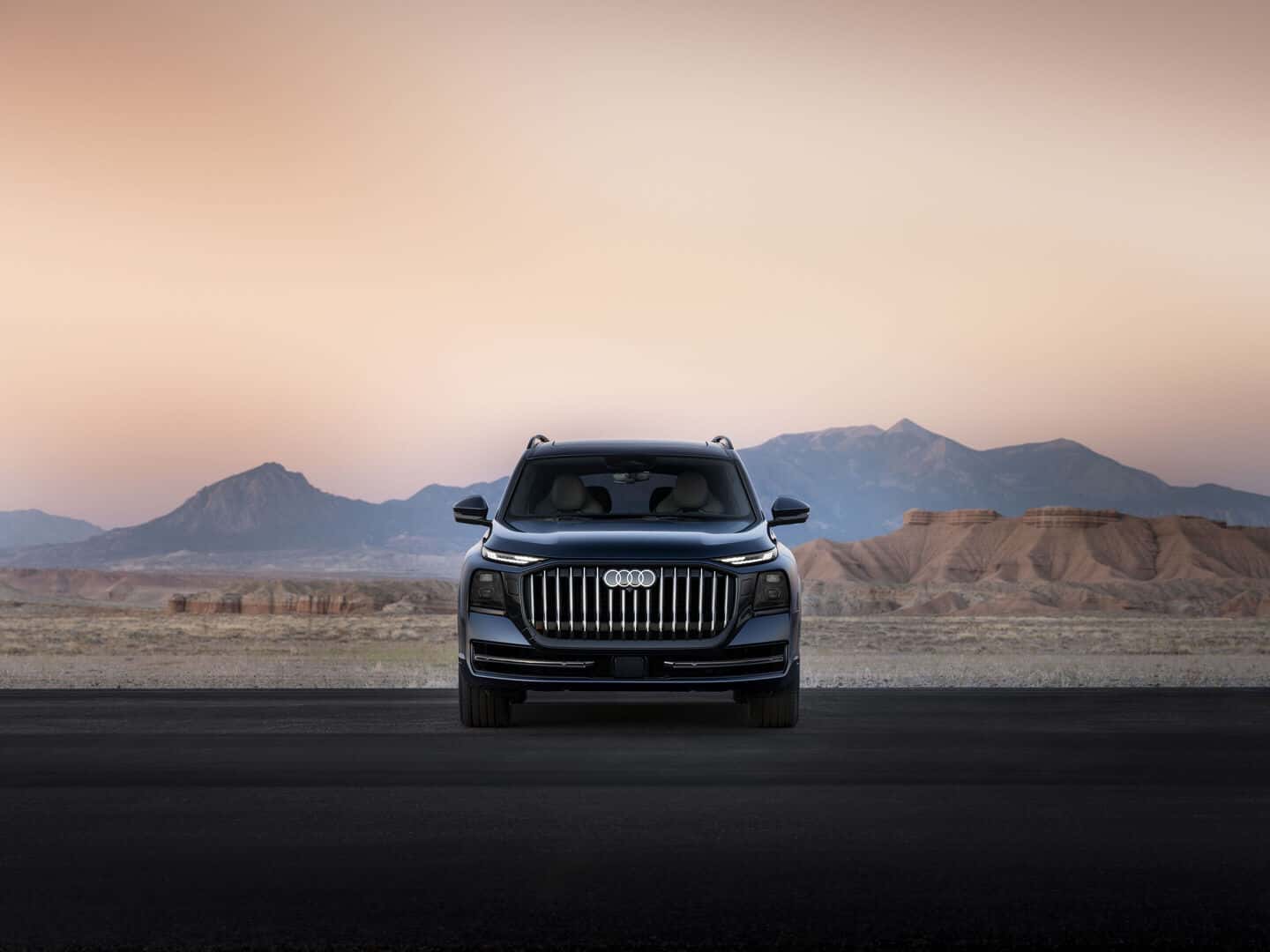
The U.S. figures, with their conditions
The Audi USA overview identifies the V6, standard adaptive air suspension and a manufacturer-claimed 4.9-second 0–60-mph time. These are published specifications rather than results from our testing. Its capacity figure is expressly attached to the seven-seat configuration.
| Item | Published figure | What it describes |
|---|---|---|
| Engine output | Up to 429 hp | Twin-turbo V6 maximum output |
| Acceleration | 4.9 seconds | Audi’s stated 0–60-mph time |
| Maximum cargo capacity | 87.7 cu. ft. | Seven-seater with second and third rows folded |
| Seating | Six or seven | Different second-row arrangements |
For a household regularly using the third row, the folded-seat maximum answers only part of the storage question. The remaining luggage space with those seats occupied, the load opening and the shape of everyday bags matter separately. An 87.7-cubic-foot maximum does not establish whether a particular stroller fits behind the third row.
Six seats and seven seats serve different jobs
Audi’s May 12 interior preview described two individual power-adjustable second-row seats in the six-seat arrangement. The seven-seat version instead provides three places in the middle row. Individual third-row seatbacks fold electrically, allowing a passenger position to remain in use while the other side carries cargo.
The July world-premiere release adds a specific access detail: an outer second-row seat can slide and tilt forward without folding its backrest, allowing third-row access with a child seat fitted there. That describes the seat mechanism; it does not establish compatibility with every child restraint or seating combination. The actual restraint and vehicle instructions still determine the installation.
Power doors are another available feature, with obstacle detection intended to stop an opening door when something is in its path. This can be useful in a tight parking space, but it is not a promise that the door can avoid every obstacle. Identify the door equipment alongside the seating layout, rather than assuming every photographed feature is standard.
Hands-free assistance still requires attention
Audi describes adaptive driving assistant plus as SAE Level 2 assistance for approved highway segments in the United States, Canada and Germany. It can manage steering, acceleration and braking within its operating limits, while a driver-monitoring camera checks attention. The driver remains responsible and must stay alert. Hands-free operation does not mean the driver can stop watching the road.
Launch timing and prices belong to their market
Audi’s July 27 update set a fourth-quarter North American and European launch plan. That dated announcement does not establish that a particular U.S. vehicle has arrived or is available for purchase.
The world-premiere release’s €108,400 starting price applies to the German-market 220-kW Q9 TDI diesel. It is not a U.S. V6 MSRP, and converting the currency would not make it one. A useful U.S. comparison needs the actual trim, selected equipment and destination charge together, rather than a German entry price beside U.S. horsepower and cargo figures.
0 comment(s) so far on 2027 Audi Q9: U.S. Specs, Seating and Cargo Explained