

2027 Toyota Prius vs. Plug-in: Price and Charging Costs
Hybrid ownership
The 2027 Toyota Prius and Prius Plug-in Hybrid share a family name, but they ask different things of an owner. The regular Prius needs gasoline and manages its hybrid battery automatically. The plug-in adds externally charged driving range. Its value depends on whether charging fits the routine as well as on the purchase-price difference.
Updated October 16, 2026

Separate the starting prices from the purchase total
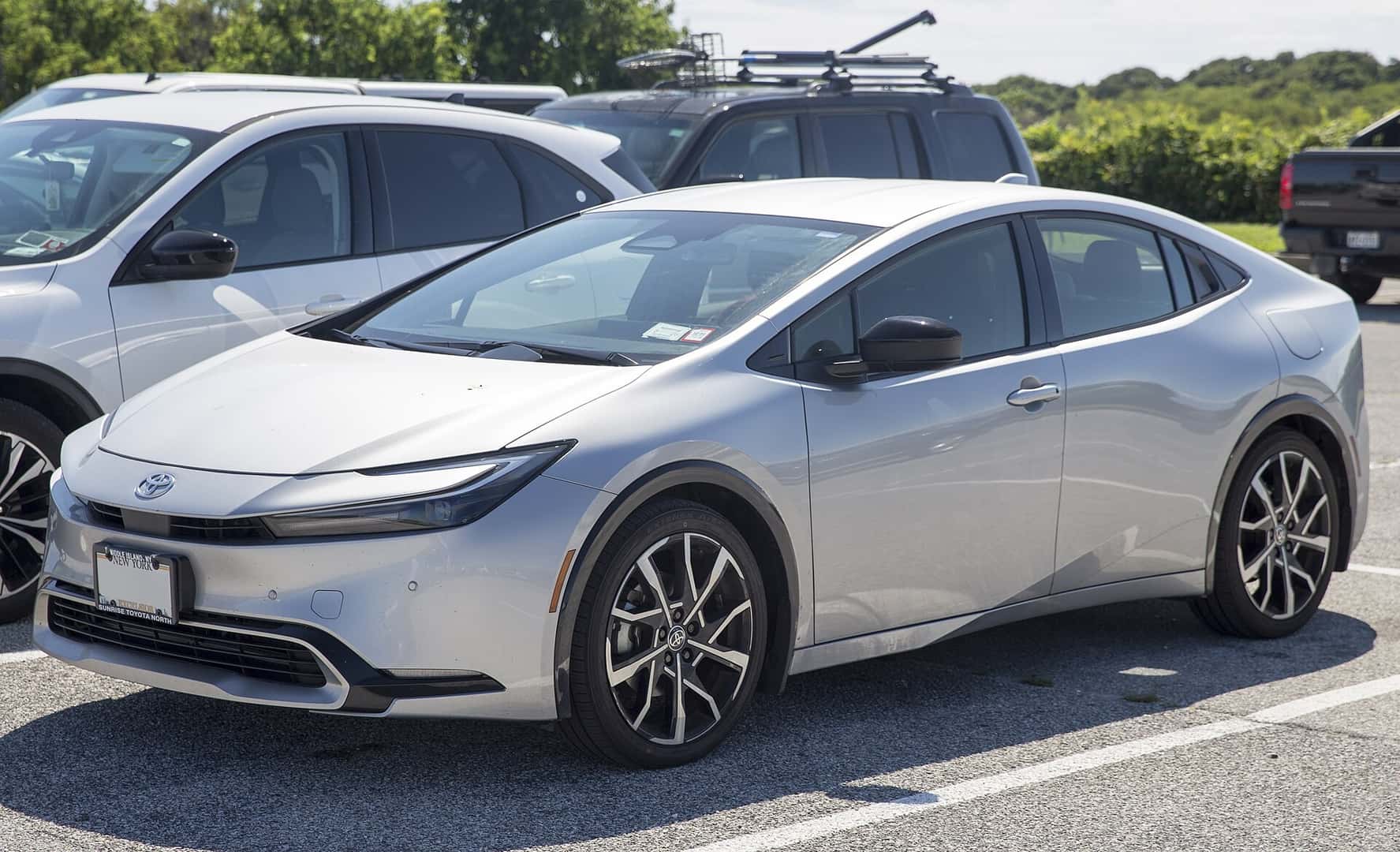
In its July 16, 2026 announcements, Toyota listed the regular Prius LE from $28,755 and the Prius Plug-in Hybrid SE from $33,980, each before a $1,295 dealer processing and handling charge. Adding that stated charge gives $30,050 and $35,275 respectively—a $5,225 difference between those starting configurations. These are announced manufacturer prices, not current transaction quotes or out-the-door totals.
The sources are Toyota’s regular Prius announcement and Plug-in Hybrid announcement. Compare the equipment you actually want before treating that base-price gap as the cost of adding a plug alone. Taxes, options and the agreed purchase price still need their own lines.
Use the right efficiency measure
Toyota quoted an EPA-estimated 55 mpg combined for the regular LE front-wheel-drive Prius. For the plug-in SE, it quoted up to 44 miles of all-electric range and 51 mpg combined in hybrid operation. Those describe different operating conditions. Electric range is not a second gasoline-MPG figure and should not be added to it.
The Department of Energy explains that a conventional hybrid recovers braking energy and uses its engine and motor without plugging into an external power source. A plug-in hybrid has a different charging arrangement: DOE’s plug-in guide describes external charging and subsequent hybrid operation. Exact engine-start behavior and electric operation depend on the vehicle and conditions.
Map one ordinary week
Write down each day’s distance, where the car parks and when dependable charging would be available. Include errands after the commute, a missed charging night and the longer trip that happens every week. A short commute alone does not establish that all driving will be electric.
For each charging location, identify access, the electricity price and any parking or session charge. Home charging, workplace charging and public charging can have different economics. An apartment parking space without an approved electrical arrangement is not the same as a usable home charging point. Confirm the arrangement before making the purchase-price comparison depend on it.
Calculate energy cost before claiming a payback
For the regular hybrid, an initial fuel estimate is annual miles divided by the appropriate MPG estimate, multiplied by gasoline price. For the plug-in, separate the miles you expect to cover on externally charged energy from the remaining hybrid miles. Use the vehicle’s electricity-consumption information and the electricity rate for the first part, and gasoline consumption for the second.
Keep charging losses and paid session charges in the estimate rather than treating battery capacity as the exact amount purchased from the wall. If the result depends on a rebate, incentive or special financing offer, establish eligibility and current terms separately. None is assumed in this comparison.
Compare the resulting annual difference with the actual purchase-price gap. A simple payback estimate leaves out financing cost, insurance, maintenance and eventual resale, so describe it as an energy-only calculation. It is not a guaranteed ownership saving.
Choose the arrangement you can use consistently
The plug-in gives an owner with suitable charging another way to cover daily driving. The regular hybrid avoids the external-charging task. Neither conclusion requires a prediction about which car will hold its value better or what a particular lender will approve.
If the decision is already between regular-hybrid grades and drivetrains, the separate 2027 Prius price and FWD-versus-AWD comparison addresses that narrower choice. Keep the powertrain decision and the trim decision distinct so that each extra cost has a clear purpose.
0 comment(s) so far on 2027 Toyota Prius vs. Plug-in: Price and Charging Costs