

2026 Subaru Trailseeker: Range by Trim and Charging Context
Electric SUVs
Updated October 16, 2026
The 2026 Subaru Trailseeker combines standard dual-motor all-wheel drive with 375 horsepower. The more useful distinction for an EV comparison is below that headline: its range estimate changes by trim, and its advertised fast-charge time describes a particular part of the battery charge, under particular conditions.
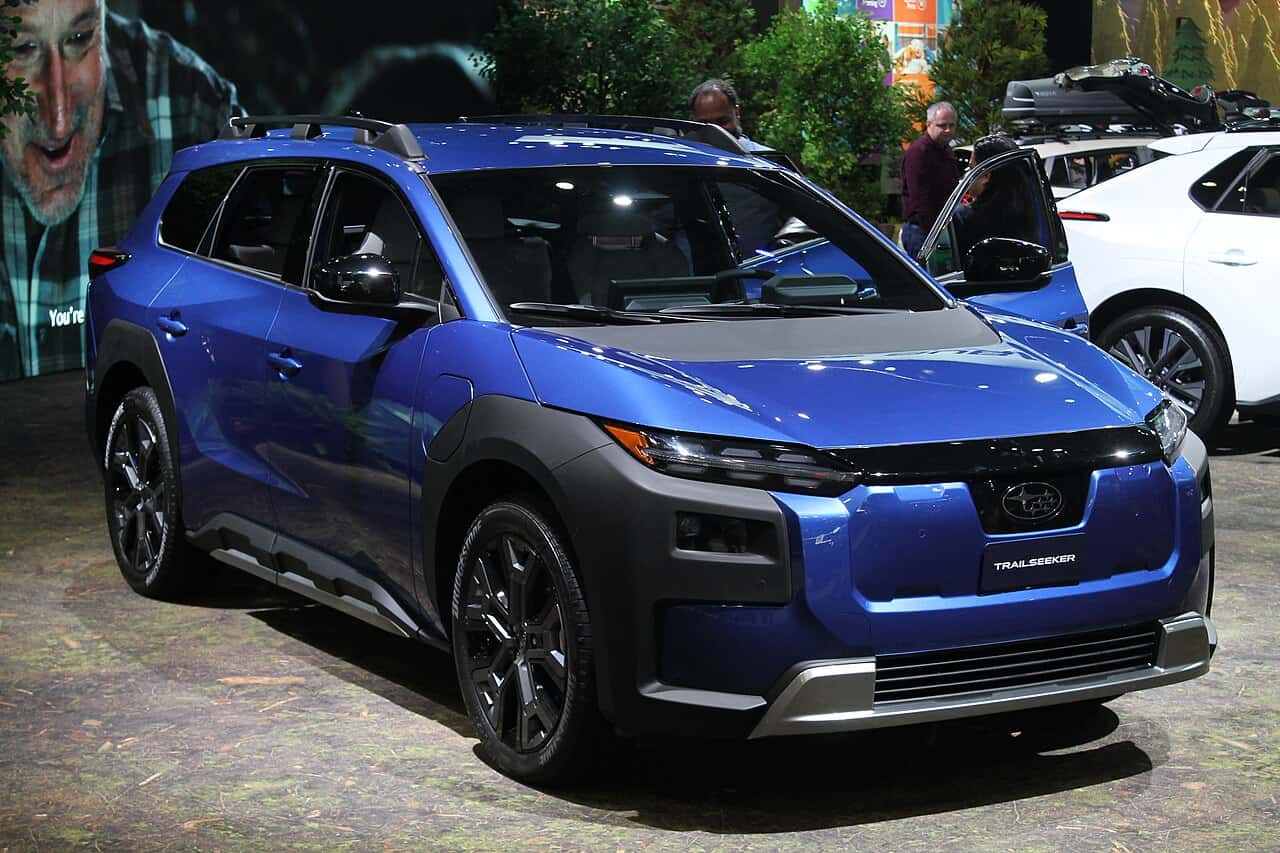

The 281-mile figure belongs to Premium
Subaru’s 2026 trim comparison lists these EPA-estimated ranges on a full charge. Its footnote says actual range varies with conditions, weather and vehicle condition.
| Trim | EPA-estimated range | Standard wheel diameter |
|---|---|---|
| Premium | 281 miles | 18 inches |
| Limited | 274 miles | 20 inches |
| Touring | 274 miles | 20 inches |
| Touring Leather | 274 miles | 20 inches |
The seven-mile difference is a published trim comparison, not proof that wheels alone cause the entire change. Nor is either estimate a promise for a winter highway journey. Compare the exact trim with the routes you actually drive, rather than applying the largest number to every Trailseeker.
Twenty-eight minutes does not mean empty to full
Subaru’s specifications pair a maximum rated DC charging speed of 150 kW with an approximate 10-to-80-percent charging time of 28 minutes at a 150-kW DC charger. The charging footnote identifies initial charge, charging rate, ambient temperature and other factors as variables. Maximum power is not an average sustained throughout a session.
The manufacturer’s model overview also describes battery preconditioning and NACS compatibility. Those features help explain the charging design; they do not establish that every nearby station is compatible, working or available when you arrive. A route plan still needs a suitable stop and an alternative.
For a journey you repeat, examine one realistic itinerary: starting charge, distance to the first suitable charger, the charge you would want on arrival and the next usable stop. Include the time to reach the station and any waiting. The advertised battery interval answers a narrower question than the duration of a travel break.
Work out the parking arrangement before the payment
The Department of Energy’s home-charging guidance distinguishes Level 1 from faster Level 2 equipment and recommends reviewing the property’s electrical capacity with a qualified electrician. Apartment or shared parking needs its own arrangement. Before treating home charging as settled, check the parking permission, equipment and installation requirements.
Ask what is practical at the place the vehicle will be parked overnight: where the cable reaches, which equipment is suitable, whether installation is needed and how the electricity is billed. A quoted charger price by itself does not answer those questions.
For an energy-only comparison, multiply the vehicle’s electricity use in kWh per 100 miles by the electricity price per kWh. As an illustration, 30 kWh per 100 miles at $0.15 per kWh equals $4.50 per 100 miles. Those are example inputs, not a Trailseeker consumption rating or a quoted local rate. Public charging fees, installation and other ownership costs need separate entries.
AWD is part of the specification, not a verdict
Subaru also specifies 8.5 inches of ground clearance. The dual motors, clearance and trim equipment describe what the vehicle is; they do not establish measured winter braking, an off-road route’s suitability or long-term reliability. There is no firsthand driving test behind this article. The useful next comparison is the exact vehicle’s equipment and charging fit, with the estimates kept in their proper scope.
0 comment(s) so far on 2026 Subaru Trailseeker: Range by Trim and Charging Context