

Higher Incentives, Uneven Prices: May 2026 New Cars
New-car market
Updated October 17, 2026
New-car transaction prices eased in May 2026 while incentive spending increased. Kelley Blue Book put the national average at $49,220, down 0.5% from April but 1.2% above a year earlier. A smaller average bill did not mean every model became cheaper.
What changed in May
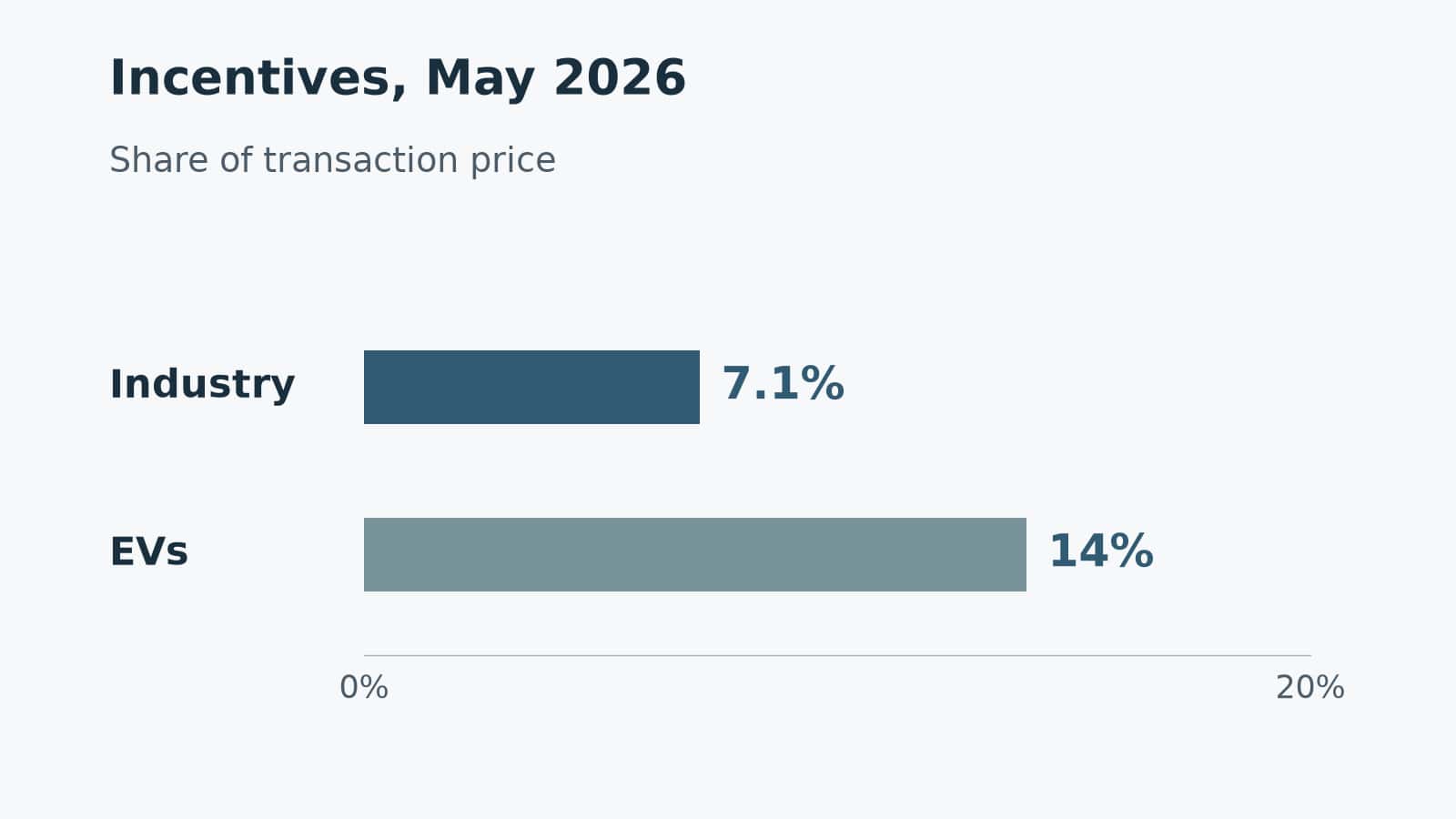
The June 9 pricing report compared May with a revised April average of $49,456. Incentive spending reached 7.1% of transaction price, versus 6.9% in April. That is an industry spending ratio, not a universal discount from a vehicle’s sticker price. Compact and subcompact SUV transaction prices were higher year over year despite the decline in the monthly average.
EV incentives averaged 14% of transaction price. This average does not establish an individual offer.
More than one kind of price
Cox’s separate May inventory report, published June 11, measured 2.89 million new vehicles and 76 days’ supply. Inventory rose slightly from April, while faster selling reduced supply relative to sales. A higher vehicle count and fewer days’ supply can coexist because the latter also depends on how quickly vehicles are selling.
That report’s average listing price was $49,307. A listing is an asking price for available inventory; the transaction report describes purchases. The two averages describe different groups and should not be subtracted to calculate a typical negotiated discount. Cox also reported that roughly 56% of inventory was below $50,000 and a quarter was in the $30,000–$40,000 range. The national average therefore does not define the price of every available car.
Supply also varied by brand. Cox reported Nissan at 82 days in May, while Chrysler, Dodge and Jeep had substantially higher supply year over year. A national measure cannot describe availability of a trim or configuration.
For a financed purchase, the market average is not a payment quote. The CFPB notes that lenders consider the borrower, loan terms and vehicle when setting a rate. May’s price and incentive figures do not establish those terms.
0 comment(s) so far on Higher Incentives, Uneven Prices: May 2026 New Cars