

Car Loan Access Improved in May: What the Numbers Mean
Auto Finance
Updated October 16, 2026
Auto credit became more accessible in May 2026, according to Cox Automotive’s June 10 report. Its Dealertrack index improved, and its measured approval rate rose. Yet loans lasting more than 72 months also became more common. Access and affordability answer different questions: a lender may offer financing that still carries a substantial long-term cost.
What the May report actually measured
The original Cox report put the All-Loans Index at 103.7, up 1.5% from April. Cox said narrowing yield spreads and improving approvals drove the increase. The figures below describe that historical report, rather than today’s lending terms or an individual applicant’s prospects.
| Measure | April | May |
|---|---|---|
| All-Loans Index | 102.2 | 103.7 |
| Measured approval rate | 70.6% | 72.4% |
| Share of loans longer than 72 months | 29.7% | 30.0% |
The 103.7 reading is an index value, not a percentage chance of approval. Cox also reported a falling subprime share, which partly offset the improvement. Conditions did not necessarily improve equally for every borrower.
A smaller payment can come from a longer commitment
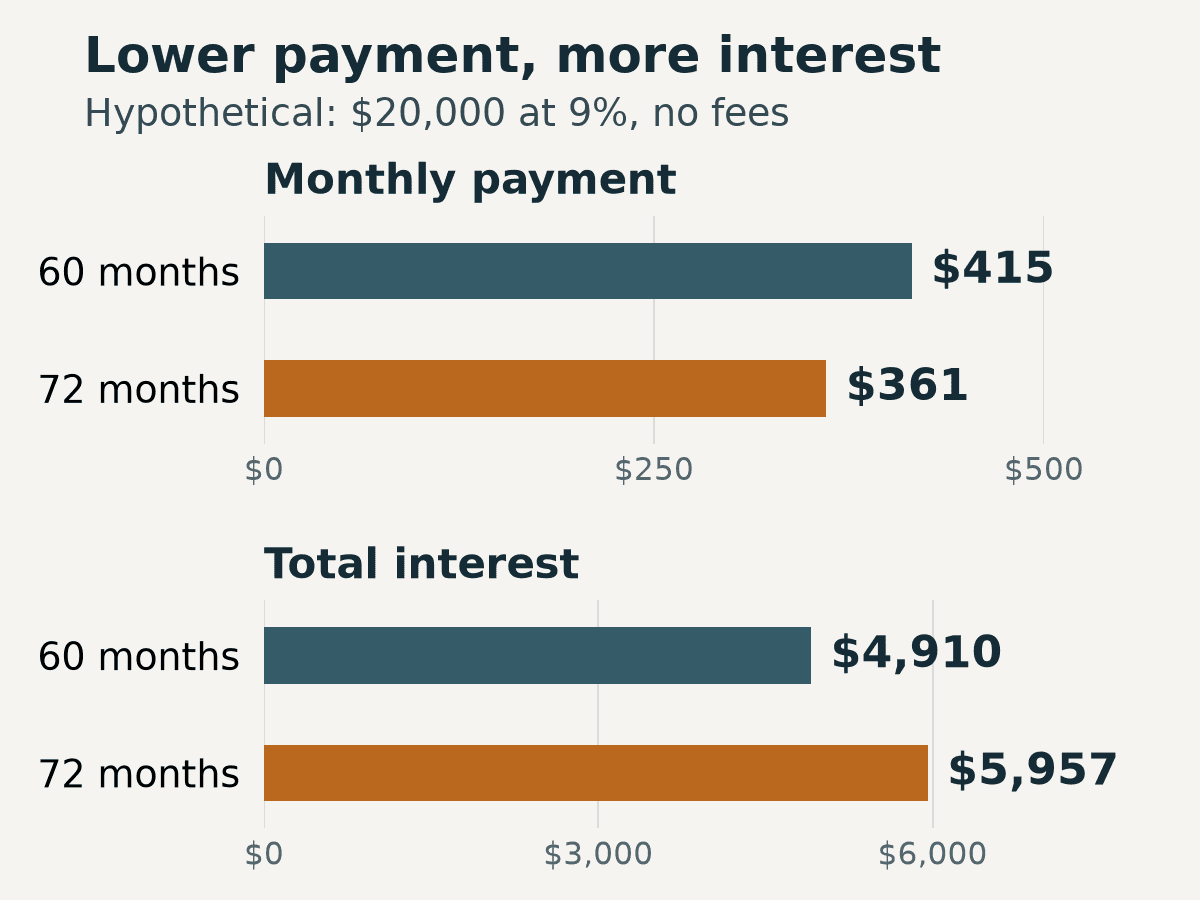
A longer term can lower the scheduled monthly payment without lowering the amount borrowed. The following illustration isolates that difference: $20,000 financed at a fixed 9% annual interest rate, with monthly amortization, no loan fees and every payment made on schedule. It is arithmetic, not a current rate offer or a prediction of anyone’s approval.
| Term | Approximate monthly payment | Approximate total interest |
|---|---|---|
| 60 months | $415 | $4,910 |
| 72 months | $361 | $5,957 |
The longer example reduces the monthly payment by about $55 while adding about $1,047 in interest and another year of payments. The table rounds displayed amounts; the calculation uses the unrounded amortized payment. Actual contracts can differ in fees, payment timing and other terms.
Read the offer, not the market average
The Consumer Financial Protection Bureau identifies credit history, income and debts, loan amount, term, down payment and vehicle characteristics among the factors lenders consider. A broad index cannot tell you how those inputs will combine in your application. Compare offers using the same amount financed and proposed vehicle, rather than assuming a market improvement guarantees a lower rate.
Separate the vehicle’s purchase price from the borrowing terms. If a payment changes, identify whether the reason is a different price, down payment, amount financed, rate or number of payments. Otherwise a lower monthly figure can conceal that the underlying deal has changed.
The written cost comparison
The CFPB’s Truth-in-Lending explanation distinguishes APR, finance charge, amount financed and total of payments. APR incorporates the interest rate and mandatory fees; the finance charge describes interest and certain fees over the scheduled loan. The disclosure also identifies the payment schedule and other important terms.
Request the completed disclosure before signing and compare it with the offer used for budgeting. The market report explains why access changed in May. The written vehicle price and financing terms establish what a particular proposed purchase would cost.
0 comment(s) so far on Car Loan Access Improved in May: What the Numbers Mean