

2026 Kia K4 Hatchback: Cargo, Engines and Trim Differences
Compact cars
Updated October 16, 2026
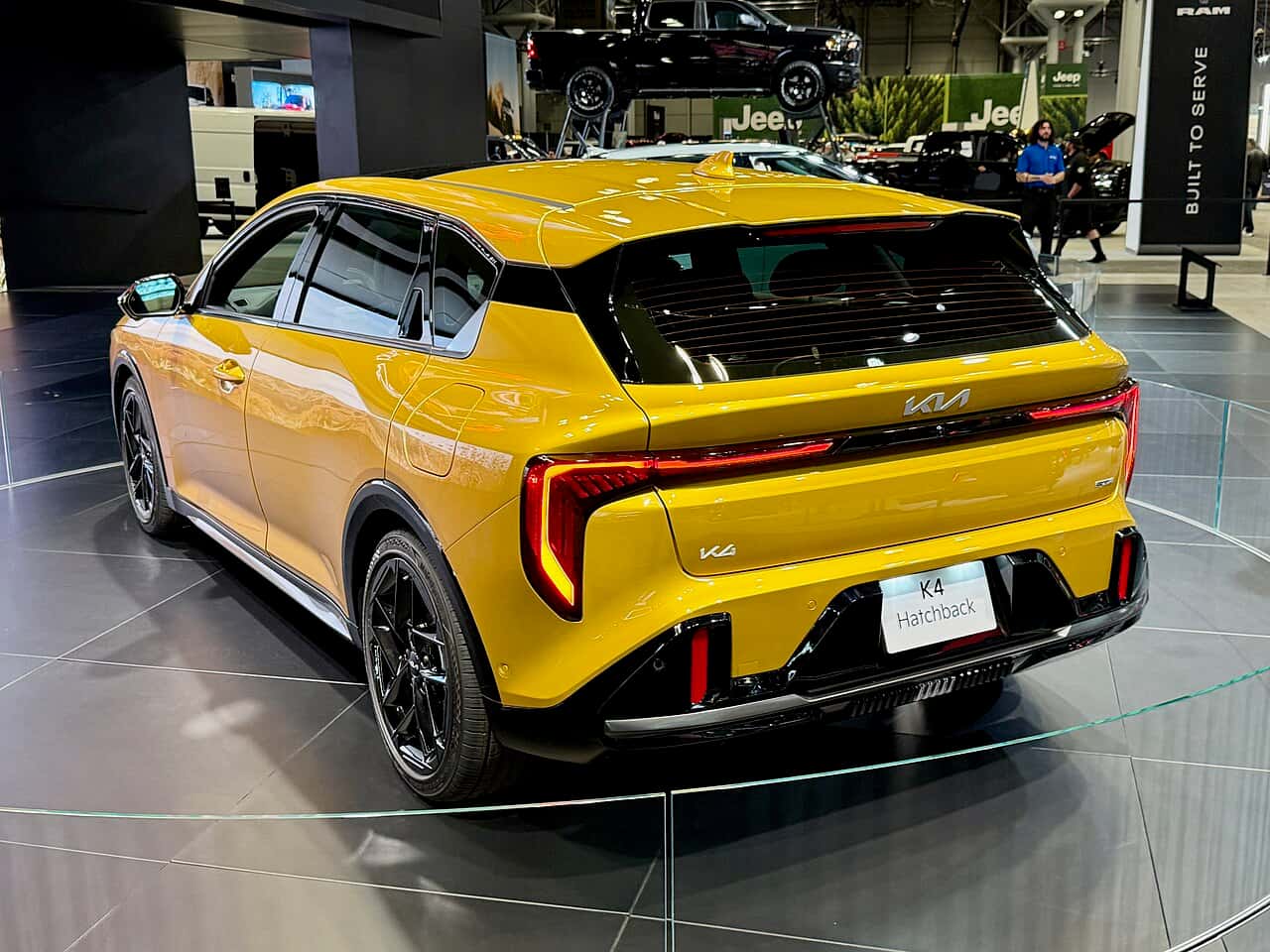
The 2026 Kia K4 Hatchback’s practical advantage is straightforward: a larger rear opening and more luggage space than the sedan, in a shorter body. Its sportier styling is a separate question from performance. The useful choices are how much room remains with passengers aboard, which engine and transmission are fitted, and which features belong to the actual trim.

Two cargo figures answer different questions
In its firsthand GT-Line Turbo review, Cars.com reports Kia’s 22.2-cubic-foot cargo figure behind the rear seats, compared with 14.6 cubic feet for the K4 sedan. The reviewer also notes the hatchback’s roughly 11-inch reduction in overall length. That combination explains its appeal without assuming it will accommodate every bulky object.
Kia’s retained U.S. full-line brochure, on its 2026 K4 Hatchback page, lists 59.3 cubic feet with the second row folded. This is the larger configuration with the rear passenger seats surrendered. It should not be presented as the luggage capacity available while carrying people in those seats.
| Measurement | 2026 K4 Hatchback | What it describes |
|---|---|---|
| Cargo behind the rear seats | 22.2 cu. ft. | Rear seats remain available for passengers |
| Maximum cargo | 59.3 cu. ft. | Second-row seats folded |
| Rear legroom | 38.0 in. | Published seating dimension |
| Rear headroom | 38.3 in. | Published seating dimension |
The brochure supplies the rear-seat dimensions as well as the folded cargo figure. None measures the opening’s narrowest point, the shape of a particular stroller or the space left after a child restraint is installed. For an awkward item, its dimensions and the hatch opening are more informative than comparing cubic-foot totals alone.
GT-Line is not the same thing as GT-Line Turbo
Cars.com distinguishes the 147-horsepower 2.0-liter engine and continuously variable automatic from the GT-Line Turbo’s 190-horsepower 1.6-liter turbo and eight-speed automatic. Its driving account concerns the GT-Line Turbo, so its impressions should not be transferred wholesale to a base-engine car. These are two different powertrain choices, rather than a manual-versus-automatic decision.
Kia’s 2026 U.S. model page separately identifies the GT-Line’s multi-link rear suspension and the GT-Line Turbo’s 18-inch wheels, turbo engine and eight-speed automatic. The GT-Line name therefore does not, by itself, establish that the turbo engine is fitted.
The same page lists a 29.6-inch combined display arrangement for the GT-Line Turbo: a 12.3-inch instrument display, a 5-inch climate display and a 12.3-inch infotainment touchscreen. It is not one uninterrupted 29.6-inch touchscreen. The surround-view camera, ventilated seats and Digital Key are listed among available features; an illustrated cabin is not proof that they are installed on a specific car.
Practical hatchback, rather than an automatic hot-hatch claim
Conner Golden’s Cars.com drive describes the GT-Line Turbo as more convincing for everyday use than as a dedicated hot hatch, with reservations about steering feel and the all-season tires during spirited driving. That is the named reviewer’s assessment, not our own test or a measured verdict on every trim.
For a buyer, the cargo layout and exact equipment make the stronger case. A hatchback can offer a different way to carry luggage without requiring SUV proportions, but its shape does not guarantee lower insurance, fuel or tire costs. Those comparisons need particular vehicles and actual usage, rather than a general promise that choosing a smaller body saves money.
0 comment(s) so far on 2026 Kia K4 Hatchback: Cargo, Engines and Trim Differences