

Used Hybrid Demand: What the Q1 2026 Numbers Mean
Hybrid market
Updated October 17, 2026
Used hybrids gained share in iSeeCars’ Q1 2026 study; average days on market rose.
Share growth did not mean faster sales
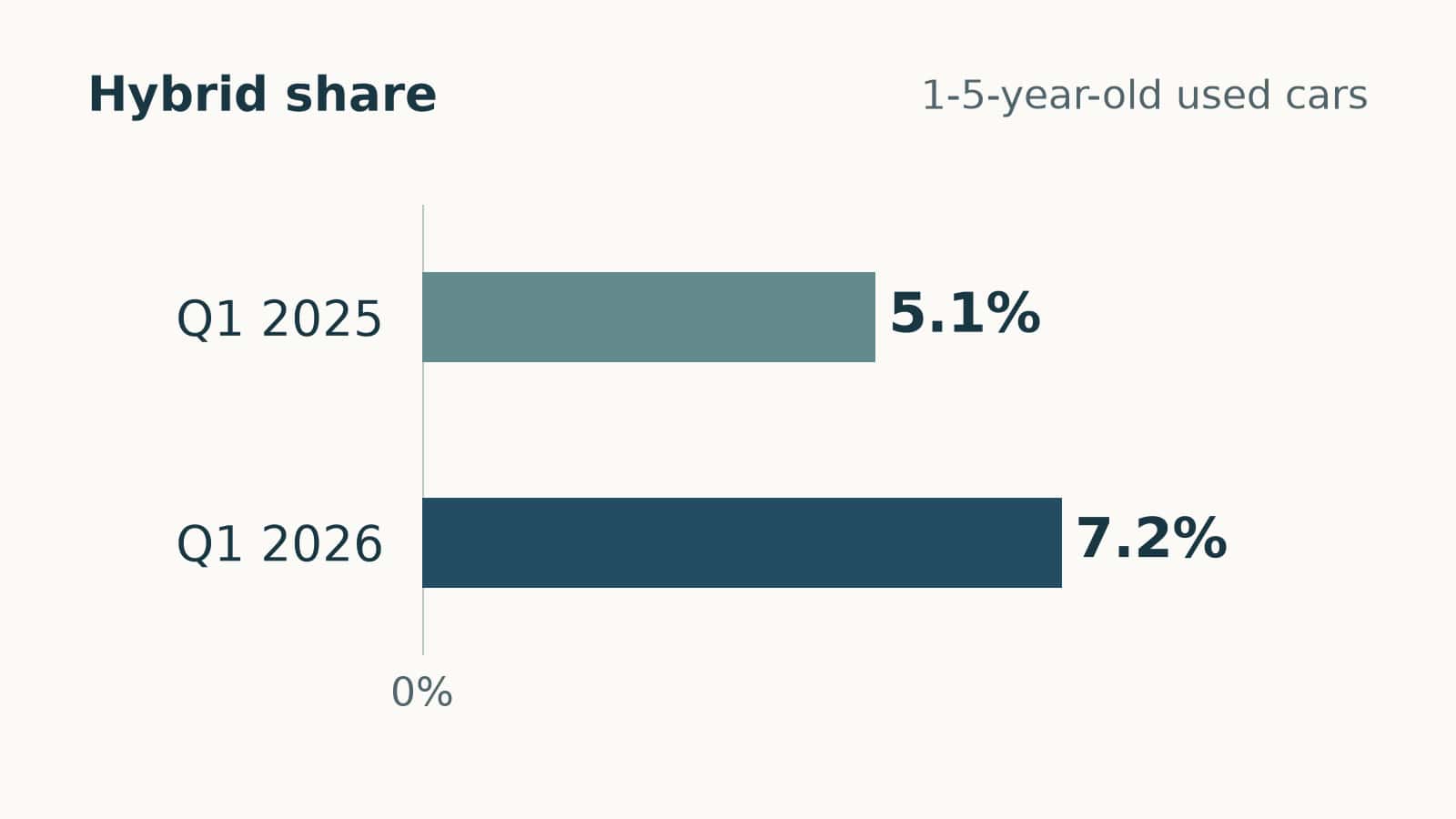
The April 29 study analyzed more than 6.7 million one- to five-year-old used cars sold in the first quarters of 2025 and 2026. Hybrids’ published share rose from 5.1% to 7.2%. Yet their average time on market increased from 40.1 to 54.4 days, versus gasoline vehicles’ 54.1 days in 2026. Hybrid rankings also include plug-in models. These measures reflect the study’s age range and methods, not a buyer census or evidence all hybrids sold faster.
Retail listings and auctions answer different questions
Cox Automotive’s April 7 first-quarter report described stronger wholesale prices: the mix-, mileage- and seasonally adjusted Manheim index reached 215.3 in March, up 6.2% annually. It also reported nearly 37,000 EVs sold through Manheim in the quarter, a wholesale record, alongside a separate retail estimate above 100,000 used EVs.
Those figures do not overturn iSeeCars’ retail-listing results. They concern different channels, populations and measures. A change in auction volume does not establish the time a listed hybrid takes to sell. Keep the observation period and the kind of transaction attached to each comparison, rather than treating “used demand” as one interchangeable statistic.
Identify which kind of hybrid is listed
The Department of Energy’s HEV explanation describes an engine working with one or more electric motors. A conventional hybrid cannot charge from an external plug: the engine and regenerative braking replenish its battery. Mild and full hybrids also differ; a mild hybrid cannot propel the vehicle using electricity alone.
Read the exact model and powertrain designation before transferring a category trend to a candidate car. A listing’s word “hybrid” does not describe one universal design. Ask which system is fitted and use that vehicle’s specifications when comparing it with another model, rather than assuming an electric-only capability from the label.
A plug-in changes the ownership comparison
DOE’s separate plug-in hybrid explanation makes charging access part of the fuel-use question. A PHEV has an engine and an electric motor and can take energy from outside charging equipment. Its fuel consumption depends on the distance driven between charges; the drivetrain label alone does not describe how much gasoline a particular owner will use.
For a used PHEV, compare the vehicle’s specified electric range with the trips and charging arrangement you expect to use. A category’s popularity is not evidence of personal fuel savings. Keep the charging plan separate from the purchase price rather than assuming the study’s broader hybrid group describes your daily energy use.
Popularity does not set an individual value
Kelley Blue Book’s valuation definitions require details such as year, model, mileage, style, options, condition and ZIP code. Trade-in and private-party estimates concern different transaction channels. Neither a category’s expanding share nor a model’s position in a sales ranking supplies those vehicle-specific inputs.
Match the configuration and value channel before comparing numbers. Note whether a figure is an estimate or a conditional offer, and keep its condition assumptions visible. This is the practical limit of the market story: a dated study can describe how its sample changed, while the individual vehicle still requires its own comparison.
0 comment(s) so far on Used Hybrid Demand: What the Q1 2026 Numbers Mean