

Wind Noise While Driving: Door Seals, Glass, Or Trim?
Noise and refinement
A whistle or rushing sound at road speed can come from air moving around a seal, window, roof opening or exterior accessory. The sound’s apparent location is a starting clue, not a diagnosis. Before replacing weatherstripping, document when the noise occurs and what changed before it began.
Updated October 16, 2026
Describe the sound before assigning a part
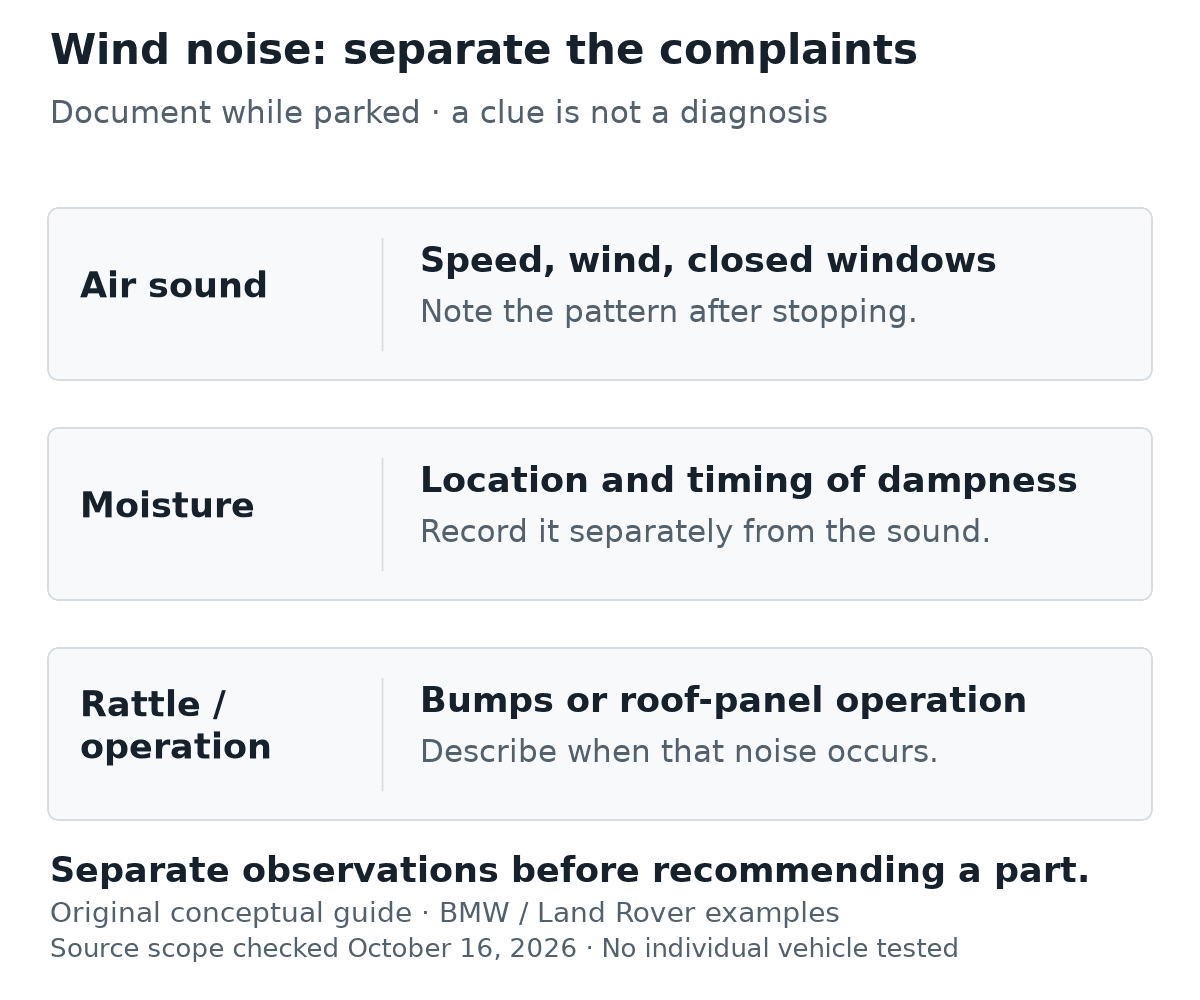
Note whether it is a steady rush, a narrow whistle, a pulsing thump or a rattle over rough pavement. Record the approximate speed, wind conditions and whether all windows and roof panels were fully closed. Make notes after stopping; the driver should not handle a phone or attempt adjustments while driving.
Recent windshield work, door repair, a new roof carrier or a window that no longer closes normally are useful details. They establish a sequence to investigate, not proof that the last repair caused the noise. A buyer should ask for the finding rather than infer collision damage from a whistle alone.
Look at what can be checked while parked
| Area | Useful observation |
|---|---|
| Door and window perimeter | Visible tears, displaced seals, trapped debris or glass that does not reach its expected closed position. |
| Roof opening | Whether the panel is fully closed and whether a seal looks displaced; avoid forcing the mechanism. |
| Roof accessories | Which carrier or crossbars are fitted and whether the noise began after installation or a position change. |
| Moisture | Where dampness appears and when, recorded separately from the sound. |
Use the vehicle and accessory instructions for any permitted removal or repositioning. A Ford roof-rack manual example explicitly notes that crossbar position can affect wind noise. Its position and load instructions apply to that vehicle’s equipment; they are not universal settings for another rack.
Noise and water entry are different complaints
A wind noise does not automatically establish a water leak, and a dry cabin does not locate a whistle. BMW’s panoramic-roof diagnostic bulletin separates wind noise, water entry, rough-road noises and noises during operation. It describes several possible areas for its listed models rather than one replacement part for every complaint.
Likewise, Land Rover’s Discovery roof-seal bulletin directs technicians to continue diagnosis if the inspected seal is installed correctly. These are examples of why a repeatable symptom and a matching vehicle procedure matter. They do not establish that either bulletin applies to an unrelated car.
Ask how the source was isolated
A useful assessment recreates the complaint under appropriate, lawful conditions and identifies the part or gap responsible. It should explain why the proposed adjustment or replacement addresses that finding. Ask how the result will be checked after repair, ideally under comparable conditions.
Do not bend a door frame, add household adhesive, block drainage paths or apply tape across safety equipment as an improvised test. Glass alignment, trim attachment and roof drainage can require model-specific procedures. Loose exterior parts or glass that will not secure properly need prompt assessment before further driving.
The goal is a specific explanation: where the air noise enters, what evidence supports that conclusion and whether the correction changed the original complaint. That is more useful than treating any highway noise as proof that the whole door seal needs replacement.
0 comment(s) so far on Wind Noise While Driving: Door Seals, Glass, Or Trim?