

Seat Heater Not Working? Settings, Cycling and Diagnosis
Seat comfort and controls
Updated October 16, 2026
A seat heater that never warms, a heater that gradually turns itself down and a heater unavailable alongside other electrical features are different complaints. Begin with the exact seating position, the selected setting and what happened over time. Those details are more useful than ordering a switch or heating element from the symptom alone.
Check what that seat is equipped to do
Identify the model year, trim and affected position before comparing controls. In the 2021 gasoline Honda CR-V manual, front heaters are optional; rear heaters are limited to equipped Canadian models, with no heater in the rear center position. The front system operates with the power mode on, but Honda warns against using it with the engine off because that can weaken the battery.
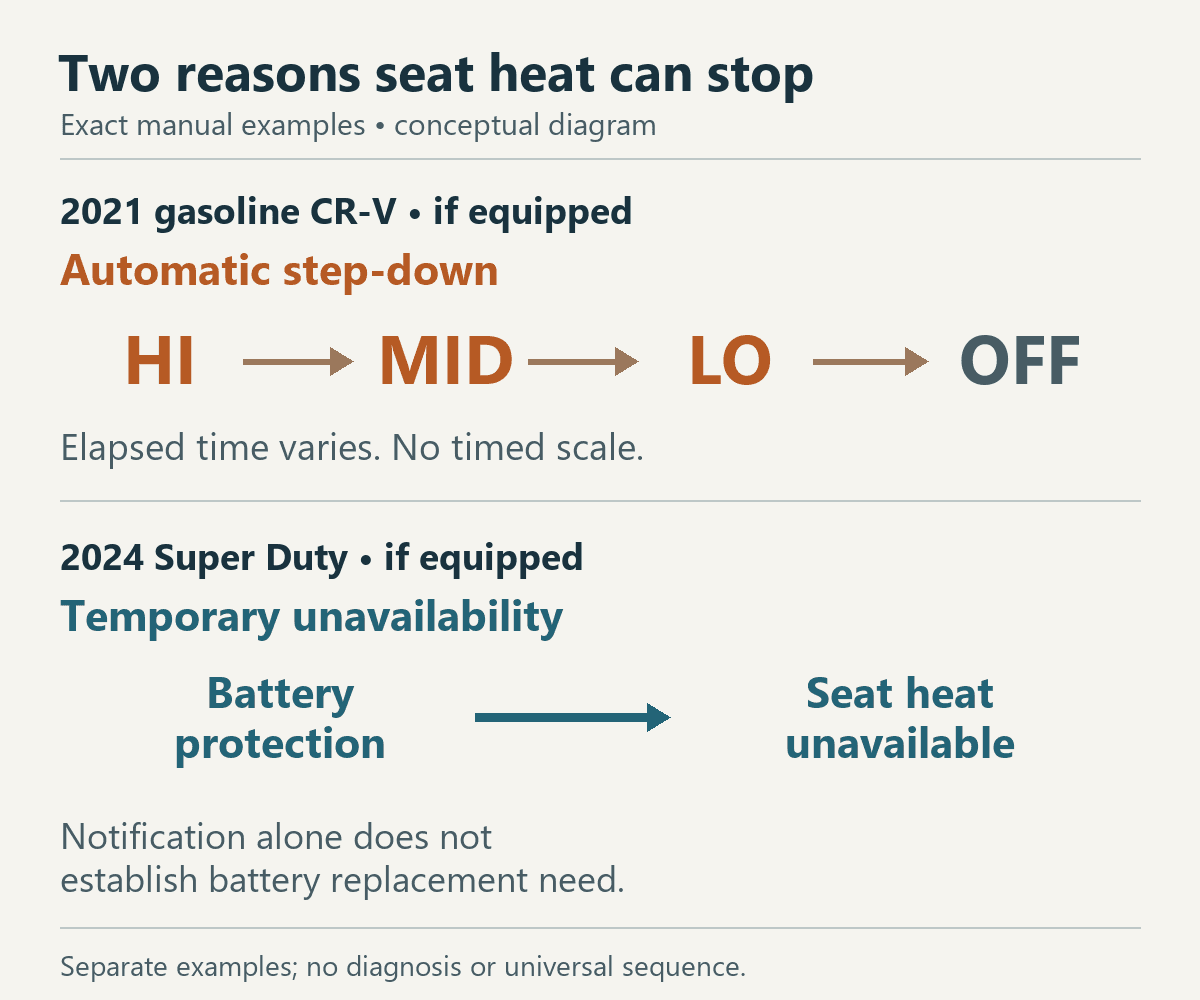
The same Honda manual explains that heat automatically decreases one level at a time until the heater switches off. The elapsed time varies with the interior environment. A seat that was warm and then cooled therefore needs a different description from one that never warmed. That documented behavior does not explain every shutdown on another vehicle.
A selected setting and available heat are separate observations
The 2024 Ford Super Duty manual says the vehicle must be running to use its equipped heated seats. Its indicators show the selected heat level. Ford also describes battery-management protection that can temporarily disable heated seats and other electrical systems when excessive battery drain is detected. A related notification alone does not establish an electrical fault or a battery needing replacement.
For an existing complaint, note whether the indicator changes, whether warmth begins before fading, and whether one position or several are affected. Preserve the exact wording of any message and mention recent battery or seat work. These are observations for a service appointment; they do not identify a failed circuit, sensor or element.
Burn precautions matter even at a low setting
Honda warns that seat heaters can cause burns and says people with diminished temperature sensation or sensitive skin should not use them. This includes the examples it names, such as diabetes or lower-limb nerve damage. Do not repeatedly select a higher setting to test a concern by how long someone can tolerate the heat.
Ford likewise warns that low-temperature, prolonged exposure can burn someone unable to feel pain normally. Its precautions prohibit heat-blocking covers or cushions, sharp objects in the seat, heavy objects on it and operating the heater while the seat is wet. Follow the precautions for the actual vehicle before further use.
Ask for a finding that matches the complaint
Describe the problem in plain terms: “driver’s seat indicator stays on but the seat remains cold,” for example. Ask whether the technician confirmed the complaint and checked it against that model’s operating conditions before recommending a part. A useful explanation connects the observed behavior to a documented finding, rather than treating every cold seat as the same repair.
If the heat becomes uncomfortable, switch it off. Persistent missing heat, unexpected shutdowns or uneven heating warrant assessment using the vehicle’s service information. Keep owner checks at the controls and manual; electrical or seat disassembly belongs with a qualified service provider.
0 comment(s) so far on Seat Heater Not Working? Settings, Cycling and Diagnosis