

Power Seat Not Moving: Controls, Memory and Position
Power-seat controls explained
A power seat that will not move may involve one adjustment, one control or the whole seat. Start by identifying the affected function and whether the stuck position allows proper seating. An audible response or partial movement alone does not identify a failed part.
Updated October 16, 2026
Start with seating position, not a replacement motor
Identify the affected seat first: driver or passenger, and which adjustment stopped. A seat that will not slide is a different report from a backrest that will not recline. Record the position it is stuck in, too. Being unable to reach the pedals properly is more consequential than losing a preferred lumbar setting.
NHTSA’s airbag guidance recommends sitting properly, using the seat belt and keeping at least 10 inches between the breastbone and the frontal airbag cover, while allowing the driver to reach the pedals comfortably. A failed adjustment does not remove the need for proper positioning. If the stuck position prevents proper control, belt fit or seating posture, arrange appropriate assistance rather than attempting a drive to test it.
Match the controls to the seat actually fitted
Equipment can differ between the two front seats. The 2021 Honda CR-V manual, for example, labels powered height adjustment as driver-only and treats lumbar adjustment separately. Its manual-seat controls are shown on another page. A passenger seat without a particular powered adjustment is not evidence that the feature has failed.
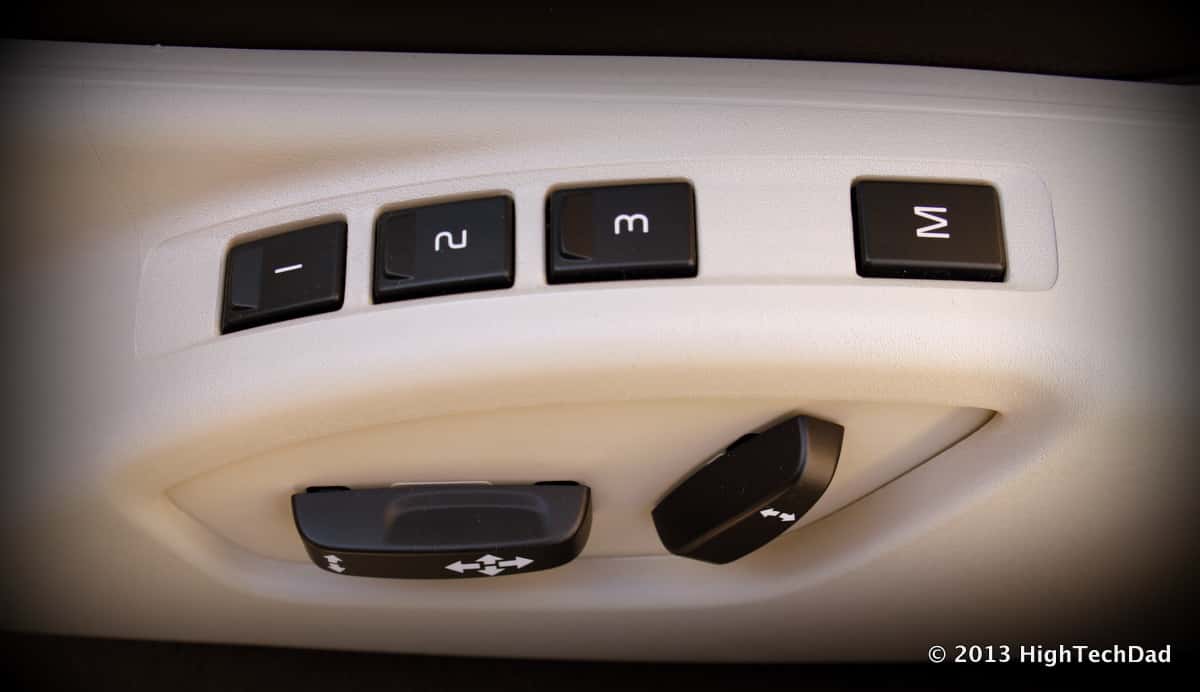
Use the matching manual’s control diagram to describe what stopped: fore-and-aft travel, cushion height, backrest angle or lumbar support, if fitted. Note whether an ordinary switch produces no response, an audible response without travel, or only partial movement. None of those observations alone confirms a bad switch, motor or track. Keep people clear of moving parts, and release the control if movement is obstructed rather than forcing it.
.jpg)
Separate memory recall from direct adjustment
A stored position and a seat-side adjustment are different requests. On an equipped 2021 CR-V, Honda says the memory system stores two driver-seat positions but excludes power lumbar. Its recall instructions require Park and the parking brake; changing the seat adjustment or shifting out of Park stops recall. Honda also allows automatic door-linked seat adjustment to be disabled through the settings screen.
The 2025 Ford F-150 manual likewise explains that pressing a memory-feature control during recall cancels the operation, and warns against using memory while moving. These are vehicle-specific examples. A failed recall request, changed setting or interrupted movement is not automatically a complete loss of seat power. Follow the actual vehicle’s conditions, and report which control worked or did not work without repeatedly cycling the seat.
Check the surrounding space without disturbing safety systems
While parked, look for loose items or cargo interfering with the seat’s space. Honda specifically warns that objects rolling beneath the front seats can interfere with seat operation, pedals or under-seat sensors. Ford says the seat area and occupants must be clear before memory movement. Keep hands out of the mechanism; do not reach into a moving track or try to pull the seat through an obstruction.
The area is not simply a collection of seat-motor wires. The CR-V manual identifies a driver-seat position sensor and front-passenger weight sensors used by its advanced airbags. Ford warns owners not to service, repair or modify the supplemental restraint system or associated components. Do not unplug or probe under-seat connectors to see whether movement returns. An airbag warning or unexpected passenger-airbag indication needs the matching manual’s instructions and qualified help, not a bypass.
Bring a precise symptom history
Record the seat, direction, control used, stopping point and any warning message. Include whether the problem began after cleaning, cargo interference, seat work or a battery event, without assuming that timing establishes the cause. Ask the repairer which finding explains the lost movement and whether the seating and restraint concerns have also been addressed. A useful conclusion distinguishes an operating condition, an obstruction and a confirmed fault; it does not select a replacement part from the sound alone.
0 comment(s) so far on Power Seat Not Moving: Controls, Memory and Position