

Heated Steering Wheel Not Working: Fuse, Switch, Or Module?
Comfort features
A heated steering wheel that does not feel warm is not automatically a fuse, switch or module failure. First establish how that exact vehicle is meant to operate: the required ignition state, temperature regulation, factory equipment and whether the complaint occurs only during remote start.
Updated October 15, 2026
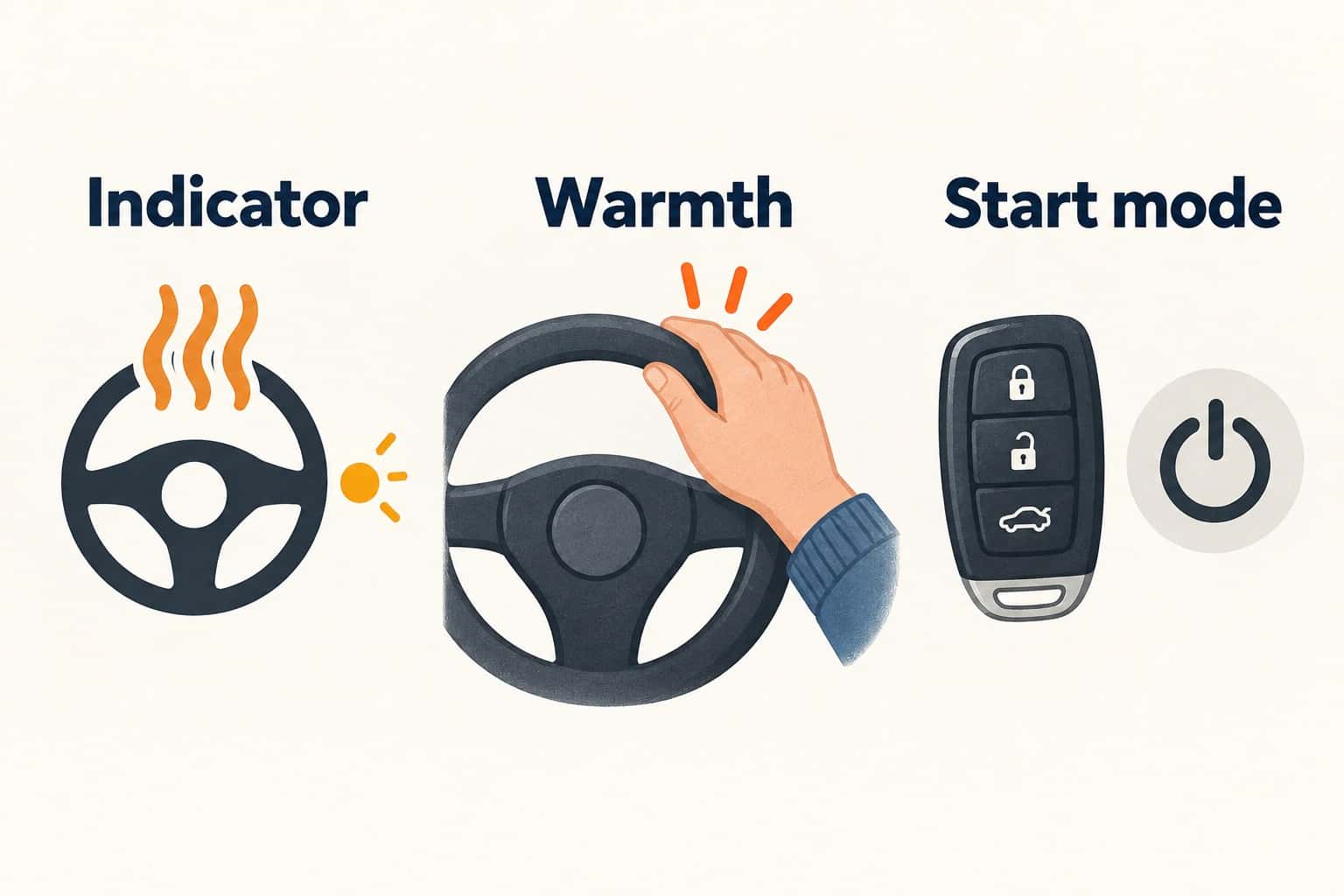
Check the operating instructions before choosing a failed part
Find the heated-wheel section in the manual for the actual model year and equipment. Confirm the correct control and any operating conditions. Record whether its indicator illuminates and whether you are testing a normal start, remote start or accessory mode. Those are different conditions, not interchangeable tests.
Temperature regulation can also change what the driver feels. The 2020 Ford Explorer manual says its system operates with the engine running and uses a sensor to regulate temperature. In warm conditions, the wheel can reach its target quickly and reduce heating current. Ford explains that this can feel as though the system has stopped even when it is operating normally.
That is an example for the covered Explorer, not a universal rule or proof that another vehicle is normal. If a previously working feature changes, compare the circumstances with the manual rather than dismissing the change or ordering a component from the symptom alone.
Remote-start operation can depend on the factory option
General Motors’ bulletin 24-NA-017 distinguishes two heated-wheel options on the listed 2023 Cadillac XT5 and XT6 models. The manual UVD option does not heat during remote start by design; the automatic KI3 option can have a remote-start setting. The relevant question is which option the vehicle actually has.
A separate GM document, PIC6539A, dated January 15, 2025, describes the UVD option on listed 2024–2025 Buick Encore GX and Envista, Chevrolet Trailblazer and Trax vehicles. It says remote-start heating is not its operating mode: the operator commands the standalone system with its switch. That document does not establish how every GM vehicle or later model operates.
If the wheel heats after a normal start and manual selection but not during remote start, document both results. Verify the installed option and current manufacturer information before treating the difference as a defect or assuming a software setting can add a missing function.
Make the observation specific
| Observation | Useful detail |
|---|---|
| No heat is felt | Normal start or remote start, approximate cabin conditions, selected control and indicator response. |
| It warms and then feels cooler | How long it warmed, whether the indicator changed and whether the manual describes temperature regulation. |
| Only part of the rim feels different | The location and whether this is a new change; ask how the covered vehicle’s heating arrangement is designed. |
| Another wheel control or warning changes | The exact control or warning, when it occurred and whether it happened at the same time. |
Make checks while safely parked. Observe the controls you normally use; do not deliberately activate cruise control or another driving function simply to test an electrical theory.
Keep any repair recommendation tied to the actual system
A failed heater does not by itself identify a clockspring, battery or control module. Different wheel-mounted functions may have different control paths. A horn or warning-light concern deserves its own description rather than being used as an automatic explanation for the heater.
For a persistent change that the manual does not explain, give the repairer the operating comparison, vehicle identity and any relevant prior wheel or column work. Ask what test supports the proposed repair and whether the original complaint was observed. Steering-wheel and column work can involve restraint components; leave disassembly and electrical probing to appropriately qualified personnel.
0 comment(s) so far on Heated Steering Wheel Not Working: Fuse, Switch, Or Module?