

Smart Concept #2: From Design Study to UK Specifications
Small electric cars
Updated October 16, 2026
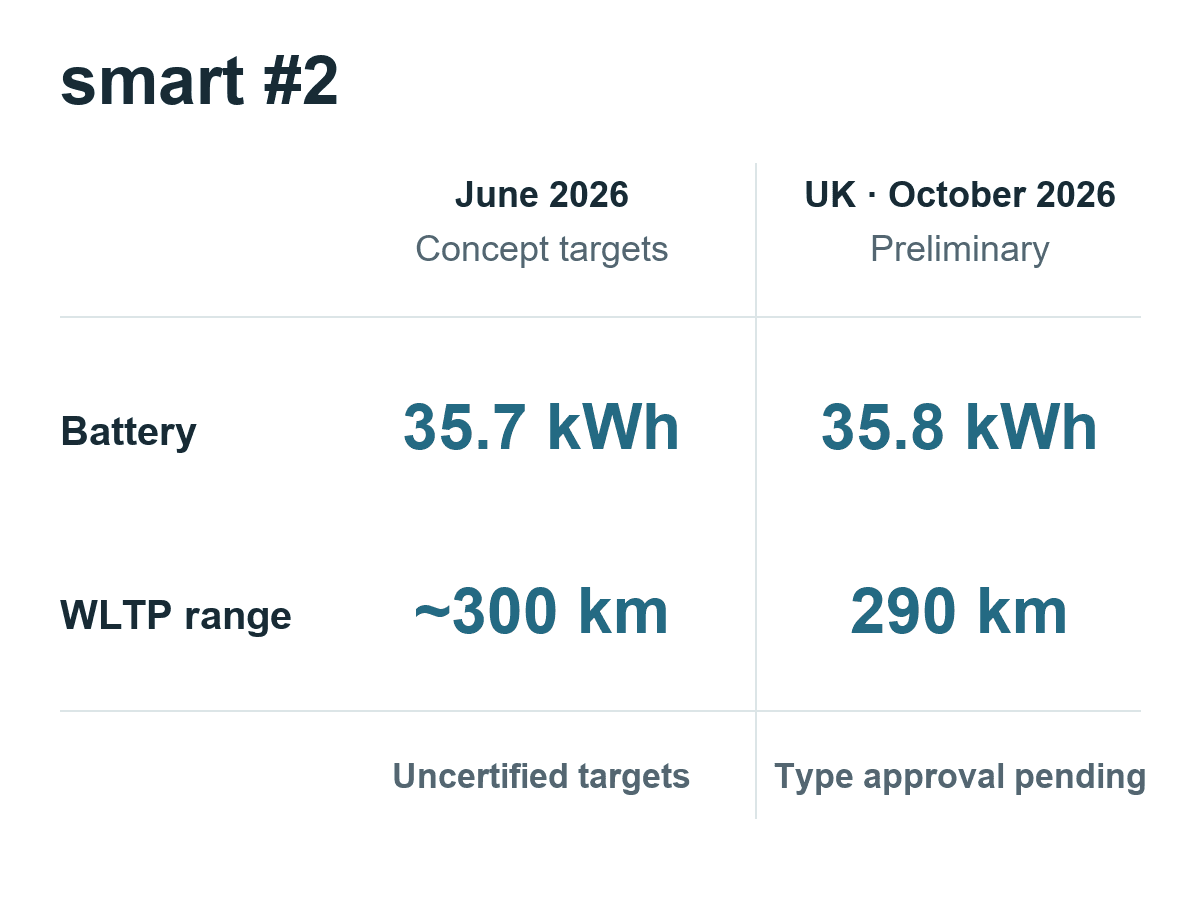
Smart’s Concept #2 explored a return to a two-seat electric city car. The comparison has since become more concrete: Smart’s UK customer page now lists preliminary specifications for the #2. Those figures help explain the vehicle’s intended role, while remaining subject to type approval.
What the concept was trying to solve
In its June 22, 2026 presentation, Smart described a purpose-built electric platform called ECA and an interior concept with a continuous bench seat and an S-shaped cockpit. The design question was how to use a small footprint without making the cabin feel divided or cramped.
That release described a 35.7-kWh battery target and roughly 300 kilometres of uncertified WLTP range. They were development targets, rather than a specification to carry forward unchanged. The concept itself was not offered for sale. Smart’s June concept and platform release
What the UK specifications now say
| Item | Published figure |
|---|---|
| Seats | Two |
| Battery | 35.8 kWh; LFP chemistry |
| Range | 290 km WLTP |
| AC charging | Pure: 7.4 kW; Premium and Couture Edition: 11 kW |
The UK page says homologation remains in progress, details can change and delivery follows its completion. The table is therefore a provisional regional specification, not a U.S. specification or an EPA range rating. Smart UK specifications and qualifications
A charging number still needs its conditions
Smart lists up to 65-kW DC charging and a 10–80% time of 20 minutes under optimal conditions. Its notes identify battery and ambient temperature, available power and other restrictions as variables. A planned stop needs room for that variation.
Start with the trips it must cover
A two-seat layout makes the passenger question immediate: does this car cover the household’s regular trips, or would another vehicle still be needed? Then check parking space, luggage requirements and the charging arrangement where the car would spend its time.
0 comment(s) so far on Smart Concept #2: From Design Study to UK Specifications