

Trade-In Value: Estimates, Offers and Your Loan Payoff
Vehicle valuation
Updated October 16, 2026
A useful trade-in value starts with a defined vehicle, a date and a type of transaction. A guide estimate, a buyer’s written offer and the equity remaining after a loan payoff answer different questions. Keep those numbers separate before deciding whether an offer fits the replacement purchase.
Match the valuation to the actual vehicle
Kelley Blue Book’s valuation FAQ asks owners to identify the year, make, model, mileage, ZIP code, body style, trim, options, condition and intended sale channel. It says its vehicle values analyze actual market transactions rather than setting prices through arbitrary formulas. Those are KBB’s stated inputs and method, not a description of every appraisal service.
Save the information entered alongside the result. A comparison is difficult to interpret if one estimate describes a different trim, assumes working equipment that is broken or uses a different mileage figure. Record known damage and warning messages accurately; photographs, service records and equipment documentation help explain those inputs without claiming that maintenance adds a fixed amount to value.
An estimate and an offer have different conditions
KBB calls its Trade-In Range an estimate and says values are not guaranteed. Its separate Instant Cash Offer is a specified purchase amount subject to inspection and the program’s terms. A private-party value is another channel, with the eventual price affected by actual condition and local market conditions. None should be relabeled as completed sale proceeds.
| Number | Question it answers | Record to retain |
|---|---|---|
| Guide estimate | What does this service estimate for these inputs and this channel? | Result date, vehicle description and condition assumptions |
| Written offer | What amount is this buyer offering, subject to which conditions? | Buyer, amount, expiration and outstanding inspection requirements |
| Equity or shortfall | What remains after the lender’s applicable payoff? | Accepted amount and dated lender payoff information |
Request comparable written terms from buyers instead of comparing headline amounts alone. Ask whether an amount depends on buying another vehicle, whether an inspection remains and what could change the figure. Disclose the same condition information to each buyer. A higher preliminary number with unresolved conditions is not equivalent to a completed, unconditional transaction.
The amount owed does not establish the car’s value
The Consumer Financial Protection Bureau’s trade-in guidance explains that a lender’s payoff can differ from the balance on a statement because of interest, fees or other charges. Get the applicable payoff and its timing from the lender rather than subtracting an old statement balance.
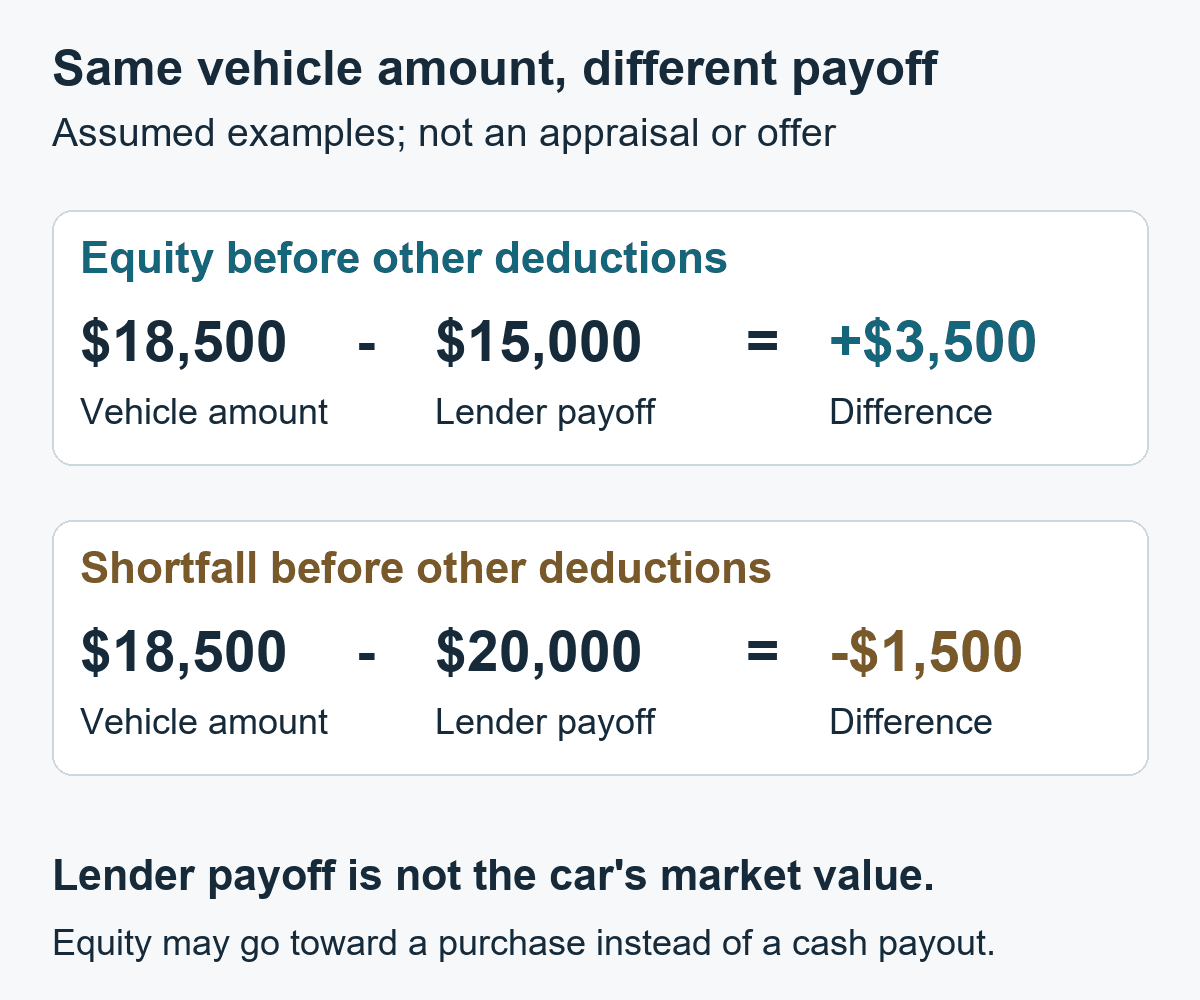
For illustration only, an accepted $18,500 vehicle amount minus a $15,000 payoff leaves $3,500 before any other applicable transaction deductions. If the payoff were $20,000, the same amount would leave a $1,500 shortfall. These are assumed numbers, not an appraisal, offer or quoted fee. The first result may be applied to a purchase rather than paid out as cash.
CFPB warns that moving an unpaid balance into a new loan increases that loan’s cost. A promise to handle the old loan is also different from confirmation that the old lender has actually been paid. Keep that confirmation with the transaction records.
Review the replacement purchase separately
Record the replacement vehicle’s price, charges, trade allowance and payoff as distinct entries. If borrowing, the Truth-in-Lending disclosure gives separate figures such as APR, amount financed, finance charge and total payments. A monthly payment by itself cannot explain how the trade or old balance affected the agreement.
There is no universal rule here that private selling pays more, cosmetic work returns its cost or a trade creates a particular tax saving. The useful comparison is the same accurately described vehicle, current written conditions and the complete transaction arithmetic—not whichever estimate happens to be largest.
0 comment(s) so far on Trade-In Value: Estimates, Offers and Your Loan Payoff