

Toyota’s 2.0-Liter Turbo: What the GR Yaris M Concept Shows
Engine technology
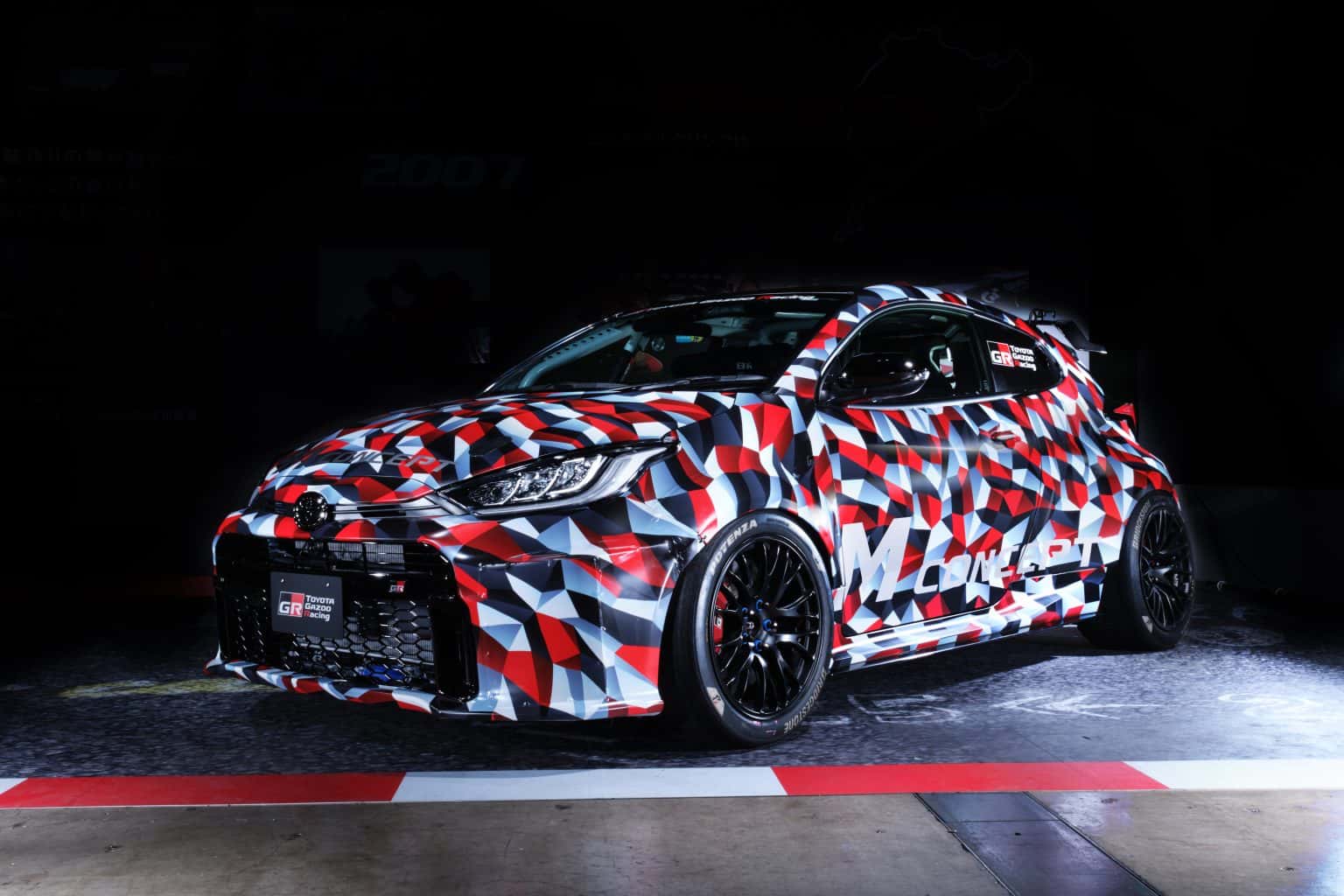
Toyota’s new 2.0-liter turbocharged four-cylinder is an engine-development story with a particularly unusual test vehicle: the mid-engined GR Yaris M Concept. The official announcements describe that concept and a wider effort to integrate future engines with electrification. They do not establish a production hybrid version of every GR model.
Updated October 16, 2026
Correction: An earlier version described this development engine as a hybrid powertrain for the GR lineup. The cited Toyota announcements do not establish that production claim.
What Toyota actually announced
In its March 11, 2025 announcement, Toyota described an under-development 2.0-liter, inline-four turbo engine installed amidships in the GR Yaris M Concept. The program used motorsport as a demanding development environment. It was not a specification sheet for a showroom-ready hybrid sports car.
Engine location is central to the experiment. Moving the powertrain behind the driver changes the distribution of mass and the demands placed on the chassis. A concept using a familiar model name can therefore be testing a substantially different vehicle layout. Its appearance alone does not tell a prospective buyer which components will reach a production car.
The G20E gained a more detailed development record
Toyota’s October 25, 2025 Okayama announcement identified the engine as the G20E and the car as a midship four-wheel-drive concept. Toyota said the engine and transmission had moved behind the driver’s seat and that the wheelbase and track dimensions had been revised. It also described difficulties with braking, steering and driving that had kept the car out of an earlier race.
That account matters because it shows what development involves beyond a power figure. Integrating an engine requires work on the whole vehicle. A successful demonstration or race entry does not independently establish production durability, emissions certification, pricing or availability in a particular market.
Electrification compatibility is not a hybrid-model announcement
The wider context came from the May 28, 2024 joint engine-development announcement by Subaru, Toyota and Mazda. Each company described engines intended to work with electrification, including better integration with motors, batteries and electric drive units. The companies also discussed more compact packaging and compatibility with carbon-neutral fuels.
That supports a direction of development. It does not identify a particular battery, electric motor, plug-in charging system or hybrid output for the GR Yaris M Concept. Mild-hybrid, full-hybrid and plug-in-hybrid systems are different arrangements; an engine’s potential to work with electric components does not make those arrangements interchangeable.
Nor does a carbon-neutral-fuel development aim establish that a vehicle has zero tailpipe emissions or that the required fuel is available at an ordinary filling station. Those questions need their own vehicle and fuel evidence. They cannot be resolved from the engine’s displacement or a general corporate strategy.
What this means when comparing an actual GR car
Use the specifications for the model and model year being considered. Toyota’s 2026 GR Corolla information, for example, identifies its G16E-GTS turbocharged engine. The G20E concept story should not be substituted for that car’s installed powertrain or used to imply a forthcoming replacement date.
For a future road car, the meaningful announcement would name the production model, market, powertrain, output and availability. A price or delivery decision needs those details rather than a projection from a race concept. The reviewed engine-development announcements also do not establish a named MR2 or Celica production application, so this article does not assign one.
The worthwhile news is the engineering approach: Toyota used a mid-engine, four-wheel-drive concept to explore a new compact turbo engine under demanding conditions. That is a substantial development story on its own, without presenting a hypothetical hybrid lineup as a product already on the way.
0 comment(s) so far on Toyota’s 2.0-Liter Turbo: What the GR Yaris M Concept Shows